You walk into a room and can’t remember why you’re there.
You lose your train of thought mid-sentence.
Your brain used to be sharp (like, dangerous sharp), but now you’re forgetting names, skipping words, rereading the same paragraph five times, and wondering if you’re just “getting older.”
But your brain isn’t falling apart, it’s gasping for air.
Your brain needs more oxygen than almost any other part of your body. It’s only 2% of your total weight, but it demands 20% of your oxygen supply. That’s a lot of pressure on an organ that can’t store oxygen and doesn’t exactly thrive in today’s toxic soup of mold, metals, pathogens, EMFs, and chronic stress.
So when your brain is under siege, and oxygen flow gets compromised, you’re going to feel it. Fast.
This doesn’t show up in your bloodwork. Your doctor may tell you everything looks “normal.” But you know better. Because you live with the fog. The forgetfulness. The weird mood dips. The lost words and scrambled focus. The feeling that you’re somehow disappearing behind your eyes.
If you’ve ever thought, “I’m doing everything right, so why do I still feel like this?”, your brain may just need more of the most basic nutrient of all: oxygen.
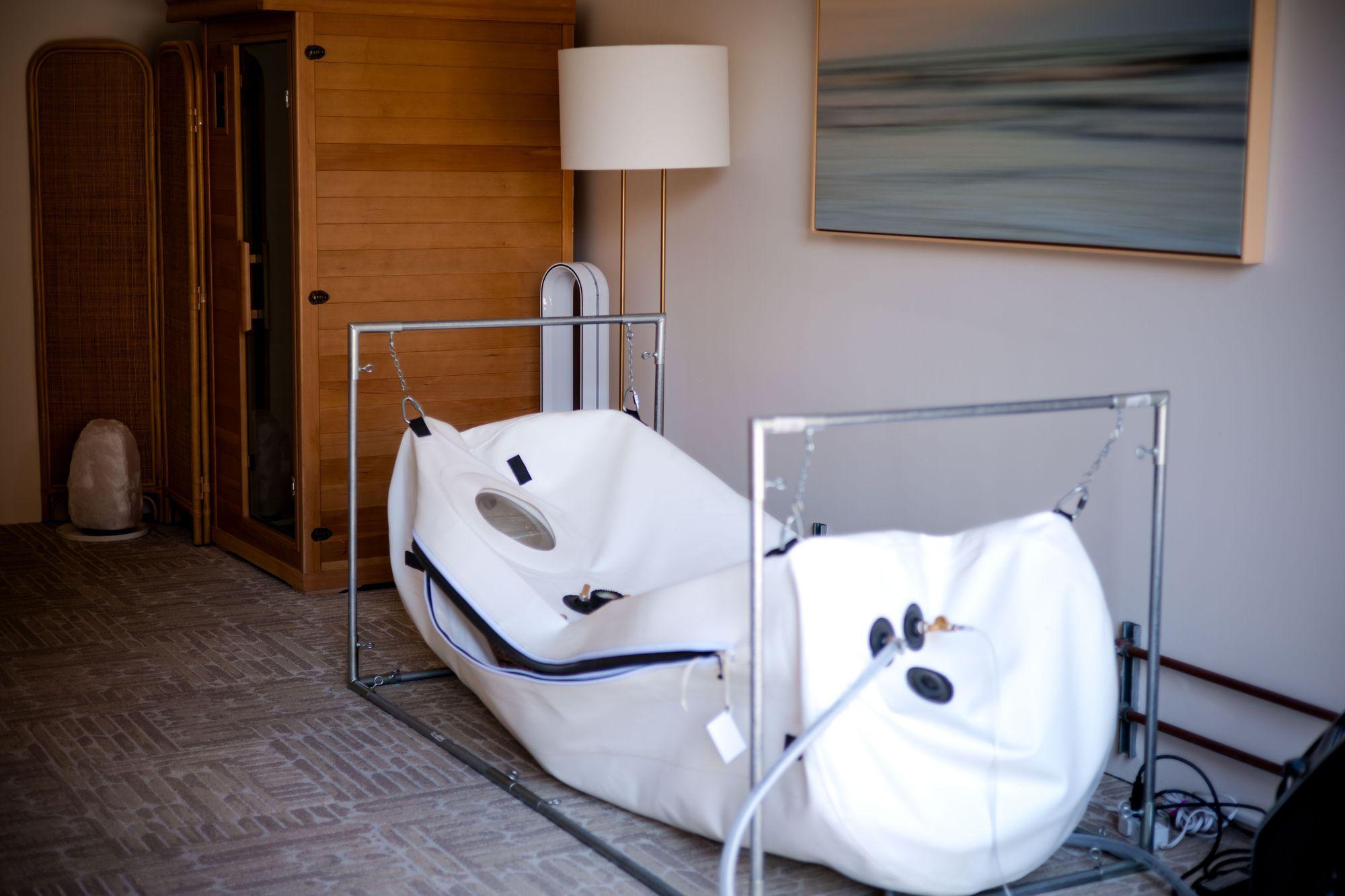
That’s where Hyperbaric Oxygen Therapy (HBOT)—and its gentler cousin, mild HBOT (mHBOT)—come in.
Key Takeaways
- Your brain needs more oxygen than you think.
- Oxygen is your brain’s primary fuel.
- mHBOT may be the gentler choice for sensitive systems.
What Are HBOT and mHBOT?
Most people only stumble across HBOT or mHBOT after they’ve already tried everything else: the meds, the diets, the supplements, the saunas, the celery juicing. (Don’t worry—I’ve been there too, juicing my paycheck into oblivion.)
So, what is HBOT?
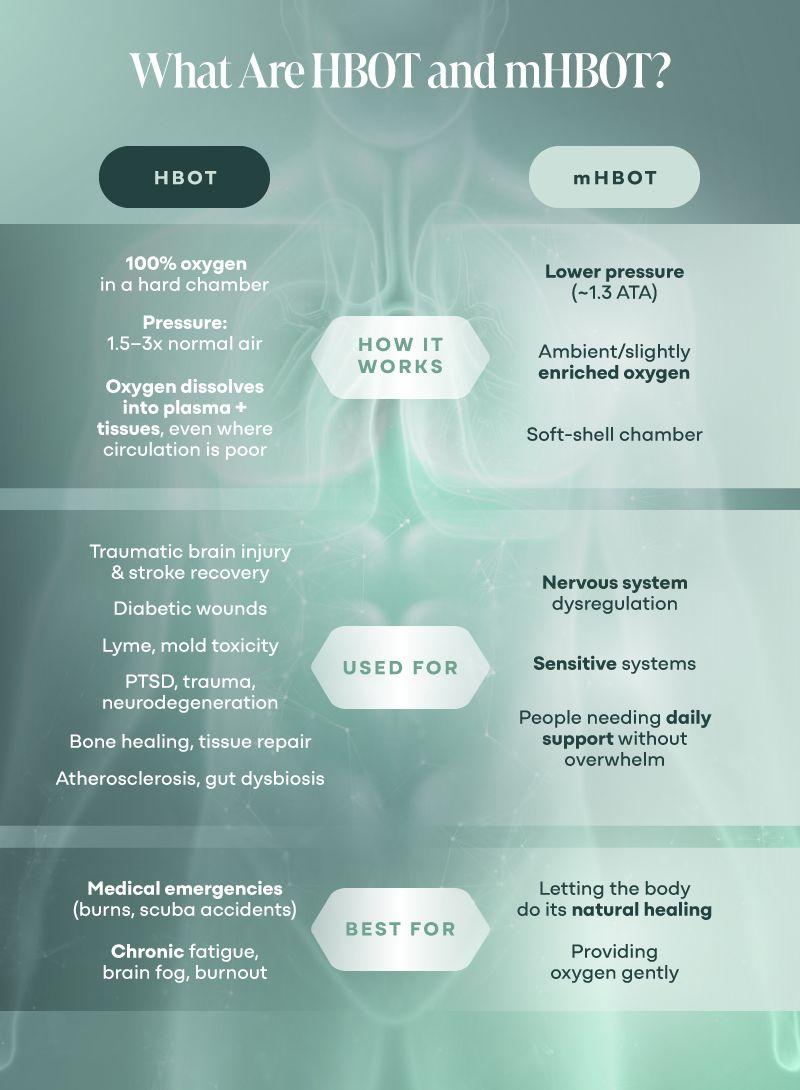
HBOT: Hyperbaric Oxygen Therapy
HBOT is a therapy where you breathe 100% oxygen inside a chamber that’s pressurized to 1.5 to 3 times higher than normal air pressure (8, 13, 15, 16, 18, 23, 28, 29, 35).
This combination forces oxygen to dissolve directly into your blood plasma (not just your red blood cells), allowing oxygen to reach every single tissue in your body, including those with limited blood flow or old injuries (8, 12, 13, 26, 28, 33).
Originally used for scuba divers with the bends (decompression sickness) (1, 19, 28), HBOT is now used for a wide range of issues:
- Traumatic brain injuries (TBIs) (1, 12, 17, 35, 36)
- Stroke recovery (1, 12, 18)
- Diabetic wounds (11, 12, 19)
- Lyme disease (39)
- Mold toxicity (12)
- Cognitive issues (1, 12, 14, 16, 20, 21, 31)
- PTSD and emotional trauma (3, 10, 31, 36)
- Neurodegenerative diseases (1, 21)
- Bone healing and osteoporosis (2, 13)
- Tissue repair (13, 24, 26)
- Atherosclerosis (12)
- Gut dysbiosis (23)
But this therapy isn’t reserved for medical emergencies anymore. More and more people with chronic symptoms and brain-based burnout are using it to reclaim their energy, clarity, and peace of mind.
mHBOT: Mild Hyperbaric Oxygen Therapy
mHBOT delivers lower pressures (around 1.3 ATA) and ambient or slightly enriched oxygen in a soft-shell chamber. Gentle and safe for daily use, it supports sensitive systems and nervous system regulation by giving your body the oxygen it needs to function optimally.
I use “m/HBOT” to indicate both mHBOT and HBOT.
Why Your Brain Needs More Oxygen Than It’s Getting
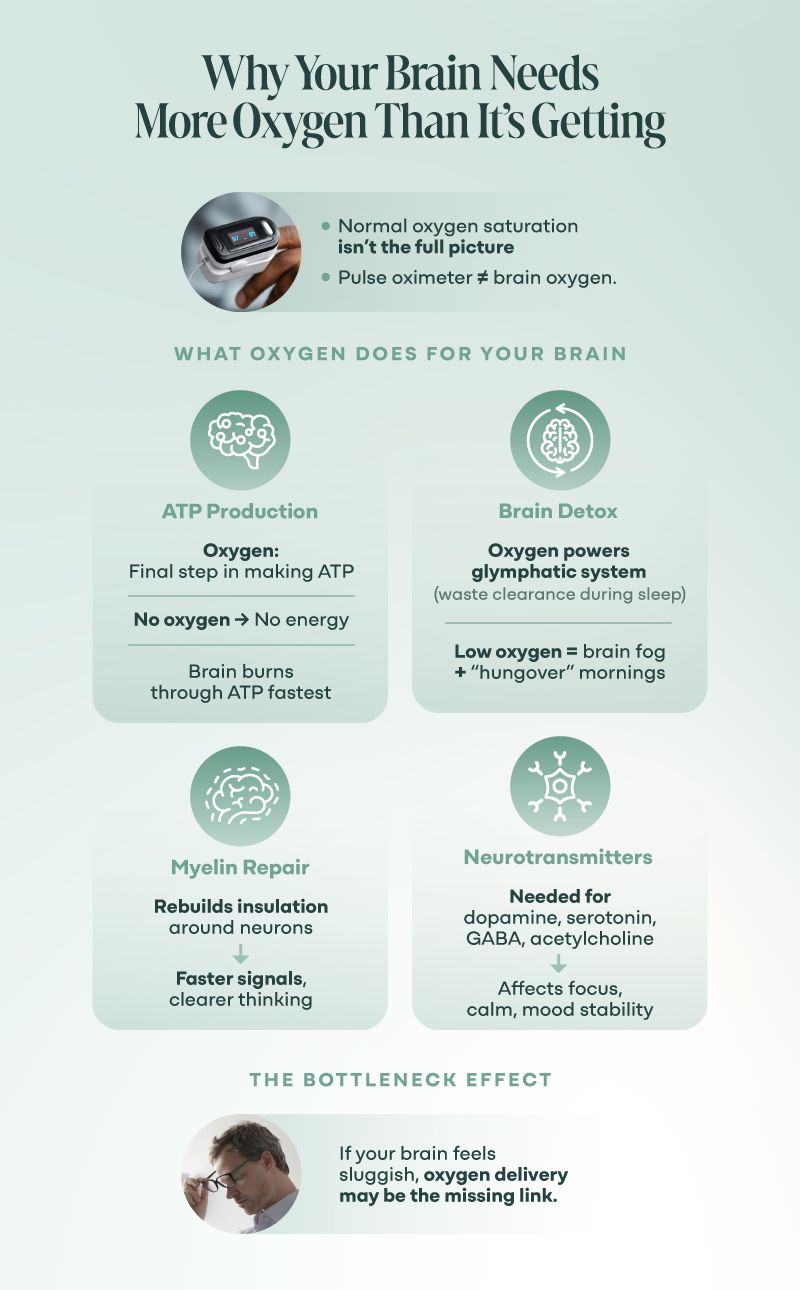
Just because your pulse oximeter says 98% doesn’t mean your brain is getting what it needs.
That number only measures how much oxygen is bound to hemoglobin in your red blood cells, not how much oxygen is reaching your brain tissue, your neurons, or your detox pathways.
Your brain can’t store oxygen. It runs on a just-in-time delivery system.
When anything disrupts that supply (whether it’s chronic stress, past trauma, mold, heavy metals, poor sleep, or nervous system overload) the brain goes into triage mode. It shuts down what it considers non-essential (goodbye, short-term memory and verbal fluency) just to keep the lights on.
Here’s what oxygen does for your brain:
- ATP production: Oxygen is the final electron acceptor in the mitochondria. (Translation: no oxygen, no ATP. No ATP, no energy.) And your brain cells burn through ATP like wildfire.
- Neurotransmitter synthesis: You need oxygen to make dopamine, serotonin, GABA, and acetylcholine; the very chemicals that keep you focused, calm, motivated, and emotionally stable.
- Myelin repair: Myelin is the fatty insulation that speeds up signal transmission in your brain. When it’s damaged (by toxins or inflammation), everything slows down. Oxygen supports myelin regeneration, which means clearer thoughts and quicker mental reactions.
- Brain detox (glymphatic system): Your brain has its own built-in waste management system called the glymphatic system, which clears out toxins and metabolic waste while you sleep. That system relies on oxygen and fluid movement to function. If oxygen is low, brain detox stalls, and you wake up feeling hungover even if you haven’t touched a drop.
The good news is that this is fixable.

mHBOT: The Gentle Powerhouse for Sensitive Systems
If the idea of sitting in a pressurized oxygen chamber makes your nervous system clench like it’s about to take a test it didn’t study for, you’re not alone.
That’s why mild hyperbaric oxygen therapy (mHBOT) exists. (But there’s a time and a place for HBOT, and that’s why we offer both at the Saleh Center.)
Lower Pressure, Same Direction
mHBOT uses a soft-sided chamber and lower atmospheric pressure (usually around 1.3 ATA) with ambient or lightly enriched oxygen levels.
This gentle approach nudges your body into healing mode. This is especially good if:
- You have a dysregulated nervous system that freaks out under new protocols
- You’re dealing with mold, parasites, or EMF sensitivity
- You’re so used to crashes after trying new things that you flinch at the word “detox”
mHBOT says, “Let’s go at your pace.” It supports your oxygen-starved brain and tissues without tipping you into overwhelm.
Slow and Steady Wins the Brain
You don’t have to tolerate extreme pressure to get real benefits. Over time, mHBOT can:
- Improve cognitive function
- Boost circulation and mitochondrial repair
- Support deep, parasympathetic healing
- Make your other detox work doable
Here’s how one client put it: “I couldn’t tolerate anything when I started. But mHBOT made it possible to start detoxing without crashing. It gave me capacity I didn’t know I could get back.”
That’s what we’re after: capacity. Not forcing the body to heal faster but giving it what it needs to feel safe doing the work.
How m/HBOT Supports Brain Health
By now you know your brain is oxygen-hungry. But what’s less obvious is what happens when it finally gets what it needs.
Let’s break it down.
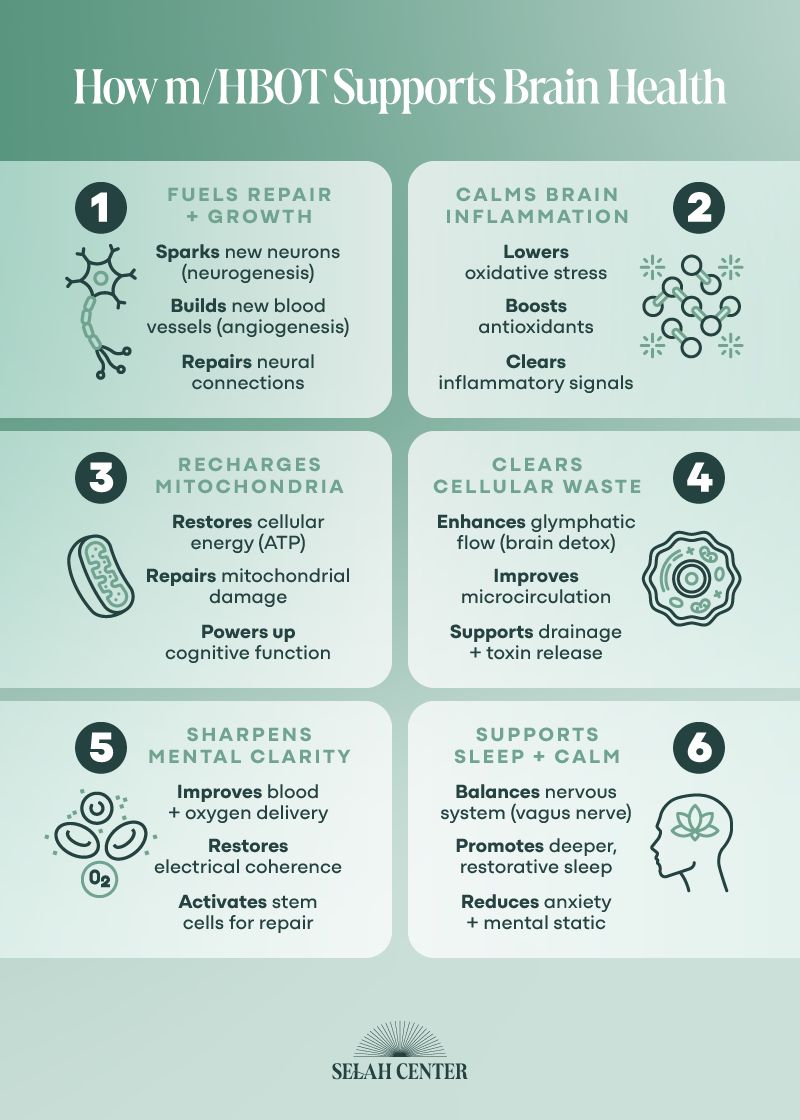
Oxygen Fuels Neuroplasticity and Neurogenesis
Neuroplasticity and neurogenesis refer to your brain’s ability to rewire and grow new cells. When you breathe oxygen in a hyperbaric environment (especially in a pressurized chamber), it saturates your plasma and floods your tissues, including your brain.
This triggers:
- Neurogenesis (the creation of new neurons, especially in the hippocampus, aka your memory bank) (1)
- Angiogenesis (the growth of new blood vessels in the brain—better flow = better function) (1,8, 13, 15, 29, 34)
- Neuroprotection and synaptic repair (reconnecting damaged communication lines between neurons) (8, 18)
This applies whether you’ve got mold exposure, fibromyalgia, long COVID, or you’re just “weirdly tired and foggy all the time.”
It Reduces Neuroinflammation
Whether it’s from toxicants, stealth pathogens, leaky gut, EMF exposure, or trauma, neuroinflammation disrupts everything: Focus, mood, memory, and even sleep quality.
HBOT addresses this at the source by:
- Increasing anti-inflammatory activity (2, 8, 9, 13, 18, 19, 23, 25, 29, 34, 35)
- Boosting antioxidant enzyme production (8, 12, 13, 19, 29, 35)
- Lowering markers of oxidative stress (yes, even in the brain) (1, 8, 12, 13, 14, 18, 28, 34, 35)
Translation: Less inflammation means clearer thinking, better mood, and a brain that actually wants to do things again.
It Supports Mitochondrial Repair
Remember the mitochondria? The powerhouse of the cell? Your brain cells are absolutely packed with them. And when they’re struggling (which they often are with chronic symptoms), everything suffers, especially energy and cognitive function.
HBOT helps your mitochondria (1, 8, 15, 16, 35):
- Rebuild their membranes
- Restore energy production (ATP)
- Reduce mitochondrial DNA damage caused by toxic exposures
This is why many people report feeling a “brain boost” or a surprising sense of mental wakefulness after sessions. Like someone flipped the lights back on.
It Clears Out Cellular Trash
Your brain detoxes mostly during sleep, via a system called the glymphatic system. (Remember this from above?)
HBOT increases microcirculation, enhances glymphatic flow, and supports lymphatic drainage pathways (1, 8, 12, 14, 15, 33, 34).
If your detox pathways are stagnant, oxygen therapy helps move the gunk out, instead of just stirring it around, which is why HBOT pairs beautifully with any root-cause detox plan.
But only when drainage is prepped first. (If it’s not, you risk redistributing toxins instead of releasing them. AKA, the “why do I feel worse?” trap.)
How m/HBOT Supports Mental Clarity
Brain fog is disorienting, frustrating, and hard to explain to people who haven’t lived it.
If you’ve ever:
- Reread the same paragraph three times and still absorbed nothing
- Forgotten words mid-sentence, like your brain’s autocorrect glitched out
- Spaced out halfway through conversations and nodded like you understood
- Felt like you’re floating next to your life instead of participating in it
You know the kind of “mental fog” we’re talking about.
But here’s the good news: Fog is simply stagnation, and stagnation is reversible with oxygen, flow, and support.
Oxygen Clears the Signal
Your brain is an electrical organ. It’s made of circuits, signals, and speed, and all that gets scrambled when inflammation blocks the flow and your cells are starved for oxygen.
HBOT helps by:
- Improving cerebral blood flow (your brain’s “oxygen delivery service”) (1, 8, 12, 14, 15, 33, 34)
- Enhancing neurotransmitter function, so you can make and use things like dopamine, GABA, and acetylcholine (18)
- Restoring electrical coherence in the brain (yes, that’s a real thing, and yes, it’s as cool as it sounds)
- Activates your own stem cells so they can orchestrate healing (8, 13, 14, 15, 16, 34)
You start to feel more like you again. The you who could problem-solve, stay focused, remember what day it is, and finish tasks without crying into a sinkful of dishes.
Sleep Quality and Mental Clarity
If you’re not sleeping deeply, your brain isn’t resetting. Period.
HBOT supports sleep indirectly by regulating inflammation (2, 8, 9, 13, 18, 19, 23, 25, 29, 34, 35) and balancing the autonomic nervous system (especially the vagus nerve, your body’s stress dial) (19).
Some people even find that a few sessions help them fall asleep faster and wake up without that groggy, “someone unplugged me mid-charge” feeling.
Better sleep means stronger detox and clearer thinking. It’s all connected, and oxygen helps tie it together.
It Helps Your Nervous System Chill So Your Mind Can Focus
Chronic stress and trauma keep your nervous system in fight-or-flight mode, which turns your brain into a threat-detection machine instead of a calm, focused powerhouse.
When your body finally gets enough oxygen, it relaxes.
HBOT supports parasympathetic dominance (the healing state) which means less spinning, less anxiety, and more grounded, present awareness (19).
Mental clarity also means:
- Emotional balance
- Creative flow
- Feeling safe inside your own head again
That’s the power of oxygen: it turns the static down and helps you tune back in.

Oxygen Therapy for Sharper Thinking and Recovery
If you’ve been in survival mode for months—or years—you’re not after a quick cognitive boost. You’re looking for a full reset: your brain, your energy, your self, back online. That’s where oxygen therapy shines.
Whether you’ve been flattened by chronic symptoms, burned out by life, or left hanging by the medical system, hyperbaric oxygen therapy helps create the conditions for recovery on a cellular and systems level.
Sharper Thinking Starts at the Cellular Level
When people think of mental clarity, they picture productivity hacks or nootropics.
But sharper thinking isn’t about tricking your brain into focus, it’s about restoring capacity.
HBOT helps you:
- Reclaim baseline cognitive function, not just “perform” temporarily
- Reactivate dormant brain regions through increased oxygenation and blood flow
- Improve working memory, processing speed, and verbal fluency
This is why stroke patients, concussion survivors, mold illness warriors, and long-COVID sufferers all report similar results: “It felt like the lights came back on.”
Recovery That Doesn’t Require You to Push Through
If you’ve ever been told to “exercise more” or “try meditating” while feeling like you’re moving through wet concrete, you know how gaslighting recovery advice can be.
m/HBOT doesn’t require you to do more. It meets your body where it is and lets it do what it already knows how to do: heal.
This is especially critical for:
- Trauma survivors with a hypersensitive nervous system
- Cognitive fatigue post-exposure (mold, metals, parasites)
- Neurodivergent folks with sensory overload or executive dysfunction
- People with long COVID, POTS, ME/CFS, or similar complex cases where exertion = crash
Oxygen therapy supports rather than pushes—passive input with powerful ripple effects.
Yes, Even the Biohackers Love It
If you’re in that curious middle space where you’re both healing and optimizing, good news.
m/HBOT is also used for:
- Brain performance in high-stakes roles (pilots, athletes, CEOs)
- Integrating deep emotional work (like somatic therapy or plant medicine journeys)
- Post-surgical or injury recovery (with fewer meds and faster results)
- Cognitive support in aging and early dementia prevention
You don’t have to “do all the things.” Just choose the one thing that gives your system room to breathe.

A Quick Note on the Research
Most of the existing research on hyperbaric oxygen therapy has been done using hard-sided, high-pressure chambers, the kind you’d find in hospitals, integrative clinics, or clinical research settings.
That’s not because they’re always the best or most accessible option, but because that’s where the funding flows.
(Let’s be real: pharmaceutical companies and hospital systems aren’t lining up to fund studies on a therapy they can’t patent.)
But just because most published studies focus on full-pressure HBOT doesn’t mean mild hyperbaric therapy (mHBOT) isn’t effective. It just hasn’t had the same research dollars behind it yet.
Anecdotally and clinically, we’ve seen incredible outcomes, especially in complex chronic cases.
At The Saleh Center, we use both, depending on what a client is ready for.
m/HBOT isn’t a one-size-fits-all magic pod. If you have an untreated pneumothorax, certain lung conditions, or ear issues that can’t handle pressure changes, this therapy isn’t for you—yet.
Always work with a practitioner who understands your case and can make sure the chamber supports your system, not steamrolls it.
In our experience, m/HBOT helps our clients build capacity for detox and repair without triggering crashes or overwhelm.
That makes it a powerful tool in a true bioregulatory approach.
If you’ve been battling brain fog, fatigue, and a sense that your best thinking is locked behind glass you’re not imagining things.
You’re likely under-oxygenated and overwhelmed. Your brain is doing the best it can—but today’s world doesn’t make it easy. Chronic stress, toxins, trauma, and a system that treats symptoms like flaws leave many in a quiet cognitive crisis.
This is fixable. No hype. No buzzwords. Just oxygen and pressure giving your brain what it needs to recover and thrive.
It’s a lifeline for a system that’s been stuck in survival mode for too long. And if you’re reading this, maybe you’ve already decided:
You’re done surviving. You’re ready to heal.
FAQs
What’s the difference between HBOT and mHBOT?
HBOT uses high-pressure, hard-sided chambers with 100% oxygen. mHBOT uses lower pressure and ambient or enriched oxygen in soft-sided chambers. Both work. mHBOT is just gentler and better tolerated by sensitive systems.
Will I feel anything during a session?
Most people feel relaxed or slightly pressurized in their ears (like taking off in a plane). Afterward, many report feeling clearer, calmer, and more grounded.
Is it safe if I have a chronic illness or nervous system issues?
That’s exactly who mHBOT is for. It’s designed to support detox and healing without triggering overwhelm, crashes, or flare-ups.
How many sessions do I need?
Everyone’s different. Some feel shifts within a few sessions; others with complex chronic issues benefit from regular use over time. Think of it as building momentum, not flipping a switch.
Can I use m/HBOT while detoxing?
Yes, and it often makes detox more tolerable by supporting oxygen delivery, glymphatic drainage, and mitochondrial repair. Just make sure your drainage pathways are open first.
Does it help with brain fog from mold, Lyme, or long COVID?
Absolutely. These conditions all impair oxygen flow and mitochondrial function. m/HBOT helps restore clarity by addressing the root, not just the symptoms.
Can it replace my other treatments?
m/HBOT isn’t a replacement, but it makes your other healing work more effective by giving your brain and body the oxygen they’ve been missing.
Are there any risks or side effects?
m/HBOT is very well tolerated. Some people may feel temporary fatigue or detox symptoms if their drainage isn’t prepped, but that’s easily managed.
References (38)
- Progress on the mechanism and application of hyperbaric oxygen therapy for neurodegenerative diseases - PubMed. Accessed August 16, 2025.
- Ansari S, Gaurav A, Gupta T, et al. Hyperbaric oxygen therapy is effective and safe for femoral head osteonecrosis: a prospective midterm outcome study - PubMed. European Journal of Orthopaedic Surgery & Traumatology.
- Antunes F, Machado M, Garavini A, Carvalho V, de Souza A. The effect of hyperbaric oxygen therapy on psychological state and wound healing: a case report - PubMed. Wound Management & Prevention.
- Bayoumy AB, de Ru JA. Acute acoustic trauma requires urgent treatment within 72 h for optimal outcomes: results from the Dutch armed forces - PubMed. European Archives of Oto-Rhino-Laryngology.
- Brekke FB, Lippe N von der, Røed I, Gudmundsdottir H, Braaten M, Nordheim E. Hyperbaric oxygen treatment in addition to conventional multidisciplinary care in patients with calciphylaxis - PubMed. Clinical Nephrology.
- Calderón P, Quera R, Núñez P, Flores L. Treatment with hyperbaric oxygen in a Crohn’s disease patient - PubMed. Revista Española de Enfermedades Digestivas.
- Canarslan Demir K, Avci AU, Ozgok Kangal MK, et al. Hyperbaric Oxygen Therapy for Managing Cancer Treatment Complications: A Safety Evaluation - PubMed. Medicina.
- Cannellotto M, Yasells García A, Landa MS. Hyperoxia: Effective Mechanism of Hyperbaric Treatment at Mild-Pressure. IJMS. 2024;25(2):777.
- Cha J, Bosco G, Moon RE, Melloni G, Camporesi EM. Hyperbaric Oxygen Therapy for Management of Complex Regional Pain Syndrome - PubMed. The Clinical Journal of Pain.
- Doenyas-Barak K, Kutz I, Lang E, et al. Hyperbaric Oxygen Therapy for Veterans With Combat-Associated Posttraumatic Stress Disorder: A Randomized, Sham-Controlled Clinical Trial - PubMed. The Journal of Clinical Psychiatry.
- Elsharnoby AM, El-Barbary AH, Eldeeb AE, Hassan HA. Resistant Chronic Venous Leg Ulcers: Effect of Adjuvant Systemic Hyperbaric Oxygen Therapy Versus Venous Intervention Alone - PubMed. The International Journal of Lower Extremity Wounds.
- Ezra N, Dang K, Heuser G. Improvement of attention span and reaction time with hyperbaric oxygen treatment in patients with toxic injury due to mold exposure. Eur J Clin Microbiol Infect Dis. 2010;30(1):1-6.
- Feng J, Zhu C, Zou J, Zhang L. Hyperbaric Oxygen Therapy for the Treatment of Bone-Related Diseases.
- Ginzarly M, Khairy S, Wang Z, Qureshi U, Zaitoun R, Efrati S. Efficacy of hyperbaric oxygen therapy in treating fibromyalgia linked to childhood trauma after late-onset and over a decade of symptoms: a case report. J Med Case Reports. 2025;19(1).
- Hadanny A, Sasson E, Copel L, et al. Physical enhancement of older adults using hyperbaric oxygen: a randomized controlled trial. BMC Geriatr. 2024;24(1).
- Hadanny A, Zilberman-Itskovich S, Catalogna M, et al. Long term outcomes of hyperbaric oxygen therapy in post covid condition: longitudinal follow-up of a randomized controlled trial. Sci Rep. 2024;14(1).
- Hajek M, Jor O, Tlapak J, Chmelar D. Hyperbaric Oxygen Therapy in Children with Brain Injury: A Retrospective Case Series - PubMed. International Journal of Medical Sciences.
- Han Y, Huang L, Wu J, Wan G, Mo L, Liu A. The Role of Astrocytes in Poststroke Rehabilitation. Brain and Behavior. 2025;15(6).
- Kanowski S, Shen Y, Klein T, Moeller MJ, Koch A, Theilig F. Impact of hyperbaric oxygenation therapy (HBOT) on renal function in human. Sci Rep. 2025;15(1).
- Lawati YKA, Hazra D, Al-Alawi AKA, Abri SA. A Rare Case of Acute Carbon Monoxide Toxicity Mimicking Stroke and Successfully Managed with Hyperbaric Oxygen Therapy - PubMed. Sultan Qaboos University Medical Journal.
- Li B, Li H, Chen H, et al. Utilizing Hyperbaric Oxygen Therapy to Improve Cognitive Function in Patients With Alzheimer’s Disease by Activating Autophagy-Related Signaling Pathways - PubMed. Physiological Research.
- Li TH, Lin CH, Peng CK, et al. Effects of adjuvant hyperbaric oxygen therapy and real-time fluorescent imaging on deep sternal wound infection: a retrospective study - PubMed. Journal of Wound Care.
- Li Y, Sun R, Lai C, et al. Hyperbaric oxygen therapy ameliorates intestinal and systematic inflammation by modulating dysbiosis of the gut microbiota in Crohn’s disease. J Transl Med. 2024;22(1).
- Mortada H, González JE, Husseiny YM, et al. Efficacy of Hyperbaric Oxygen Therapy as an Adjunct in Aesthetic Surgery: A Systematic Review and Meta-analysis of Postoperative Outcomes and Complications - PubMed. Aesthetic Plastic Surgery.
- Nguyen H, Hai T, Nguyen Van T, et al. Results of treating patients with cellulitis by hyperbaric oxygen: a case-control study - PubMed. Accessed August 16, 2025.
- Öztürk M, Demir L. Evaluation of Patients Undergoing Hyperbaric Oxygen Therapy for Earthquake-Related Tissue Injuries - PubMed. Disaster Medicine and Public Health Preparedness.
- Park S, Marinov A, Clarke H, et al. Safety of hyperbaric oxygen therapy in non-emergent patients with a history of seizures: A retrospective cohort study - PubMed. PLOS ONE.
- Patel SH, Joseph JJ, Gandhi TR, Mehta A, Shah A. A Review of Emerging Evidence and Clinical Applications of Hyperbaric Oxygen Therapy - PubMed. Journal of Intensive Care Medicine.
- Peng S, Zeng L, Lu B, Li Q. Application of hyperbaric oxygen therapy in the treatment of spinal cord injury: insights from preclinical to clinical evidence - PubMed. Medical Gas Research.
- Schiavo S, Brenna CTA, Albertini L, Djaiani G, Marinov A, Katznelson R. Safety of hyperbaric oxygen therapy in patients with heart failure: A retrospective cohort study - PubMed. PLOS ONE.
- Sun Y, Ren T, Ji X. Influence of hyperbaric oxygen therapy-specialized care on limb motor function and mental state of cerebral infarction patients with hemiplegia - PubMed. Technology and Health Care.
- Tu P, Halili X, Zhang S, Yang J, Xiao Y. The effectiveness of hyperbaric oxygen therapy in children and adolescents and with autism spectrum disorders: A systematic review and meta-analysis - PubMed. Progress in Neuro-Psychopharmacology and Biological Psychiatry.
- Weng J, Ren H, Guo Q, et al. Efficacy and safety of hyperbaric oxygen therapy for diabetes peripheral neuropathy A systematic review and meta-analysis. Published online September 4, 2024.
- Zhang R, Guo H, Tang S, Zuo J, Shi X. Effect of hyperbaric oxygen therapy on postoperative muscle damage and inflammation following total knee arthroplasty: a randomized controlled trial. Sci Rep. 2025;15(1).
- Zhao H, Zhang T, Wang Y, Fang Y. Early Hyperbaric Oxygen Therapy Promotes Recovery of Blunt Liver Injury in Rats via Inhibiting Inflammatory Response and Oxidative Stress. Int J Med Sci. 2025;22(9):2174-2185.
- Figueroa XA, Wright JK. Hyperbaric oxygen: B-level evidence in mild traumatic brain injury clinical trials - PubMed. Neurology.
- Guenneugues R, Henckes A, Mansourati V, Mansourati J. Effects of hyperbaric exposure on mechanical and electronic parameters of implantable cardioverter-defibrillators - PubMed. Europace.
- Chen SY, Tsuneyama K, Yen MH, Lee JT, Chen JL, Huang SM. Hyperbaric oxygen suppressed tumor progression through the improvement of tumor hypoxia and induction of tumor apoptosis in A549-cell-transferred lung cancer - PubMed. Scientific Reports.
This article is for general education and is not a substitute for personal medical advice.