You’re not sliding backward, but you’re not moving forward either.
Just kind of stuck.
Some days you feel like you’re tiptoeing around your own biology, afraid to poke the bear of another flare-up.
You’re exhausted, foggy, maybe still bloated after meals even though you’ve eliminated everything but hope from your plate.
It’s not your fault. But it is your biology. Not broken. Not fragile. Just under-resourced.
And one of the resources your body is most likely missing is oxygen. Not in the “just breathe deeper” kind of way.
I’m talking about oxygen saturation at the cellular level, the kind that fuels your mitochondria, detox pathways, and nervous system so you can get traction in your healing again.
That’s where Hyperbaric Oxygen Therapy (HBOT) and mild Hyperbaric Oxygen Therapy (m/HBOT) come in.
If you’re stuck in chronic fatigue, post-infection symptoms, mold recovery, or endless die-off cycles, one of these might be the tool that moves the needle when nothing else has.
Key Takeaways
- Adequate oxygenation is a biological imperative even at the cellular level.
- Oxygen under pressure can dissolve into your plasma and other fluids, delivering it to all your cells.
- m/HBOT is better for sensitive systems and long-term healing.
What Is HBOT? Understanding Oxygen as Medicine
HBOT is not a glorified oxygen mask or a spa gimmick sandwiched between cryotherapy and a vitamin IV.
Hyperbaric Oxygen Therapy is a powerful clinical tool that delivers oxygen under increased pressure.
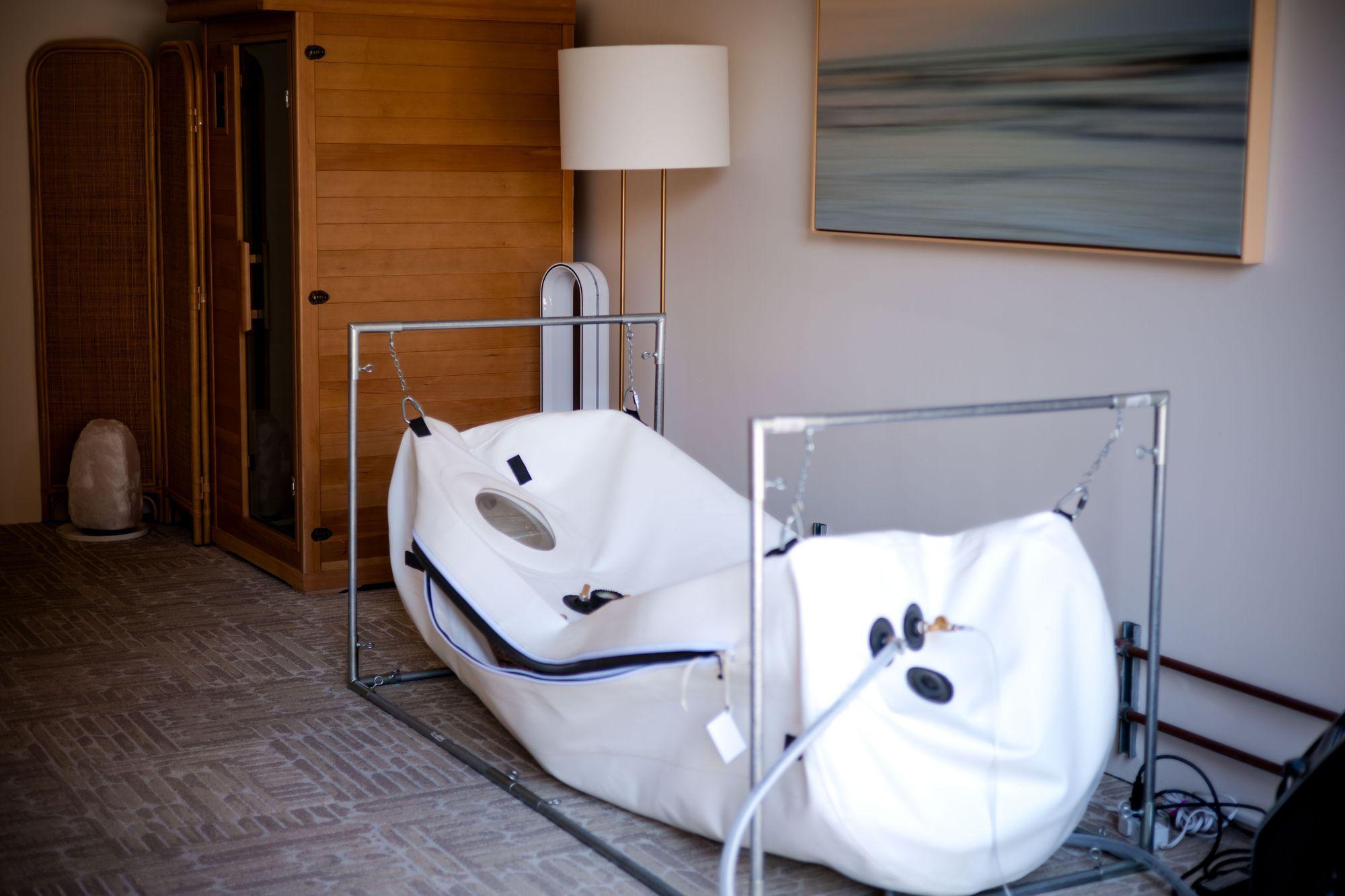
You lie down inside a sealed chamber (think: comfortable, capsule-like pod) and breathe oxygen-rich air while the pressure slowly increases. Under normal conditions, oxygen travels through your body bound to red blood cells, but under pressure, that oxygen dissolves directly into your plasma, lymph, cerebrospinal fluid, and even the spaces between your cells (8, 12, 13, 26, 28, 33).
That means your tissues are getting flooded with oxygen in places where blood flow might be compromised, like damaged nerves, inflamed tissues, or areas hit hard by long-term stress or toxicity.
For someone dealing with chronic fatigue, brain fog, long-standing digestive issues, or detox symptoms that just won’t quit, this can change everything.
Not all hyperbaric therapy is created equal. There are two main types you should know about, and both can accelerate healing when used at the right time.
Traditional HBOT (typically found in hospitals and integrative clinics) can deliver 100% oxygen at higher pressures (around 2.0 to 2.5 ATA or atmospheres) and uses hard-shell chambers. These are often used for serious acute conditions like burns, decompression sickness, and radiation damage (1, 19, 28). They’re powerful tools to have in your arsenal.
Then there’s mild hyperbaric oxygen therapy, or m/HBOT, which uses soft-shell chambers and lower pressures (around 1.3 to 1.5 ATA), usually with concentrated air instead of pure oxygen.
These are more widely available and can be profoundly effective for folks dealing with chronic symptoms, mold exposure, gut issues, and nervous system dysregulation, especially when you use them consistently.
(I use “m/HBOT” to indicate both HBOT and mild HBOT.)
So, what’s “best”? It depends on you, your body, your sensitivity, and your goals.
They can each be the best option at different times.
How Hyperbaric Oxygen Therapy Accelerates Recovery
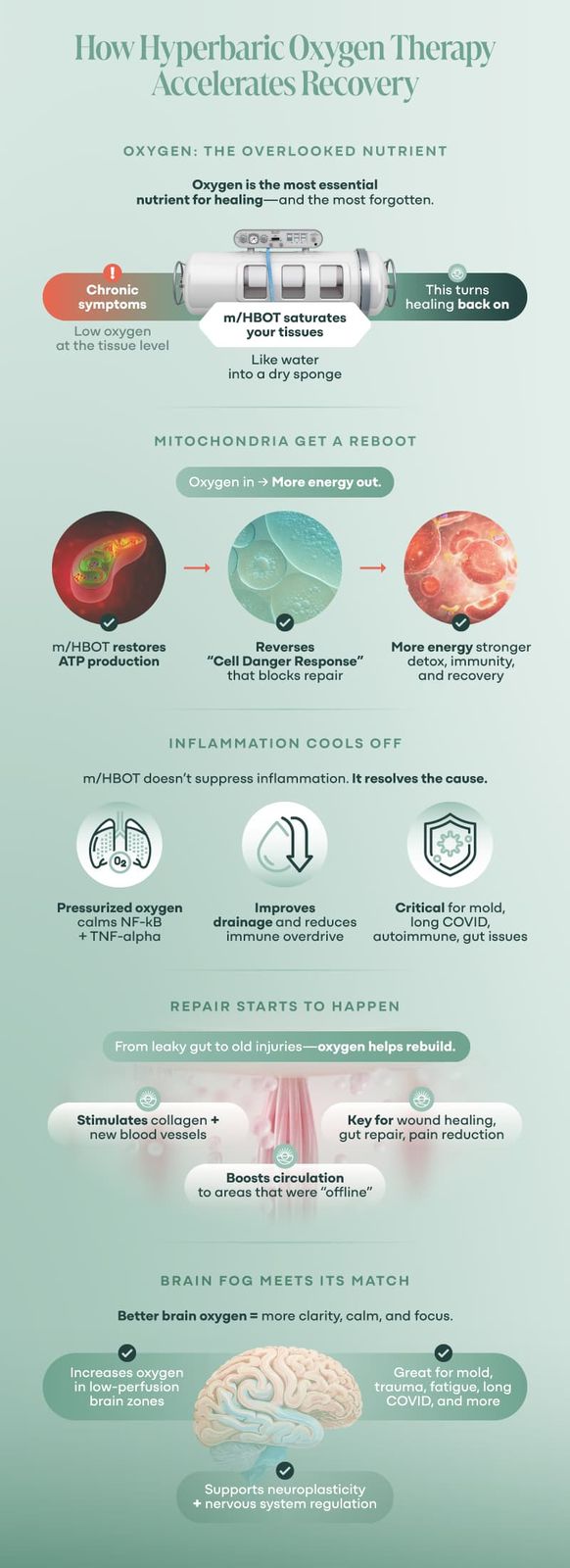
Oxygen is the most essential nutrient your body has, but it’s also the most overlooked when it comes to recovery.
We talk endlessly about supplements, minerals, mitochondria, gut bugs, drainage, and detox, but might forget the very thing that powers all of it.
When you’re stuck in chronic symptoms, your cells are stuck in survival mode.
m/HBOT changes that. When you give your body pressurized oxygen, it goes beyond what a deep breath or a walk in fresh air can do. That oxygen dissolves directly into your fluids, saturating your tissues like water soaking into a dry sponge, and that’s when healing starts to turn back on.
Mitochondrial Reboot
At the cellular level, HBOT supercharges your mitochondria (those tiny engines that make ATP, your energy currency) (1, 8, 15, 16, 35). Chronic fatigue, brain fog, and even hormone imbalance often trace back to poor mitochondrial output. HBOT helps them breathe again, literally—more oxygen in produces more ATP out.
That means more energy for repair, immune function, and detox; the stuff your body puts on pause when it is overwhelmed.
But let’s explore mitochondria a little deeper.
When your body’s been under chronic stress (from mold, infections, trauma, or toxins) your cells often get stuck in what’s called the Cell Danger Response (CDR) (39, 40, 41).
It’s like your mitochondria slam the brakes on healing because they think you’re still under attack. Until the threat is resolved, your cells won’t shift back into repair mode (39, 40, 41). This is where HBOT can be a powerful ally.
By gently increasing tissue oxygenation, HBOT helps restore mitochondrial function (1, 8, 15, 16, 35), lower the perceived threat level, and signal to your body that it’s finally safe to heal.
Inflammation Goes Down
You’ve likely been told to “reduce inflammation,” as if that’s something you can just cross off your to-do list between parasite protocols and your third sauna this week.
But inflammation is your body’s way of saying, “Hey… something’s not right. I need support.”
HBOT helps resolve what’s triggering it in the first place, at the root level.
Pressurized oxygen calms the inflammatory cascade by downregulating messengers like NF-kB and TNF-alpha, which are major players in keeping your body stuck in a chronic stress state (2, 8, 9, 13, 18, 19, 23, 25, 29, 34, 35).
Instead of suppressing your immune response, HBOT helps your system reorient and reset, like flipping a breaker so the lights can come back on.
This is especially critical if you’re dealing with:
- Mold toxicity (hello, inflamed brain)
- Autoimmune reactivity
- Lingering viral symptoms
- Leaky gut or histamine issues
- Post-infection fatigue (yes, including long COVID)
Because inflammation isn’t just redness and swelling.
It’s also mental fog, hormone chaos, disrupted sleep, and that low-grade malaise you can’t shake no matter how “clean” your diet is.
When your tissues are finally saturated with oxygen, repair enzymes activate (13, 24, 26), drainage pathways open, detox becomes safer, and the alarm bells start to fade because the fire that set them off is finally going out. This is how inflammation resolves—not by suppressing it, but by giving your body what it needs to complete the job.
Repair Goes Up
HBOT also stimulates collagen production (8, 12, 13) and angiogenesis (the growth of new blood vessels) (1, 8, 13, 15, 29, 34) which is critical for rebuilding damaged or stagnant tissue.
When oxygen levels rise under pressure, fibroblasts (the cells responsible for making collagen) become more active, and the body starts laying down new scaffolding to repair structural damage.
At the same time, improved blood vessel formation means better microcirculation (1, 8, 12, 14, 15, 33, 34), so those areas that were previously cut off from nutrients and immune support finally get what they need to heal.
This is why HBOT is so well-documented in wound care and post-surgical recovery. It helps close diabetic ulcers (11, 12, 19), rebuild skin after radiation, and even reduce pain (14, 16, 18, 25, 34).
But this same mechanism is just as relevant for the rest of us walking around with injuries that never quite resolved. Maybe it’s the ankle you twisted five years ago that still flares up when you’re tired. Or the gut lining that’s still leaking, no matter how many gut-healing protocols you’ve tried.
When tissues don’t have enough oxygen, they stagnate, they inflame, they hold on to trauma and waste. HBOT helps flip the switch from stuck to healing by restoring flow at the cellular level.
Brain Fog, Meet Neuroplasticity
Here’s where HBOT gets exciting—it improves oxygenation in the brain, even in areas that are hard to reach through standard circulation. That’s a biiig deal for anyone with mold brain, post-concussion symptoms, or long-haul stress.
HBOT has been shown to improve cognitive function (1, 12, 14, 16, 20, 21, 31), reduce post-traumatic brain symptoms (10, 36), and support the parasympathetic nervous system (19).
Translation: you think more clearly, sleep more deeply, and respond to stress without spiraling.
There’s solid research showing HBOT improves everything from memory and focus to motor recovery after neurological injury (check out all the references at the end of this article for a sampling of the research). And no, you don’t need to have a head injury to benefit.
Chronic inflammation is a brain injury. Most people just don’t know they’re walking around with one.
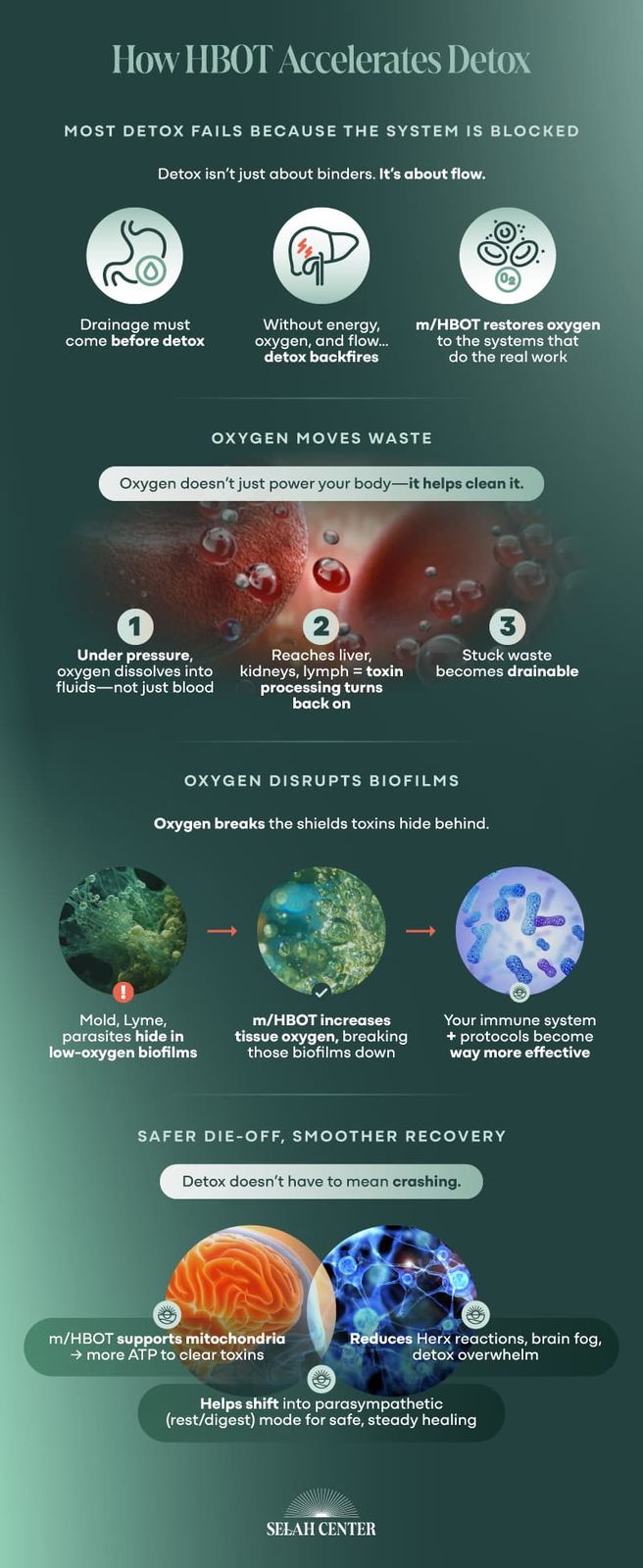
How HBOT Accelerates Detox
Most people think detox is just about binders or liver supplements, and while those can be useful, they only work if your body’s drainage pathways are open.
If your lymph is sluggish, your mitochondria are limping, and your gut is inflamed, detox becomes a trauma trigger, not a healing experience. This is where HBOT shines.
Oxygen Moves Waste (Literally)
Remember, when your body is under pressure in an HBOT chamber, oxygen dissolves directly into your fluids (8, 12, 13, 26, 28, 33). Your plasma, your lymph, even your bile. That means oxygen reaches the liver, kidneys, and lymphatic system in ways it normally can’t.
These systems start doing what they’re designed to do again: process and eliminate toxins.
With more oxygen, your cells can finally offload waste that’s been stuck in storage (aka your fat cells, joints, and brain tissue).
Toxic backlog becomes drainable.
Biofilms Don’t Love Oxygen (and That’s a Good Thing)
Many of the pathogens and toxins in your system are shielded by biofilms. Slimy little protective matrices that act like invisibility cloaks.
Mold, candida, parasites, and even Lyme bacteria use them to hide from your immune system and dodge your protocols, but biofilms are anaerobic, meaning they thrive in low-oxygen environments.
When you flood your system with pressurized oxygen, biofilms start to break down (42, 43). which makes your other detox strategies work way better. (You’ll likely find that binders and drainage tools become more effective after just a few sessions.)
Safer Die-Off, Smoother Recovery
If you’ve ever had a detox reaction that left you flattened (nausea, migraines, body pain, emotional waves), you know how real the Herxheimer response is. HBOT helps buffer this by supporting your mitochondria and nervous system during the process.
More oxygen means more ATP, and this provides more cellular energy to process and eliminate waste without spiraling.
When your body isn’t in a healing state (read: parasympathetic), detox doesn’t just stall, it backfires. HBOT helps shift your body into that healing state. Gently. Reliably. No crash required.

Who Is HBOT A Good Fit For? (And Why You’ve Probably Been Overlooking It)
Most people only stumble onto m/HBOT after running out of conventional options, or after someone whispers about it in a mold recovery forum like it’s some underground secret.
Which kind of is the vibe, unfortunately.
But HBOT isn’t just for scuba divers or burn victims. It’s for people like you. People dealing with real, unresolved symptoms that haven’t budged no matter how clean the diet or how full the supplement drawer.
You might benefit from m/HBOT if:
- You wake up tired, no matter how much sleep you got
- Your brain feels foggy or “slow to boot up”
- You’re hypersensitive to foods, smells, or your environment
- You’re stuck in a die-off loop that never seems to fully clear
- You’ve been diagnosed with “mystery” conditions like fibromyalgia, MCAS, POTS, or CFS
- You’re recovering from mold exposure, Lyme disease, parasites, or chronic viral load
- You’re trying to deto,x but every attempt leaves you crashing
- Your nervous system feels fried, and even basic self-care feels hard
In short: if your body is stuck in survival mode, m/HBOT can help shift you out of it.
Not because it overrides your biology, but because it gives your cells the oxygen they need to finally do the repair work they’ve been trying to complete all along.
This is about resourcing your body so it can respond better to everything you’re already doing. You just have to be open to the possibility that your healing might need more oxygen, and that it’s okay to try something new, even if it’s not mainstream yet.
HBOT or m/HBOT? You Have a Choice at The Selah Center
At The Selah Center, we offer both traditional HBOT and mild hyperbaric oxygen therapy (m/HBOT) because your body deserves options.
Some people do best with the intensity of full clinical HBOT.
Others need a gentler approach to avoid triggering a flare or stress response.
Having both available means we can tailor your healing experience based on your history, sensitivity level, and current goals, not someone else’s protocol.
Whether your system is strong and ready for high-pressure oxygen, or still regaining its footing, we can meet you where you are and support you depending on what your biology is asking for.
Healing takes time, and m/HBOT is a tool you can stick with while your body rebuilds. That’s what makes it powerful.
Not just the pressure. The consistency. And this is why we use m/HBOT at The Selah Center.
You’re Not Broken, You’re Oxygen-Starved
Hyperbaric oxygen therapy doesn’t promise to fix you. That’s not what healing is.
Root-level healing is about removing the obstacles to your body’s own brilliance. Creating the conditions for regeneration, not just symptom management.
m/HBOT is a tool. One that’s been waiting for you to discover it, and one that works best when you’ve already done the work to get your system out of chaos.
If oxygen is the missing piece that helps you reclaim your energy, your clarity, and your life, then you deserve access to it.
When you restore it where it’s been missing (your brain, your gut, your nerves, your cells) things start to change.
Gently. Powerfully. Sustainably.
FAQs
What’s the difference between HBOT and m/HBOT?
HBOT uses higher pressures and 100% oxygen in a hard chamber (usually in hospitals or integrated clinics). m/HBOT uses lower pressures and filtered or enriched air in a soft chamber, making it gentler and more accessible for chronic healing.
Is HBOT safe for sensitive people?
Yes, especially m/HBOT. It’s my go-to for sensitive systems because it supports oxygenation without flooding the body or triggering detox overwhelm.
Will I feel anything during a session?
Most people feel relaxed or sleepy. Some notice a slight pressure change in their ears (like on a plane). Many feel clearer or calmer afterward.
How long is a typical session?
About 60-90 minutes, depending on your goals and tolerance. Shorter sessions are available if you’re just starting or especially sensitive.
How many sessions will I need?
Healing is individual, but most people start with 10-20 sessions. Chronic conditions often benefit from ongoing, consistent use (think: 2-4x/week).
Can I use m/HBOT while detoxing or doing other therapies?
Yes, it often enhances detox and makes other protocols more effective by increasing oxygen delivery and cellular energy.
Does HBOT help with brain fog?
Yes. It improves oxygen delivery to the brain and supports neuroplasticity, helping with focus, mood, memory, and stress resilience.
Can HBOT help with mold, Lyme, or long COVID?
It’s one of the most supportive tools I’ve found for complex chronic cases, especially when other approaches have plateaued.
Is m/HBOT a cure?
Nope. It’s not a magic bullet. But it is a powerful tool that removes barriers to healing and helps your body finally do what it’s been trying to do all along.
References (43)
- Progress on the mechanism and application of hyperbaric oxygen therapy for neurodegenerative diseases - PubMed. Accessed August 16, 2025.
- Ansari S, Gaurav A, Gupta T, et al. Hyperbaric oxygen therapy is effective and safe for femoral head osteonecrosis: a prospective midterm outcome study - PubMed. European Journal of Orthopaedic Surgery & Traumatology.
- Antunes F, Machado M, Garavini A, Carvalho V, de Souza A. The effect of hyperbaric oxygen therapy on psychological state and wound healing: a case report - PubMed. Wound Management & Prevention.
- Bayoumy AB, de Ru JA. Acute acoustic trauma requires urgent treatment within 72 h for optimal outcomes: results from the Dutch armed forces - PubMed. European Archives of Oto-Rhino-Laryngology.
- Brekke FB, Lippe N von der, Røed I, Gudmundsdottir H, Braaten M, Nordheim E. Hyperbaric oxygen treatment in addition to conventional multidisciplinary care in patients with calciphylaxis - PubMed. Clinical Nephrology.
- Calderón P, Quera R, Núñez P, Flores L. Treatment with hyperbaric oxygen in a Crohn’s disease patient - PubMed. Revista Española de Enfermedades Digestivas.
- Canarslan Demir K, Avci AU, Ozgok Kangal MK, et al. Hyperbaric Oxygen Therapy for Managing Cancer Treatment Complications: A Safety Evaluation - PubMed. Medicina.
- Cannellotto M, Yasells García A, Landa MS. Hyperoxia: Effective Mechanism of Hyperbaric Treatment at Mild-Pressure. IJMS. 2024;25(2):777.
- Cha J, Bosco G, Moon RE, Melloni G, Camporesi EM. Hyperbaric Oxygen Therapy for Management of Complex Regional Pain Syndrome - PubMed. The Clinical Journal of Pain.
- Doenyas-Barak K, Kutz I, Lang E, et al. Hyperbaric Oxygen Therapy for Veterans With Combat-Associated Posttraumatic Stress Disorder: A Randomized, Sham-Controlled Clinical Trial - PubMed. The Journal of Clinical Psychiatry.
- Elsharnoby AM, El-Barbary AH, Eldeeb AE, Hassan HA. Resistant Chronic Venous Leg Ulcers: Effect of Adjuvant Systemic Hyperbaric Oxygen Therapy Versus Venous Intervention Alone - PubMed. The International Journal of Lower Extremity Wounds.
- Ezra N, Dang K, Heuser G. Improvement of attention span and reaction time with hyperbaric oxygen treatment in patients with toxic injury due to mold exposure. Eur J Clin Microbiol Infect Dis. 2010;30(1):1-6.
- Feng J, Zhu C, Zou J, Zhang L. Hyperbaric Oxygen Therapy for the Treatment of Bone-Related Diseases.
- Ginzarly M, Khairy S, Wang Z, Qureshi U, Zaitoun R, Efrati S. Efficacy of hyperbaric oxygen therapy in treating fibromyalgia linked to childhood trauma after late-onset and over a decade of symptoms: a case report. J Med Case Reports. 2025;19(1).
- Hadanny A, Sasson E, Copel L, et al. Physical enhancement of older adults using hyperbaric oxygen: a randomized controlled trial. BMC Geriatr. 2024;24(1).
- Hadanny A, Zilberman-Itskovich S, Catalogna M, et al. Long term outcomes of hyperbaric oxygen therapy in post covid condition: longitudinal follow-up of a randomized controlled trial. Sci Rep. 2024;14(1).
- Hajek M, Jor O, Tlapak J, Chmelar D. Hyperbaric Oxygen Therapy in Children with Brain Injury: A Retrospective Case Series - PubMed. International Journal of Medical Sciences.
- Han Y, Huang L, Wu J, Wan G, Mo L, Liu A. The Role of Astrocytes in Poststroke Rehabilitation. Brain and Behavior. 2025;15(6).
- Kanowski S, Shen Y, Klein T, Moeller MJ, Koch A, Theilig F. Impact of hyperbaric oxygenation therapy (HBOT) on renal function in human. Sci Rep. 2025;15(1).
- Lawati YKA, Hazra D, Al-Alawi AKA, Abri SA. A Rare Case of Acute Carbon Monoxide Toxicity Mimicking Stroke and Successfully Managed with Hyperbaric Oxygen Therapy - PubMed. Sultan Qaboos University Medical Journal.
- Li B, Li H, Chen H, et al. Utilizing Hyperbaric Oxygen Therapy to Improve Cognitive Function in Patients With Alzheimer’s Disease by Activating Autophagy-Related Signaling Pathways - PubMed. Physiological Research.
- Li TH, Lin CH, Peng CK, et al. Effects of adjuvant hyperbaric oxygen therapy and real-time fluorescent imaging on deep sternal wound infection: a retrospective study - PubMed. Journal of Wound Care.
- Li Y, Sun R, Lai C, et al. Hyperbaric oxygen therapy ameliorates intestinal and systematic inflammation by modulating dysbiosis of the gut microbiota in Crohn’s disease. J Transl Med. 2024;22(1).
- Mortada H, González JE, Husseiny YM, et al. Efficacy of Hyperbaric Oxygen Therapy as an Adjunct in Aesthetic Surgery: A Systematic Review and Meta-analysis of Postoperative Outcomes and Complications - PubMed. Aesthetic Plastic Surgery.
- Nguyen H, Hai T, Nguyen Van T, et al. Results of treating patients with cellulitis by hyperbaric oxygen: a case-control study - PubMed. Accessed August 16, 2025.
- Öztürk M, Demir L. Evaluation of Patients Undergoing Hyperbaric Oxygen Therapy for Earthquake-Related Tissue Injuries - PubMed. Disaster Medicine and Public Health Preparedness.
- Park S, Marinov A, Clarke H, et al. Safety of hyperbaric oxygen therapy in non-emergent patients with a history of seizures: A retrospective cohort study - PubMed. PLOS ONE.
- Patel SH, Joseph JJ, Gandhi TR, Mehta A, Shah A. A Review of Emerging Evidence and Clinical Applications of Hyperbaric Oxygen Therapy - PubMed. Journal of Intensive Care Medicine.
- Peng S, Zeng L, Lu B, Li Q. Application of hyperbaric oxygen therapy in the treatment of spinal cord injury: insights from preclinical to clinical evidence - PubMed. Medical Gas Research.
- Schiavo S, Brenna CTA, Albertini L, Djaiani G, Marinov A, Katznelson R. Safety of hyperbaric oxygen therapy in patients with heart failure: A retrospective cohort study - PubMed. PLOS ONE.
- Sun Y, Ren T, Ji X. Influence of hyperbaric oxygen therapy-specialized care on limb motor function and mental state of cerebral infarction patients with hemiplegia - PubMed. Technology and Health Care.
- Tu P, Halili X, Zhang S, Yang J, Xiao Y. The effectiveness of hyperbaric oxygen therapy in children and adolescents and with autism spectrum disorders: A systematic review and meta-analysis - PubMed. Progress in Neuro-Psychopharmacology and Biological Psychiatry.
- Weng J, Ren H, Guo Q, et al. Efficacy and safety of hyperbaric oxygen therapy for diabetes peripheral neuropathy A systematic review and meta-analysis. Published online September 4, 2024.
- Zhang R, Guo H, Tang S, Zuo J, Shi X. Effect of hyperbaric oxygen therapy on postoperative muscle damage and inflammation following total knee arthroplasty: a randomized controlled trial. Sci Rep. 2025;15(1).
- Zhao H, Zhang T, Wang Y, Fang Y. Early Hyperbaric Oxygen Therapy Promotes Recovery of Blunt Liver Injury in Rats via Inhibiting Inflammatory Response and Oxidative Stress. Int J Med Sci. 2025;22(9):2174-2185.
- Figueroa XA, Wright JK. Hyperbaric oxygen: B-level evidence in mild traumatic brain injury clinical trials - PubMed. Neurology.
- Guenneugues R, Henckes A, Mansourati V, Mansourati J. Effects of hyperbaric exposure on mechanical and electronic parameters of implantable cardioverter-defibrillators - PubMed. Europace.
- Chen SY, Tsuneyama K, Yen MH, Lee JT, Chen JL, Huang SM. Hyperbaric oxygen suppressed tumor progression through the improvement of tumor hypoxia and induction of tumor apoptosis in A549-cell-transferred lung cancer - PubMed. Scientific Reports.
- Naviaux RK. Perspective: Cell danger response Biology—The new science that connects environmental health with mitochondria and the rising tide of chronic illness. Mitochondrion. 2020;51:40-45.
- Naviaux RK. Metabolic features of the cell danger response. Mitochondrion. 2013;16:7-17.
- Naviaux RK. Incomplete Healing as a Cause of Aging: The Role of Mitochondria and the Cell Danger Response. Biology. 2019;8(2):27.
- Rowen R. Ozone and oxidation therapies as a solution to the emerging crisis in infectious disease management: a review of current knowledge and experience. Med Gas Res. 2019;9(4):232.
- Rowen R. Ozone therapy as a primary and sole treatment for acute bacterial infection: case report. Med Gas Res. 2018;8(3):121.
This article is for general education and is not a substitute for personal medical advice.