You wake up already tired.
You stare at the ceiling and try to remember if you actually slept or just laid there cycling through to-do lists and symptoms.
The brain fog is thick. The energy crash is inevitable. Even basic tasks seem uphill.
And most days, you still feel like your body is running on 3%. Like there’s a layer of sludge between you and the life you remember living.
You’re not dramatic. You’re not doing it wrong. You’re not unmotivated, negative, or “not trying hard enough.”
You’re dealing with a body that’s overburdened and under-oxygenated. A terrain that’s been signaling for years, and now it’s shouting.
This is where ozone therapy comes in. To help your cells breathe again, your immune system recalibrate, and your brain wake back up. But not all ozone therapies are created equal, and they definitely don’t do the same job.
There’s a newer, deeper form of ozone therapy that’s called EBOO (Extracorporeal Blood Oxygenation and Ozonation).
If you’ve got:
- Persistent fatigue that no amount of coffee can touch,
- Recurring infections that keep interrupting your healing
- Toxic load from mold, metals, or mystery exposures that you can feel but can’t seem to clear
It’s time to understand the differences between EBOO therapy and traditional ozone therapy.
Key Takeaways
- Your symptoms aren’t random. They may be rooted in oxygen deficiency and toxic load.
- EBOO therapy is the heavy hitter in the ozone therapy world.
- The “right therapy” is the one your body can actually receive.
What Is Ozone?
Ozone is oxygen’s more activated, slightly sassier cousin with three oxygen atoms instead of two (3, 6, 7, 11, 14, 20, 21, 22).
Ozone’s been used medically for over a century, first to clean wounds in WWI, then to help infections, circulation, and chronic disease, long before it became the misunderstood molecule it is today (3, 6, 7, 11, 14, 21, 22, 24).
In the right dose, medical ozone helps your immune system recalibrate, kicks pathogens where it counts, and clears out the cellular junk that’s been clogging your system.
How Can Ozone Therapy Help?
Let’s start with the research. Studies show ozone therapy can help:
- Anti-aging (14)
- Anti-tumor (14)
- Atrial fibrillation (18)
- Bacterial infections (1, 7, 13, 14, 15, 21, 22, 26, 29)
- Cardiovascular disease (3, 14, 15, 18, 26)
- Diabetic foot (14, 15, 29)
- Fibromyalgia (12, 15, 25, 27)
- Frozen shoulder (12)
- Fungal infections (13, 14, 21, 26, 29)
- Gut microbiome issues (14)
- IgA Deficiencies (10)
- Intervertebral disc herniation (7, 14)
- Low back pain (5, 7, 12)
- MS (15)
- Neurodegenerative diseases – these are things like Parkinson’s and Alzheimer’s (15)
- Osteoarthritis of the knee (7, 24)
- Osteonecrosis of the femoral head (12)
- Pressure ulcers (14, 15)
- Skin disease – think: eczema, dermatitis, and psoriasis (4, 14, 15)
- Tissue ischemia (3, 13, 20, 25)
- TMJ (7)
- Viral infections (7, 13, 14, 15, 21, 26, 29)
- Wound healing & tissue repair (4, 7, 12, 14, 15, 18, 24, 29)
- And more
Now that you’ve got the scoop on what ozone is (and what it’s not), let’s talk EBOO therapy; aka ozone therapy’s deep-cleaning, full-body upgrade.
Then we’ll break down how it stacks up against other forms of ozone therapy, so you can stop guessing and start choosing what fits your healing path.
What Is EBOO Therapy?
Imagine if your blood could take a spa day. Not the kind where it lounges in cucumbers and lavender oil (though wouldn’t that be nice?). We’re talking deep cellular renewal: Oxygenated, filtered, and recharged in real time.
That’s the essence of EBOO, short for Extracorporeal Blood Oxygenation and Ozonation (2, 4, 8, 19, 23).
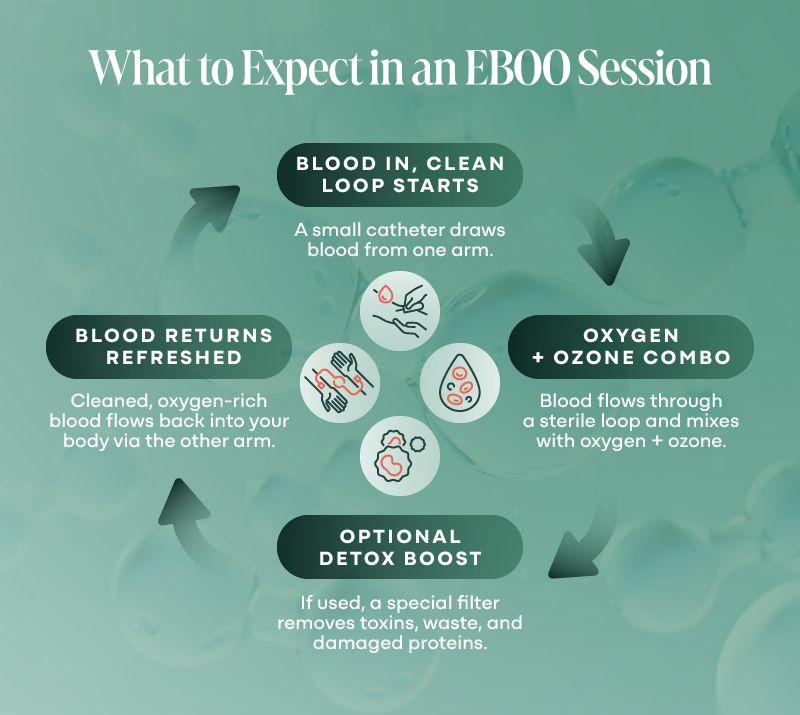
It’s a therapy where your blood leaves your body, gets infused with medical-grade oxygen and ozone, sometimes passed through a filter, and then returned to your body, all within the same session (2, 4, 8, 19, 23).
What Happens in an EBOO Therapy Session?
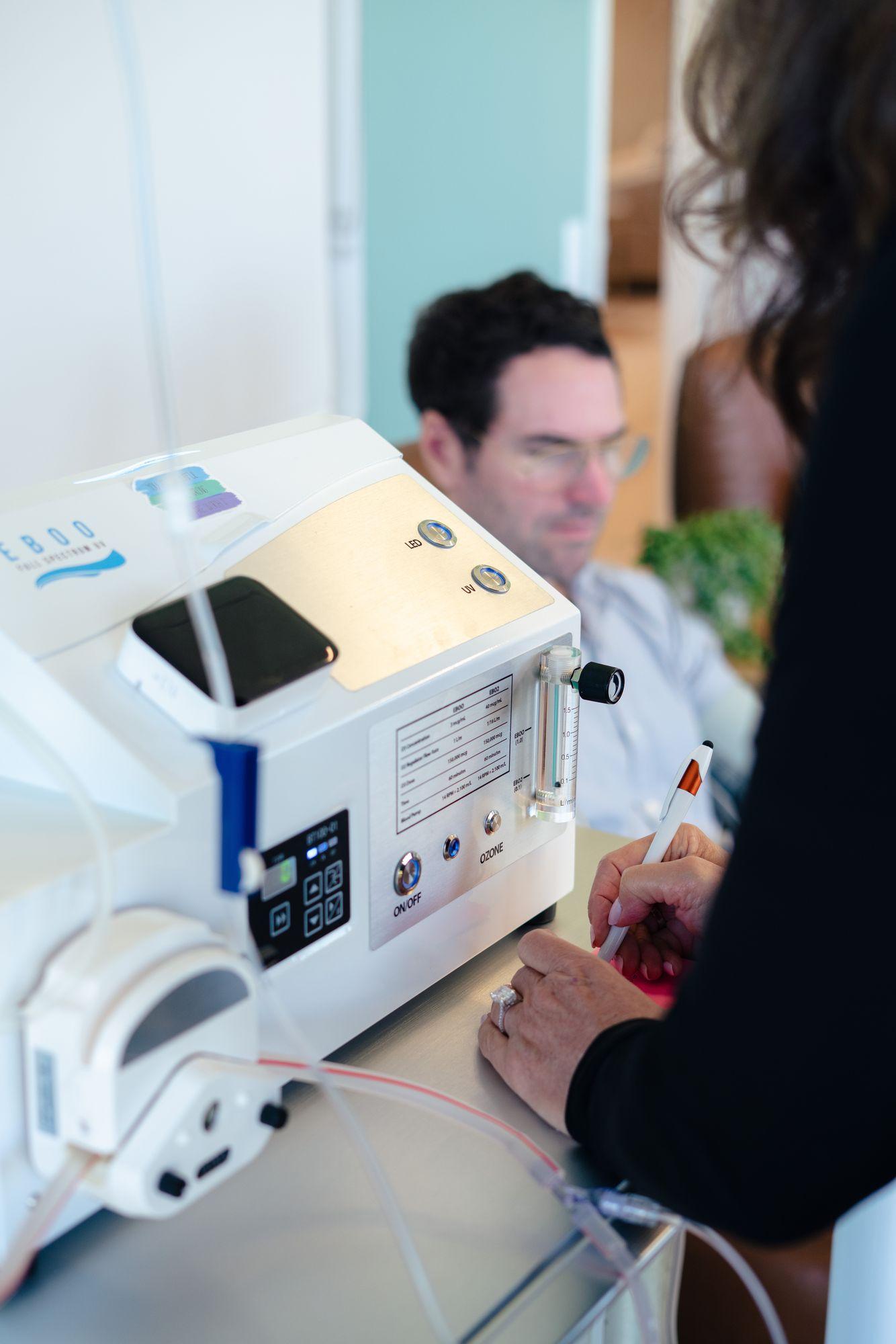
- A small catheter is placed in one arm to draw blood.
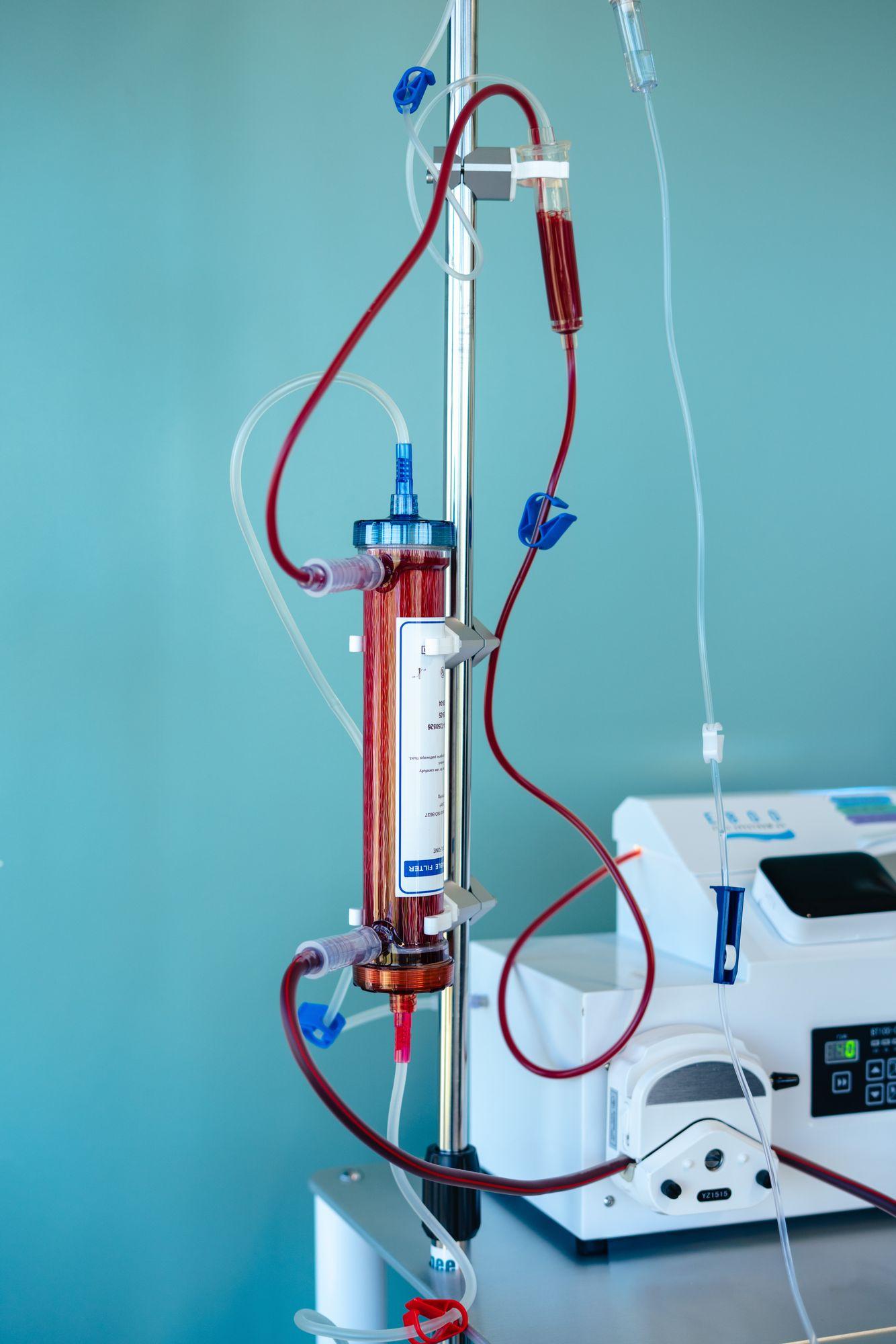
- That blood flows into a sterile, closed-loop system where it’s exposed to oxygen and ozone gas.
- If the practitioner uses an ultrafiltration membrane, it can also pull out cellular waste, damaged proteins, and toxins—stuff your liver and kidneys may have been too overwhelmed to handle on their own.
- The ozonated blood is returned to your body through the other arm, now carrying more oxygen and less junk.
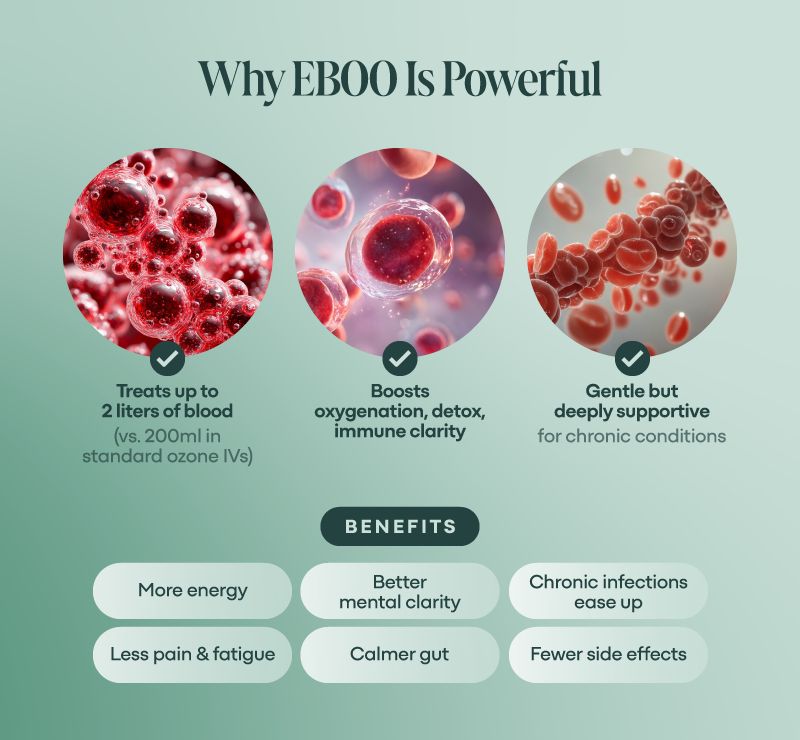
Each session treats up to 2 liters of blood (that’s about half your total volume) (2, 4, 8, 19, 23).
For comparison, a traditional ozone IV might treat 200ml, max.
Benefits Clients Often Report Post-EBOO Therapy:
- Body aches and chronic fatigue begin to shift (4, 5, 6, 11, 12, 24, 25, 26)
- Chronic infections feel less chronic (1, 3, 7, 10, 11, 12, 13, 14, 15, 21, 22, 24, 26, 27, 29)
- Gut issues begin to resolve as systemic inflammation drops (6, 7, 10, 12, 13, 18, 21, 22, 24, 25, 27)
- More energy as oxidative stress is reduced (3, 4, 10, 13, 15, 20, 25, 27, 29) and antioxidant levels are increased (3, 4, 6, 13, 14, 18, 29, 21, 22, 24, 27, 29)
- Mental clarity can return as your brain is less inflamed (no more chasing thoughts like fireflies)
- All without significant side effects (5, 6, 10, 13, 19, 21, 22, 23, 25, 27)
Is it magic? No. But it can feel that way because for some people, it’s the first time in years they experience real relief without triggering more symptom chaos.
Different Types of Ozone Therapy (And What They Do)
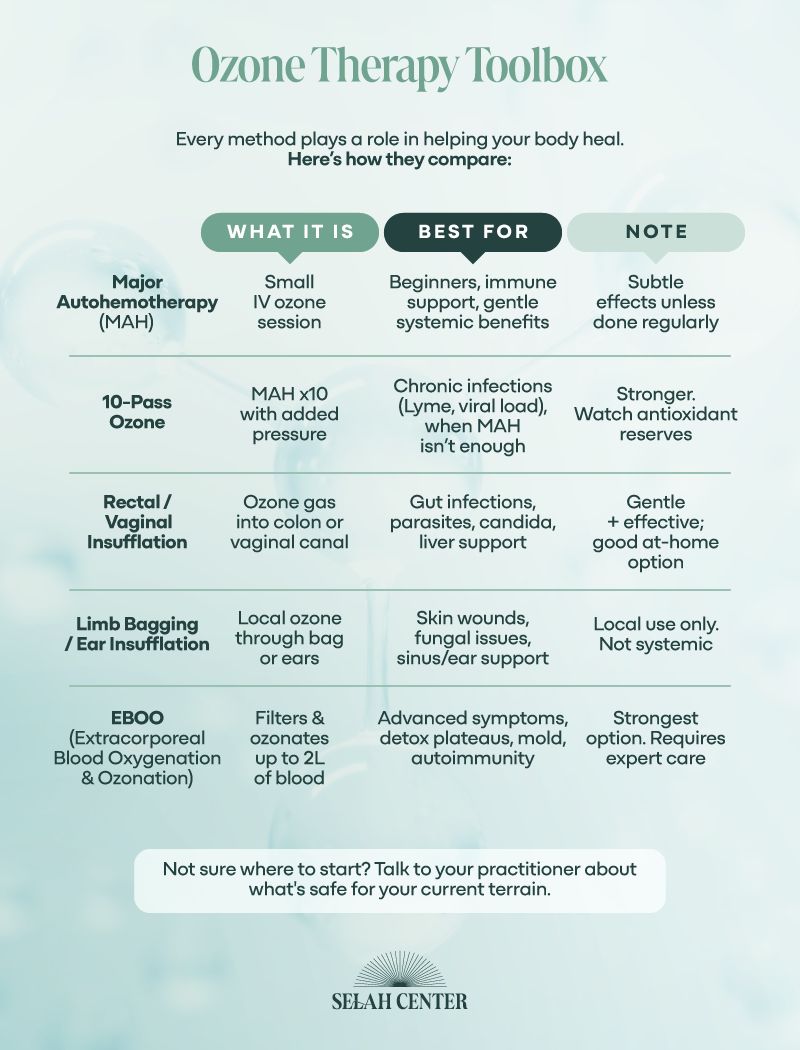
Ozone therapy isn’t a one-size-fits-all solution. It’s more like a toolbox, and each tool plays a different role in helping your body regain flow, function, and vitality.
Let’s demystify the most common types of ozone therapy, so you can understand which options make sense right now for your healing journey.
Major Autohemotherapy (MAH)
This is the OG ozone IV. A small amount of blood (typically 100–200ml) is drawn from your vein, mixed with ozone gas, and reinfused into your bloodstream (14, 17, 20, 26, 27).
Great for:
- Early-stage support
- Building resilience without overwhelming the system
- An introduction to ozone’s systemic benefits
Limitations:
- Only a small volume of blood is treated, so results are subtle unless repeated frequently
- Not ideal for high toxic loads or deeper infections
- Can crash super sensitive people
10-Pass Ozone Therapy
This is MAH’s overachieving cousin. Your blood is drawn and ozonated in 10 rapid passes, increasing the dose and intensity (1, 19, 27).
Some practitioners call it “hyperbaric ozone therapy” due to the pressure used in the process.
Great for:
- Those who’ve already tolerated MAH and need a deeper push
- Individuals dealing with viral load, Lyme, or other stealth pathogens
Limitations:
- Takes 60-90 minutes
- Higher risk of oxidative stress if your antioxidant reserves are depleted
- Doesn’t filter toxins, it just recirculates them
Rectal (or Vaginal) Insufflation
Yes, it’s exactly what it sounds like.
Ozone gas is administered through a catheter into the colon or vaginal canal (10, 27).
Great for:
- Gut infections, SIBO, parasites, candida
- Liver support via the portal vein
- A powerful yet gentle at-home option
Limitations:
- Requires consistency to see systemic effects
- Not everyone’s cup of tea (but way more accessible than IVs)
Limb Bagging & Ear Insufflation
Localized options where ozone is applied externally for wounds, infections, or upper respiratory issues (12).
Great for:
- Skin infections, ulcers, nail fungus
- Sinus support, ear infections
Limitations:
- Not systemic—targeted benefits only
EBOO (Extracorporeal Blood Oxygenation & Ozonation)
This is the whole-body upgrade.
EBOO therapy treats more blood, more deeply, and more thoroughly than any other option listed above (2, 4, 8, 19, 23).
EBOO can result in ozone uptake three times higher than any other form (23).
Great for:
- Advanced chronic symptoms
- Detox plateaus that won’t budge
- Systemic infections, mold, metals, autoimmunity
Limitations:
- More expensive
- Requires experienced practitioners and proper sequencing (don’t start here if you’re not ready)
- There are some contraindications, such as coagulation disorders, sickle cell anemia, hyperthyroidism, and G6PC or G6P-ase deficiencies (2, 6, 12, 14)
TL;DR: If MAH is dipping your toe in the ozone pool, EBOO therapy is diving in head-first, with a full filtration system strapped to your back.
Now that you’ve got the lay of the land, let’s break down how EBOO therapy compares to traditional ozone therapy in terms of whole-body impact.
EBOO vs. Autohemotherapy – A Full-Body Showdown
If you’re asking, “Why would I spend more time (and money) on EBOO therapy when I can just do a regular ozone IV?” you’re not wrong to wonder.
Autohemotherapy (like MAH or 10-pass) and EBOO therapy both use medical-grade ozone, but they don’t play the same role.
Let’s compare them side by side:
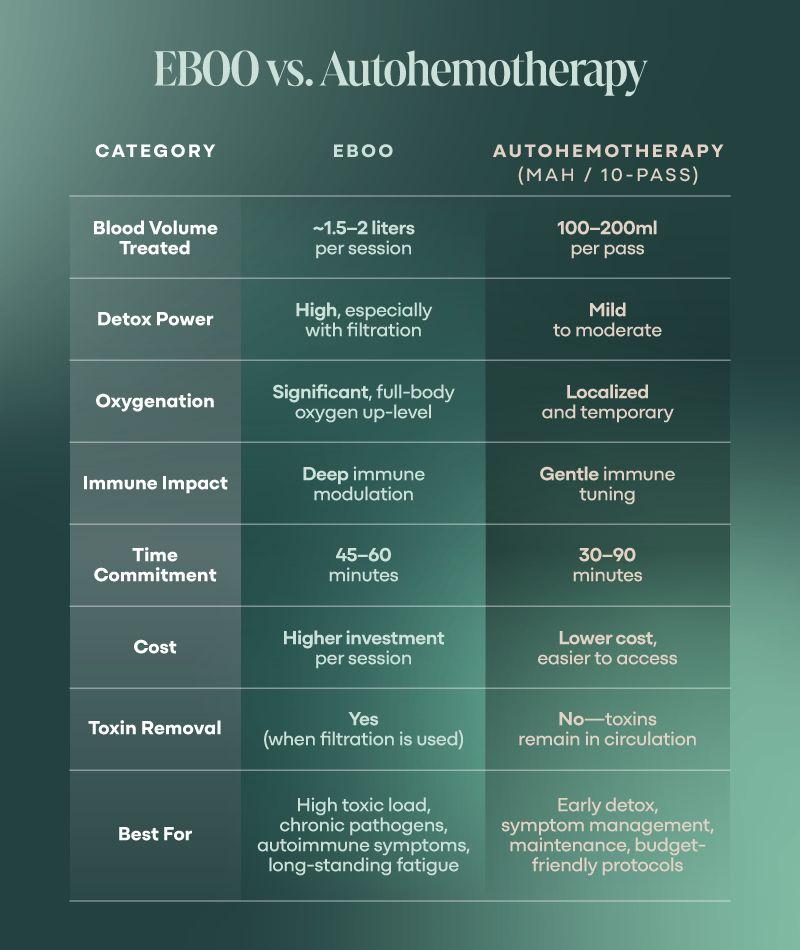
When done right, EBOO therapy can deliver dramatic systemic relief in a fraction of the time.
It’s particularly helpful if you’ve tried traditional ozone and didn’t feel the shift.
But don’t ditch MAH entirely; there’s still a time and place for it. More on that in a bit.
When EBOO Therapy Shines : Key Advantages
EBOO isn’t casual. It’s not the “let me squeeze this in after Pilates” kind of therapy.
It’s the “I’m ready to get my life back and stop managing symptoms” kind of therapy.
When done correctly—at the right point in your healing timeline—EBOO can create profound shifts in energy, clarity, and immune regulation (1, 3, 7, 10, 11, 12, 13, 14, 15, 21, 22, 24, 26, 27, 29).
It’s a detox catalyst for bodies that are stuck in chronic overload, spinning their wheels with gentler approaches.
Who Benefits Most From EBOO Therapy?
EBOO therapy can benefit many people. Here’s where this therapy shines:
1. You’ve got a high toxic burden:
Whether it’s mold, heavy metals, pesticides, or chemical sensitivities, your body is likely drowning in what it hasn’t been able to offload.
EBOO helps clear the bloodstream and reset the terrain without lighting your system on fire.
2. Your fatigue is bone-deep:
We’re not talking “I need a nap” tired. We’re talking mitochondria-on-strike, can’t-get-out-of-bed tired.
EBOO therapy reduces oxidative stress (3, 4, 10, 13, 15, 20, 25, 27, 29), increases oxygen delivery to tissues (hello, microcirculation), and helps reawaken cellular energy production (11, 13, 14, 15, 20, 21).
You’re not lazy. You’re suffocating at the cellular level. EBOO brings the oxygen.
3. You’ve got stealth infections (or suspect you do):
Lyme, Epstein-Barr, HHV6, chronic candida, parasites, you name it.
EBOO therapy supports your immune system without triggering autoimmune backlash or creating massive die-off (again, if drainage is ready) (1, 3, 7, 10, 11, 12, 13, 14, 15, 21, 22, 24, 26, 27, 29).
4. You’re dealing with autoimmunity:
Instead of shutting down immune responses like immunosuppressants, ozone helps modulate and restore immune intelligence (1, 3, 7, 10, 11, 12, 13, 14, 15, 21, 22, 24, 26, 27, 29).
It teaches your body to stop overreacting and start coordinating.
This is huge for autoimmune conditions like Hashimoto’s, lupus, or rheumatoid arthritis.
5. You’ve plateaued in your healing:
Been doing “all the things” and still stuck?
EBOO therapy can act as a system reboot, especially if you’re already supporting drainage, nervous system regulation, and mitochondrial repair.
One caveat: You’ve got to be ready.
EBOO is only helpful if your body has exit routes for toxins. That means:
- You’re pooping regularly
- Your lymph is moving
- You can sweat
- Your nervous system isn’t stuck in fight-or-flight
If those boxes aren’t checked yet, you risk stirring up a toxic storm your body can’t process.
(EBOO therapy doesn’t fix blocked drainage; it magnifies whatever terrain you bring to the table.)
When Traditional Ozone Therapy May Be the Better Fit
I love EBOO therapy. But I wouldn’t hand you the keys to a race car if you’ve never driven a manual transmission.
There are plenty of cases where traditional ozone therapy is the smarter, safer starting point.
And sometimes, it’s exactly what your body needs to build resilience before you attempt a deeper detox like EBOO therapy.
Let’s talk about when to keep it simple.
You’re New to Ozone or to Detox in General
If this is your first rodeo, starting with major autohemotherapy (MAH) or rectal insufflation gives your body a chance to respond without freaking out.
Think of it as building physical, emotional, and energetic capacity.
You wouldn’t start a workout routine with deadlifts and hill sprints. You start with walking.
Same goes here.
You’re Currently in a Crash or Flare
If your nervous system is dysregulated, your sleep is off, or you’re barely keeping up with day-to-day demands, EBOO might be too much too soon.
Autohemotherapy allows you to gently support immune modulation and detox without pushing your body past its capacity (12, 23, 29).
Reminder: More aggressive doesn’t mean more effective, especially if you’re in survival mode.
You’re Still Opening Drainage
If you’re constipated, retaining water, dealing with skin eruptions, or your lymph feels like sludge, that’s your body sending you a signal in the only language it knows.
Use traditional ozone (or even simply sauna with binders and Vagus nerve work) to get your elimination pathways flowing before diving into anything like EBOO therapy.
Because if toxins don’t have a clear exit, they’ll recirculate.
And you’ll feel worse, not better.
You’re Looking for Maintenance or Budget-Conscious Support
Not everyone lives near a clinic that offers EBOO.
MAH, rectal insufflation, and even ozone saunas can be affordable, accessible ways to maintain progress, especially after you’ve already done deeper detox work.
Many clients rotate traditional ozone into their regular protocols between EBOO therapy series.
Your Terrain Isn’t Fully Mapped Yet
If you don’t yet have a clear picture of what’s driving your chronic symptoms (whether it’s parasites, mold, heavy metals, or stealth infections) it’s better to start slow and steady.
Let your body give you feedback in layers, not all at once.
Traditional ozone helps you listen before you leap.
Bottom Line
EBOO therapy isn’t necessarily better than traditional ozone therapy; it’s different.
And sequencing matters.
If you’re not sure where to begin, start where you are and use what you have.
Remember: there’s always a next step, and you don’t have to figure out the whole staircase today.

EBOO Therapy as Part of a Healing Strategy – Not a One-Off
EBOO isn’t meant to be a one-and-done fix.
If you’re hoping to walk out of a single session floating on a detox high and never need support again, this probably isn’t the treatment for you.
But if you understand that healing happens in layers, and you’re ready to think strategically, not reactively, EBOO therapy can absolutely be a game-changing tool.
Think of EBOO Therapy as a Phase, Not a Forever Plan.
It’s most powerful when:
- Your detox pathways are open
- Your nervous system isn’t in constant crisis
- You’ve done some groundwork already
- You’re prepared to support the process after the session (because detox isn’t over when the IV comes out)
Recommended Frequency (When Your Body is Ready)
- 1x/week for 4–6 weeks is a great starting protocol
- Followed by a maintenance rhythm based on response—maybe monthly, seasonally, or during heavier detox phases
More is not always better.
Your mitochondria, immune system, and elimination pathways need time to respond, not just react.
What to Pair It With: Because EBOO Therapy Doesn’t Work in Isolation
To get the most out of EBOO, it needs to live in the middle of a well-orchestrated healing plan.
That means supporting:
- Drainage pathways (binders, colon work, castor oil packs, lymph movement)
- Nervous system regulation (vagal tone, breathwork, safe relationships, reducing EMF exposure)
- Mitochondrial repair (minerals, targeted antioxidants, structured sleep)
- Biofield and emotional terrain (trauma release, coherence practices, light therapy)
If that sounds overwhelming, remember: you don’t have to do all the things at once, just the right things, in the right order.
Red Flags: When to Pause or Slow Down
EBOO therapy is powerful. That’s why you’ve got to listen closely after a session:
- If your sleep crashes
- If you feel wired-but-tired or flat-out exhausted
- If you’re constipated, bloated, or your skin flares
- If you’re emotionally raw or reactive
These are signs your body is still in detox response, not detox recovery.
This doesn’t mean EBOO was the wrong call. It means more isn’t better. Better is better. And better starts with checking in before pushing forward.
EBOO therapy is a brilliant tool, but it’s not a shortcut.
It’s a way to help your body remember what thriving feels like when the right supports are in place.
Your Body Isn’t Broken, It’s Just Asking for Help
If you’ve made it this far, I know one thing for sure: you’re not here for quick fixes.
You’re here for truth, tools, and traction.
You’ve lived with symptoms that don’t make sense on paper.
You’ve done more research than your last five practitioners combined.
And still, you’re carrying a body that feels older than it should, heavier than it used to, and way more complicated than it ever was before.
I get it. Because I’ve been there.
And here’s what I want you to remember: You’re not fragile. You’re just overwhelmed. And your body is still on your side.
Whether EBOO therapy is your next step, or you’re starting with something simpler like autohemotherapy or rectal ozone, you’re making a powerful move. Because you’re learning to partner with your body, not just patch it.
So, whether you’re booking an EBOO session, scheduling a gut reset, or just drinking your binder and taking a nap (valid); you’re showing up.
And that’s what healing actually looks like.
Let’s keep going.
FAQs
1. What’s the difference between EBOO therapy and a regular ozone IV?
A traditional ozone IV treats about 100–200ml of blood. EBOO therapy treats up to 2 liters—while also oxygenating and filtering your blood. It’s like the difference between spot cleaning a carpet and deep-steaming the whole house.
2. Is EBOO therapy safe?
Yes, when done by an experienced practitioner and at the right point in your healing journey, EBOO therapy is safe. That said, it’s not for everyone. If your detox pathways are blocked or you’re in a crash, it might be too much too soon.
3. Who should NOT do EBOO therapy?
People with blood clotting disorders, G6PD or G6P-ase deficiencies, uncontrolled hyperthyroidism, or sickle cell anemia should avoid EBOO therapy. Always consult a qualified practitioner to rule out contraindications.
4. How will I feel after a session?
Some people feel lighter, clearer, and more energized within hours. Others experience a mild detox response (fatigue, emotional release, skin flare). This usually resolves within 24–72 hours if your drainage is open.
5. How many sessions will I need?
Most protocols recommend 4–6 sessions, once per week. Maintenance depends on your terrain and goals—it might be seasonal or monthly, depending on your body’s response.
6. Does EBOO therapy treat infections like Lyme or EBV?
EBOO therapydoesn’t “kill” infections directly; it helps modulate your immune system so it can finally respond appropriately. Clients often report fewer flare-ups, clearer brain function, and more consistent energy.
7. How does EBOO therapy support detox?
It removes toxins, cellular waste, damaged proteins, and pathogens from your blood in real time (if filtration is used). It also boosts oxygen and reduces inflammation so your detox organs can finally catch up.
8. Can I pair EBOO with other therapies?
Yes, and you should. EBOO works best when paired with binders, castor oil packs, lymph work, sauna, mitochondrial support, and nervous system regulation. It’s part of a system, not a solo act.
9. What if I feel worse after EBOO?
That’s often a sign your body wasn’t fully ready. Pause. Focus on drainage, hydration, rest, and binders. Don’t push through. The goal isn’t to detox harder; it’s to detox smarter.
References (29)
- Treatment of peritonitis using ozone and hydropressive technology - PubMed. Accessed July 22, 2025.
- Bocci V, Zanardi I, Travagli V, Di Paolo N. Oxygenation-ozonation of blood during extracorporeal circulation: in vitro efficiency of a new gas exchange device - PubMed. Artificial Organs.
- Bocci VA, Zanardi I, Travagli V. Ozone acting on human blood yields a hormetic dose-response relationship. J Transl Med. 2011;9(1).
- Calunga JL, Paz Y, Menéndez S, Martínez A, Hernández A. [Rectal ozone therapy for patients with pulmonary emphysema] - PubMed. Accessed July 22, 2025.
- Costa T, Linhares D, Ribeiro Da Silva M, Neves N. Ozone therapy for low back pain. A systematic review - PubMed. Accessed July 22, 2025.
- de Sire A, Agostini F, Lippi L, et al. Oxygen–Ozone Therapy in the Rehabilitation Field:State of the Art on Mechanisms of Action, Safety and Effectiveness in Patients with Musculoskeletal Disorders. Biomolecules. 2021;11(3):356.
- de Sire A, Marotta N, Ferrillo M, et al. Oxygen-Ozone Therapy for Reducing Pro-Inflammatory Cytokines Serum Levels in Musculoskeletal and Temporomandibular Disorders: A Comprehensive Review. IJMS. 2022;23(5):2528.
- Di Paolo N, Bocci V, Cappelletti F, Petrini G, Gaggiotti E. Necrotizing fasciitis successfully treated with extracorporeal blood oxygenation and ozonization (EBOO) - PubMed. The International Journal of Artificial Organs.
- Di Paolo N, Bocci V, Salvo DP, et al. Extracorporeal blood oxygenation and ozonation (EBOO): a controlled trial in patients with peripheral artery disease - PubMed. The International Journal of Artificial Organs.
- Díaz-Luis J, Menéndez-Cepero S, Macías-Abraham C, Fariñas-Rodríguez L. Systemic Ozone Therapy by Rectal Insufflation for Immunoglobulin A Deficiency. Published online January 29, 2018.
- He S, Chen W, Xia J, et al. Effects of ozone autohemotherapy on blood VEGF, TGF-β and PDGF levels after finger replantation - PubMed. Annals of Palliative Medicine.
- Jeyaraman M, Jeyaraman N, Ramasubramanian S, et al. Ozone therapy in musculoskeletal medicine: a comprehensive review. Eur J Med Res. 2024;29(1).
- Smith N, Wilson A, Gandhi J, Vatsia S. Ozone therapy: An overview of pharmacodynamics, current research, and clinical utility. Med Gas Res. 2017;7(3):212.
- Liu L, Zeng L, Gao L, Zeng J, Lu J. Ozone therapy for skin diseases: Cellular and molecular mechanisms. International Wound Journal. 2022;20(6):2376-2385.
- Masan J, Sramka M, Rabarova D, Lett NE. The possibilities of using the effects of ozone therapy in neurology - PubMed. Accessed July 22, 2025.
- Mehraban F, Seyedarabi A. Molecular effects of ozone on amino acids and proteins, especially human hemoglobin and albumin, and the need to personalize ozone concentration in major ozone autohemotherapy - PubMed. Critical Reviews in Clinical Laboratory Sciences.
- Niño-Sandoval TC, Rocha NS, Sarinho FW, Vasconcelos CF de M, Vasconcelos AF de M, Vasconcelos BC. Effect of autohemotherapy in the treatment of viral infections - a systematic review - PubMed. Public Health.
- Pandolfi S, Chirumbolo S, Franzini M, Tirelli U, Valdenassi L. Oxygen–ozone therapy for myocardial ischemic stroke and cardiovascular disorders. Medical Gas Research. 2024;15(1):36-43.
- Paolo D, Bocci V, Garosi G, et al. Extracorporeal blood oxygenation and ozonation (EBOO) in man. preliminary report - PubMed. Accessed July 22, 2025.
- Peng K, Wu X, Li Z, et al. Major ozonated autohemotherapy promotes the recovery of upper limb motor function in patients with acute cerebral infarction. Published online July 23, 2014.
- Rowen R. Ozone and oxidation therapies as a solution to the emerging crisis in infectious disease management: a review of current knowledge and experience. Med Gas Res. 2019;9(4):232.
- Rowen R. Ozone therapy as a primary and sole treatment for acute bacterial infection: case report. Med Gas Res. 2018;8(3):121.
- Rowen RJ, Grabovac S, Su TB. Ozone dialysis delivers three or more times the ozone than other forms of ozone blood treatment. Medical Gas Research. 2023;13(2):67-71.
- Sconza C, Di Matteo B, Queirazza P, et al. Ozone Therapy versus Hyaluronic Acid Injections for Pain Relief in Patients with Knee Osteoarthritis: Preliminary Findings on Molecular and Clinical Outcomes from a Randomized Controlled Trial. IJMS. 2023;24(10):8788.
- Sconza C, Leonardi G, Kon E, et al. Oxygen-ozone therapy for the treatment of low back pain: a systematic review of randomized controlled trials. Published online October 12, 2021.
- Shallenberger F. Principles and Applications of Ozone Therapy - A Practical Guideline for Physicians. Accessed August 11, 2025.
- Tirelli U, Cirrito C, Pavanello M, et al. Ozone therapy in 65 patients with fibromyalgia- an effective therapy. Published online March 5, 2019.
- Tylicki L, Biedunkiewicz B, Rachon D, et al. No effects of ozonated autohemotherapy on inflammation response in hemodialyzed patients. Mediators of Inflammation. 2004;13(5-6):377-380.
- Viebahn-Haensler R, León Fernández OS. Ozone in Medicine. The Low-Dose Ozone Concept and Its Basic Biochemical Mechanisms of Action in Chronic Inflammatory Diseases. IJMS. 2021;22(15):7890.
This article is for general education and is not a substitute for personal medical advice.