There’s a kind of tired that sleep doesn’t fix.
It’s the kind where your brain feels like it’s underwater before noon.
Where your nervous system’s either on edge or completely checked out. There’s no in between.
It’s not burnout from “doing too much.”
It’s the kind of exhaustion that comes from carrying something invisible.
Something your labs never seem to catch. Something your doctor politely shrugs at. Something you can feel under the surface, dragging everything down.
That’s the weight of an overwhelmed internal terrain. And your blood is carrying the burden.
Toxins, cellular waste, pathogens, mold fragments, and byproducts from that Epstein-Barr reactivation you didn’t know you had. It all adds up.
And when your system is too jammed up to filter it out efficiently, your body starts communicating with you in symptoms.
Not to punish you. To get your attention. Not to shut you down. To ask for support.
This is where EBOO therapy comes in, as a tool to give your blood a fresh start, so your body can finally do what it’s been trying to do all along: Heal.
In this article, we’ll look at what EBOO therapy is (in plain English), where it came from, how it supports your internal terrain, who it’s a great fit for (and who it’s not), and why the approach matters just as much as the therapy itself.
If your body’s been trying to get your attention and you’re ready to hear what it’s asking for, this might be your next step.
Key Takeaways
- That bone-deep exhaustion you feel isn’t from laziness or age; it’s from an overloaded internal terrain.
- Ozone therapy has deep roots in medicine.
- EBOO therapy is a full-system reset tool, but not everyone is ready for it.
What Is EBOO Therapy?
EBOO stands for Extracorporeal Blood Oxygenation and Ozonation (2, 4, 8, 19, 23), and it’s a surprisingly gentle process that gives your body a chance to thrive.
It cleans up your blood and upgrades your terrain.
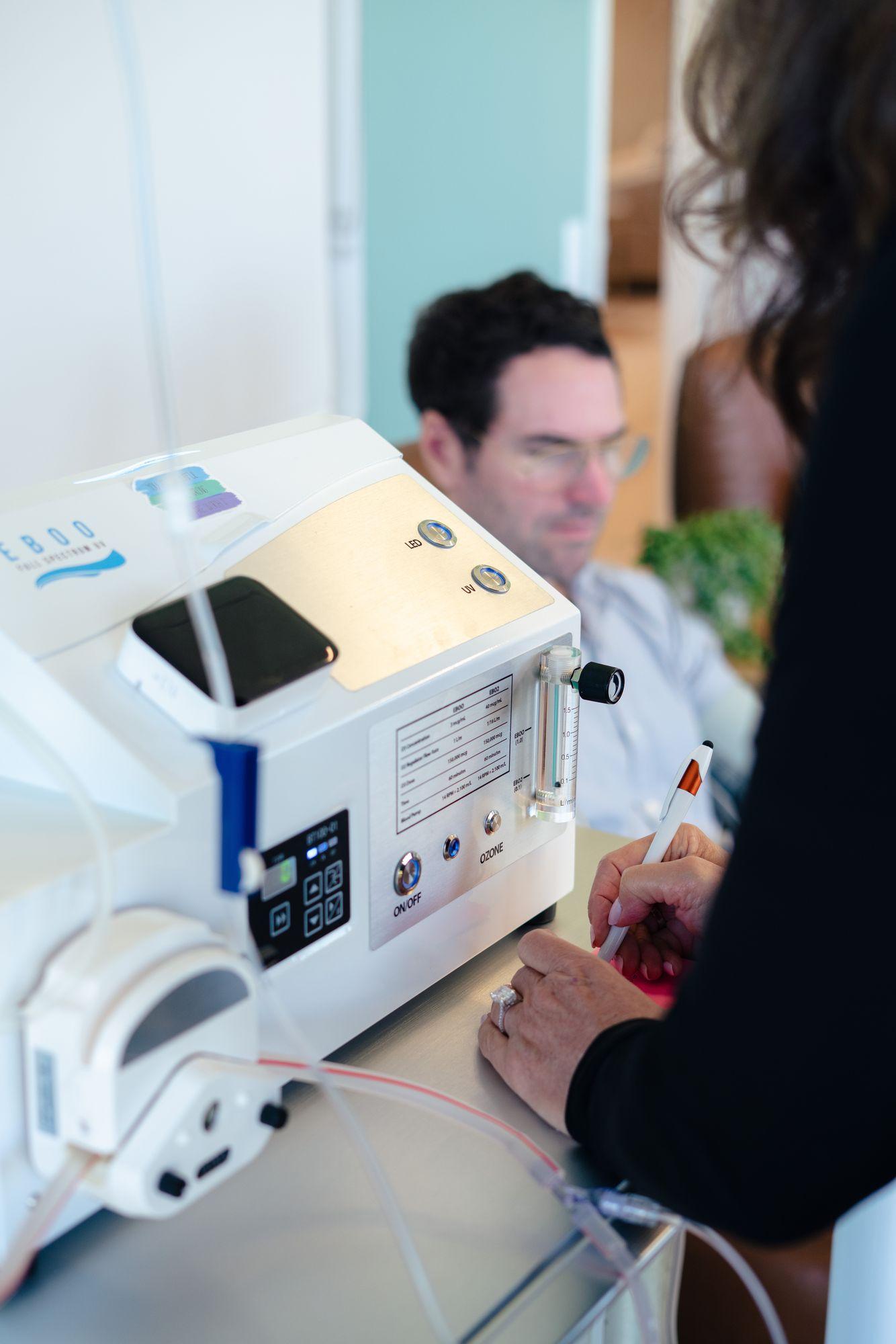
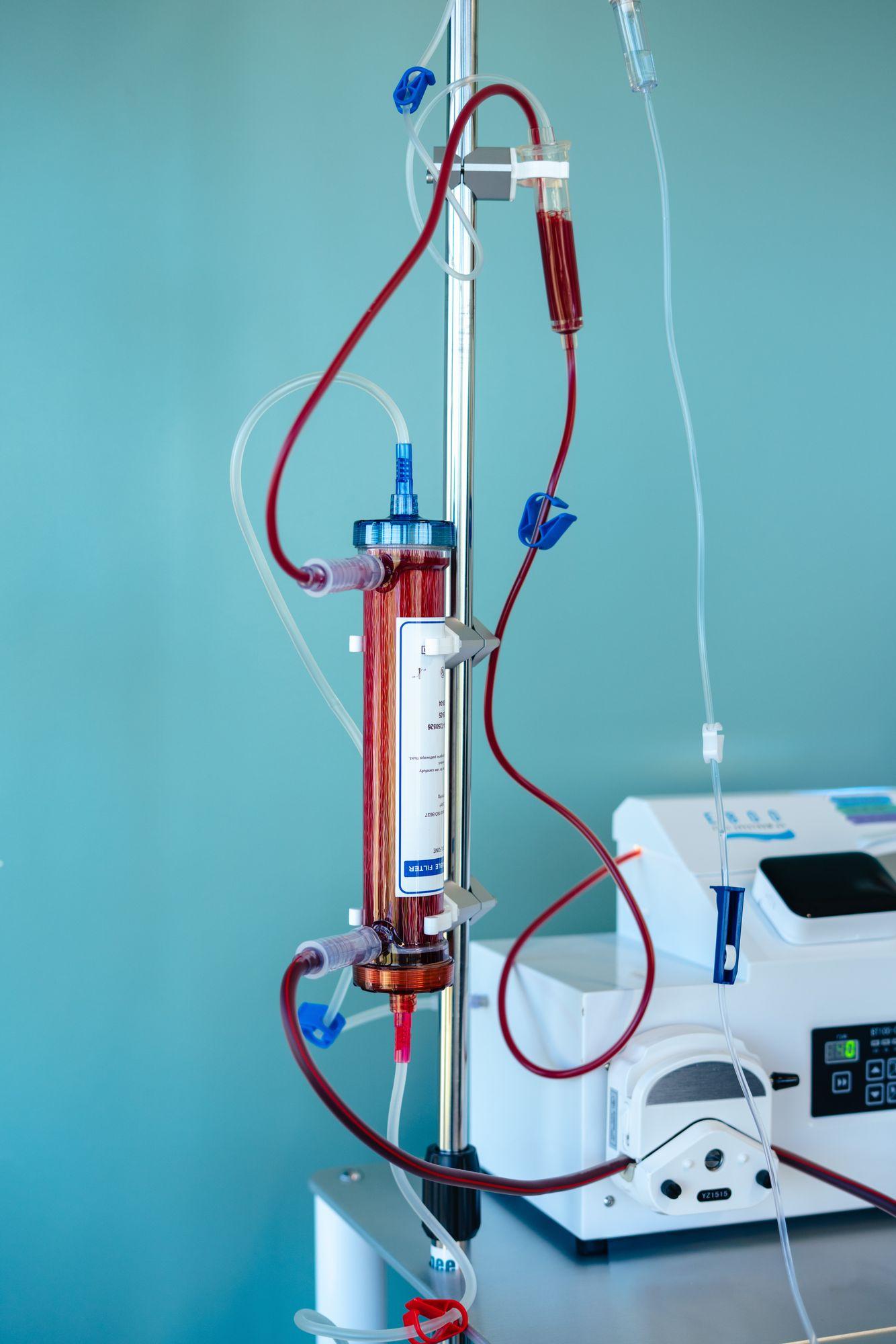
Here’s how it works: Your blood is drawn, filtered, infused with medical-grade oxygen and ozone, and then returned to your body; all in a closed-loop system that runs for about 45-60 minutes (2, 4, 8, 19, 23).
You’re lying comfortably the whole time, chatting with your practitioner, or listening to spa music.
This isn’t “oxygen therapy” like a nasal cannula in a hospital, and it’s not ozone in a sauna or sauna bag (though those can be supportive too).
This is direct systemic support where ozone’s oxidative effects gently disrupt toxins, pathogens, and cellular debris, while medical oxygen nourishes your tissues and mitochondria.
By helping to remove the static in your system (think microbial byproducts, waste proteins, mold fragments, chemical residue) it frees up your immune system to recalibrate.
Your mitochondria can start producing real energy again, your cells can communicate more clearly, your drainage pathways get a break from carrying the whole detox burden on their own.
And here’s the best part: Your body already knows what to do next. EBOO therapy just clears the interference.
A Short History of Oxygen & Ozone Therapy (Because Context Matters)
Ozone therapy isn’t new. It might just be new to you, and maybe to your doctor, depending on how many decades behind the research they are.
But long before EBOO therapy became one of the most advanced tools in regenerative medicine, its core ingredients (oxygen and ozone) had a long, fascinating history of use in healing.
A Brief Timeline: From Lightning Storms to Modern Medicine
- 1840: Ozone is discovered by German chemist Christian Friedrich Schönbein, who notices the sharp smell in the air after lightning storms. He names it from the Greek word ozein, meaning “to smell.”
- Late 1800s: Physicians begin experimenting with ozone’s antimicrobial properties for sterilizing surgical tools and treating infections.
- 1896: Nikola Tesla patents the first ozone generator in the U.S. and starts selling devices for medical use (6, 21, 22). Yes, that Tesla.
- World War I (1914–1918): Ozone is used in field hospitals to clean wounds and speed up healing, especially in gangrenous tissue.
- 1920s–1930s: German doctors like Erwin Payr and Hans Wolff develop early ozone blood therapies, setting the stage for today’s autohemotherapy.
- 1950s–1970s: Eastern Europe and Cuba embrace ozone in clinical settings, treating chronic infections, circulatory issues, and inflammatory diseases.
- 1980s–1990s: The development of 10-pass ozone therapy and MAH (Major Autohemotherapy) refines delivery methods. Ozone research expands globally, especially in Italy and Brazil.
- 2000s–Present: Enter EBOO therapy, which takes the best of previous ozone therapies and combines it with medical oxygen and filtration for deeper systemic support (2, 4, 8, 19, 23). Research begins to focus on ozone’s ability to modulate the immune system, improve oxygen metabolism, and support detox.
‘Wait! Isn’t Ozone Bad for You?’
Yes, inhaled ozone in polluted air is harmful to lung tissue, just like water is dangerous if you breathe it instead of drink it.
But in controlled clinical use, ozone becomes a powerful bioregulatory ally.
It’s used to:
- modulate immune response (3, 10, 11, 12, 13, 14, 15, 21, 22, 24, 27)
- support mitochondrial function (13, 14, 18, 21, 23)
- reduce chronic microbial and toxin load (1, 7, 13, 14, 15, 21, 22, 26, 29)
- upregulate your antioxidant system (3, 4, 6, 13, 14, 18, 20, 21, 22, 24, 27, 29)
- and improve microcirculation and cellular oxygen utilization (11, 13, 14, 15, 20, 21)
How EBOO Therapy Reboots Your Internal Terrain
Your symptoms are a form of communication from an overwhelmed system doing its best to adapt.
But you can’t heal in a swamp.
If your internal terrain is stagnant, inflamed, and carrying a backlog of pathogens and toxins, your body’s natural repair mechanisms get drowned out by the noise.
No amount of celery juice is going to unjam a system that’s still drowning in mold fragments, mycotoxins, pesticides, and cellular debris.
That’s where EBOO therapy becomes a powerful reset tool, because it helps clear what’s in the way, so healing can start flowing again.
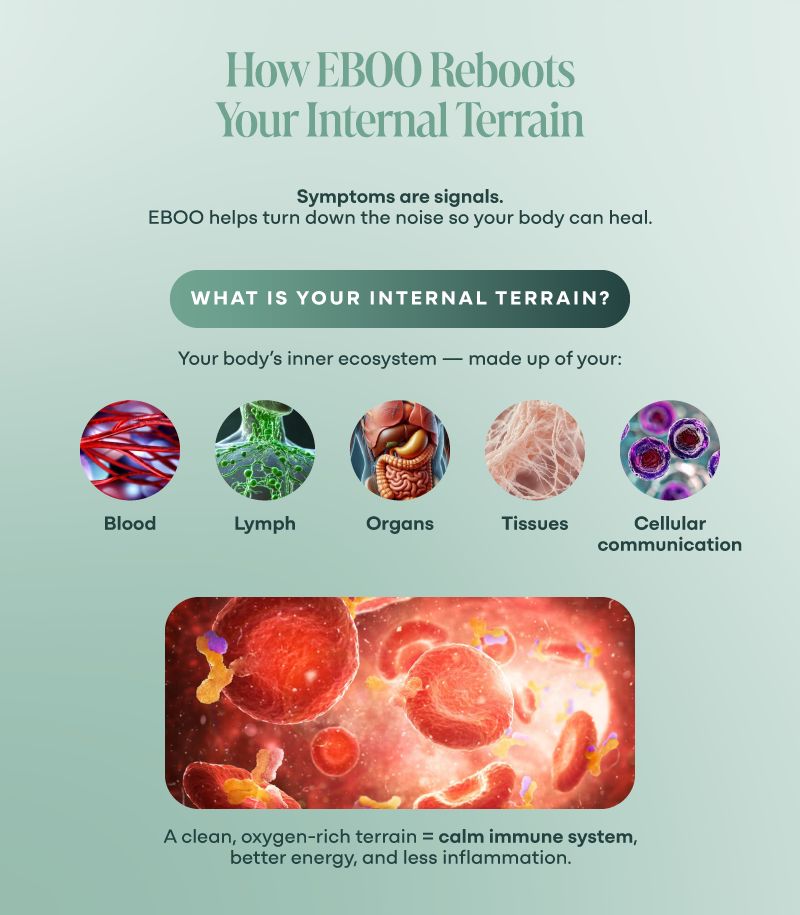
What Is Your Internal Terrain?
Think of it like your body’s ecosystem. The combined state of your blood, lymph, organs, tissues, and cellular communication networks.
When your terrain is clean, oxygen-rich, and well-regulated, your immune system can respond instead of overreacting.
Your energy stabilizes. Your brain starts coming back online. Your gut stops acting like a drama queen.
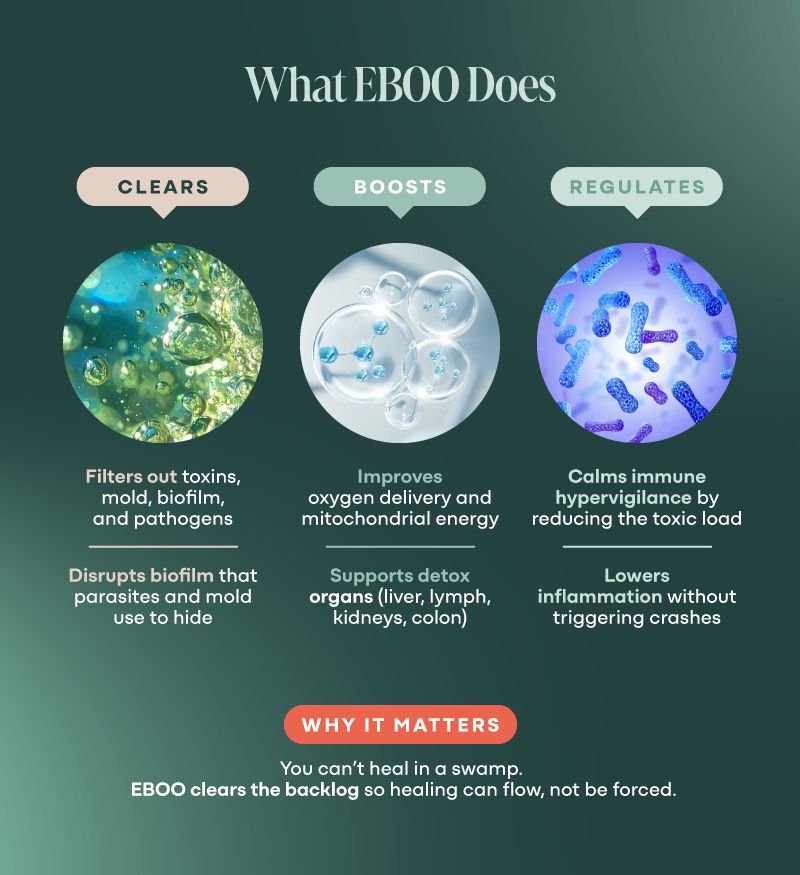
How EBOO Therapy Supports Your Terrain (2, 4, 8, 19, 23)
Let’s break it down:
- Filters out waste: EBOO helps remove inflammatory byproducts, endotoxins, mold fragments, and leftover junk from stealth infections.
- Improves oxygen delivery: Better oxygen means better mitochondrial function and real cellular energy (not borrowed stress hormones). (11, 13, 14, 15, 20, 21)
- Reduces microbial load: Ozone helps neutralize pathogens without triggering the kind of immune overreaction that leaves you bedridden. (1, 7, 13, 14, 15, 21, 22, 26, 29)
- Clears biofilm: That sneaky sludge parasites and mold use to hide? Ozone (and EBOO therapy) help disrupt it (21, 22).
- Supports detox pathways: When you lower the burden, your liver, kidneys, lymph, and colon can stop white-knuckling it.
- Calms the immune system: By removing the triggers, it reduces hypervigilance and inflammation. (3, 10, 11, 12, 13, 14, 15, 21, 22, 24, 27)
EBOO therapy restores flow so your systems can talk to each other again.
Your symptoms are a signal and EBOO helps turn down the static so you can finally hear the message.
Who Can Benefit from EBOO Therapy?
EBOO therapy isn’t for everyone, but if you’re here, there’s a good chance it’s for you.
You don’t need a formal diagnosis or a pile of test results to know something’s been off for a long time.
You can feel the stagnation in your system.
You’ve already done the surface-level stuff like the supplements, the sauna, and the binders.
But no matter how “clean” your inputs are, you still feel like you’re stuck in molasses.
That’s because healing isn’t just about what you put in, it’s about clearing what’s in the way.
EBOO helps when your body has been carrying too much, for too long and needs help catching up.
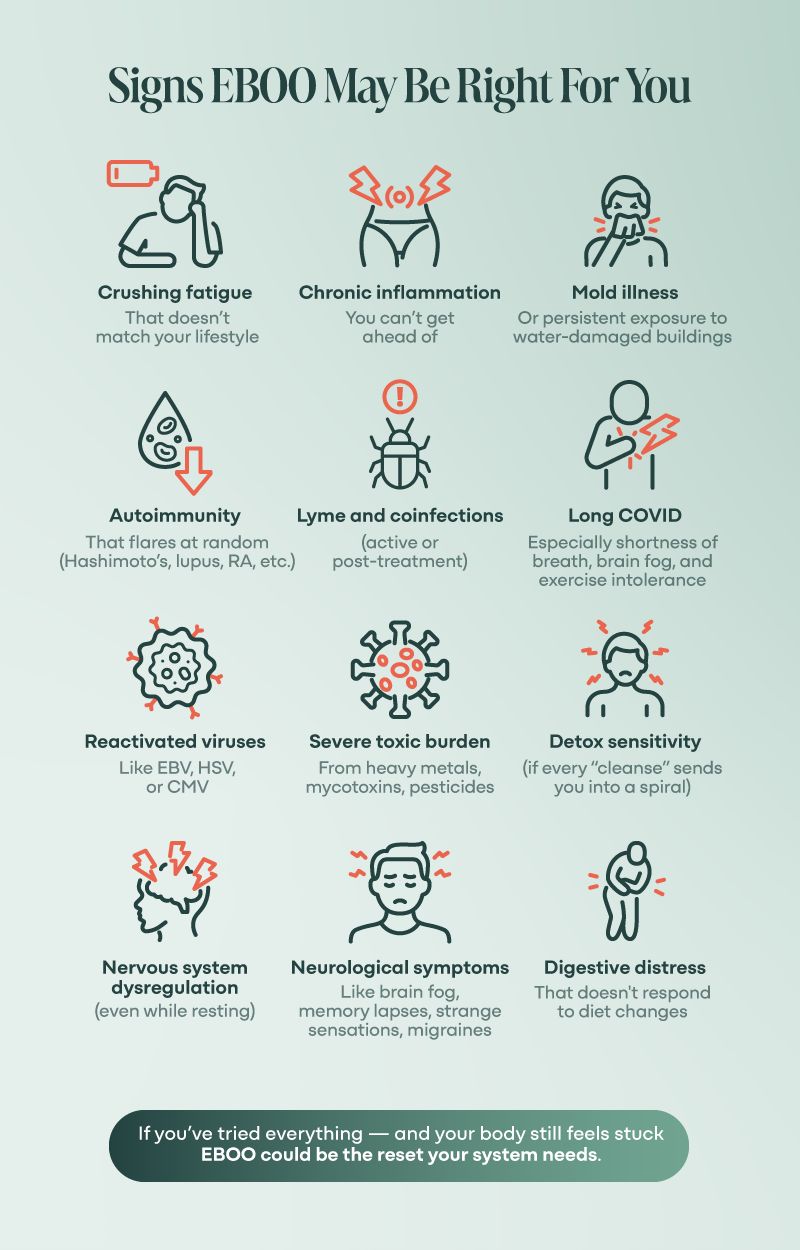
EBOO Therapy May Work for You if You Have:
- Crushing fatigue that doesn’t match your lifestyle
- Chronic inflammation you can’t get ahead of
- Mold illness or persistent exposure to water-damaged buildings
- Autoimmunity that flares at random (Hashimoto’s, lupus, RA, etc.)
- Lyme and coinfections, whether active or post-treatment
- Long COVID, especially if you’re dealing with shortness of breath, brain fog, and exercise intolerance
- Reactivated viruses like EBV, HSV, or CMV
- Severe toxic burden from heavy metals, mycotoxins, pesticides, you name it
- Detox sensitivity (if every “cleanse” sends you into a spiral)
- Joint pain and muscle aches
- Nervous system dysregulation (you’re constantly in fight-or-flight, even while resting)
- Neurological symptoms like brain fog, memory lapses, strange sensations, migraines
- Digestive distress that doesn’t respond to diet changes anymore
You don’t need to check every box. One or two of these, paired with a sense that your system is “stuck in the mud,” is enough.
Also Consider EBOO if You’re:
- Starting a new protocol (it can reduce reactivity and improve outcomes)
- Post-surgical or recovering from an infection and want to support faster repair
- Prepping for a deep parasite, mold, or metal detox, and want to stabilize your terrain first
- Managing complex chronic symptoms that don’t respond to standard approaches
- Emotionally exhausted from constantly coping instead of healing
Quick PSA: You don’t need to have a label to qualify for support. Symptoms are enough. Being ready is enough.
In the next section, we’ll talk about how to know if EBOO is the right fit for your body right now, and how to think about this therapy in the context of your healing journey (because forcing it is never the vibe).
Is EBOO Right for You? Let’s Get Specific
You’re not here because you’re curious about ozone.
You’re here because something in your system won’t let you ignore it anymore.
And you’re wondering, “Is this finally the thing that will help?”
Let’s slow that question down because healing is about tuning in and asking: What does my body need in this season?
EBOO might be a powerful next step if this sounds like you:
Ask Yourself:
- Have you tried detox protocols, only to get wiped out after one binder or one sauna session?
- Do you have labs that look “fine,” but your body is clearly not fine?
- Do symptoms move around your body like a game of whack-a-mole?
- Does your nervous system feel like it’s stuck in survival mode, no matter how much you rest?
- Do you have infections that keep “coming back,” no matter what protocol you try?
- Do you feel worse after doing the “right” things like eating clean, exercising, or taking methylated B vitamins?
- Have you stopped telling people how bad you feel because you’re tired of explaining it?
Have You Said Any (or All) of These:
“I don’t detox well”
“My body doesn’t bounce back”
“I’m reacting to everything”
“I’m sensitive to life”
If that’s the conversation inside your head, your terrain is asking for help.
What EBOO Is Not
- It’s not a magic wand.
- It’s not a way to “force detox faster.”
- And it’s not a substitute for foundational work like nervous system regulation, drainage, or gut support.
But when your body’s already doing all it can and the backlog is too big, EBOO can act like the assistant who comes in, rolls up their sleeves, and says, “Hey, I’ve got this part. You go rest for a minute.”
And that can make all the difference.
What Are the Contraindications for EBOO? (Let’s Keep It Safe)
Before you say, “Sign me up, take all my blood,” let’s pause.
Because as powerful as EBOO can be, it’s not a one-size-fits-all solution.
And pushing ahead when your body isn’t ready? That’s not healing.
That’s just another version of burnout, this time with ozone.
So, let’s talk about when EBOO might not be the right tool, at least not right now.
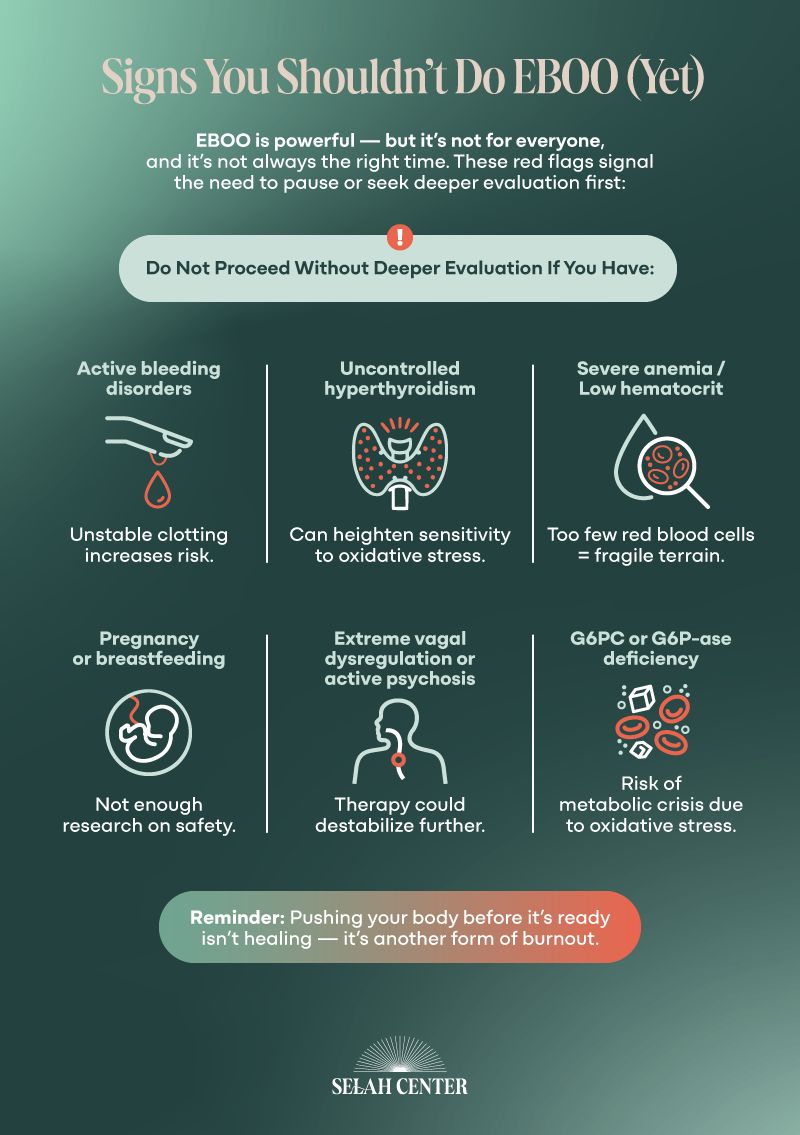
Who Should Not Do EBOO Without Deeper Evaluation:
- Active bleeding disorders: If your blood clotting is unstable, this therapy may increase your risk (6, 14).
- Uncontrolled hyperthyroidism: This condition can amplify your sensitivity to oxidative therapies (6, 12, 14).
- Severe anemia or low hematocrit: If your red blood cell count is too low, EBOO can stress an already fragile system (12).
- Pregnancy or breastfeeding: Not because it’s dangerous, but because we simply don’t have enough research (6).
- Extreme vagal dysregulation or active psychosis: EBOO engages the nervous and immune systems so if your system is already destabilized, a gentler entry point is better.
- G6PC or G6P-ase Deficiency: Your body can’t properly convert stored glycogen into usable glucose, and it causes a metabolic bottleneck. Since ozone therapies like EBOO briefly increase oxidative stress to trigger healing, that stress can overwhelm already fragile glucose regulation, creating dangerous hypoglycemia or metabolic collapse (6, 12, 14).
What to Do if You’re Not Sure
If you’re nodding “yes” to any of those, don’t write yourself off.
You’re not disqualified from healing; you just need a different starting line.
We begin with drainage, mitochondrial support, and nervous system regulation first, then return to EBOO when your body is better resourced to receive it.
“Contraindicated” doesn’t necessarily mean never.
It can mean not yet, or not in this state.
That’s why working with a practitioner who understands the full picture of your terrain (not just how to run the machine) is essential.
And that brings us to what makes The Selah Center approach to EBOO so different from the plug-and-play versions you might see elsewhere.
The Selah Center Difference
You can’t “machine” your way out of a dysregulated body.
We’ve seen people walk into ozone clinics, get hooked up to EBOO with zero prep, no terrain assessment, and no understanding of what their body was holding onto and walk out even more depleted.
Because when the body isn’t ready, detox becomes a trauma trigger.
That’s not how we do things here.
What Makes Our Approach Different?
At The Selah Center, EBOO is never a standalone therapy.
It’s a carefully timed, strategically integrated step in your healing process.
Here’s what that looks like:
- Terrain-first assessments: We map your internal landscape first: drainage, lymph, nervous system tone, toxin load, microbial activity, and more. We don’t guess.
- System prep before ozone: If your body can’t drain, can’t sleep, or can’t stay regulated, we support those foundations first. Otherwise, EBOO is just stress dressed up as an intervention.
- Advanced protocols: We pair EBOO with supportive tools like FSM (frequency-specific microcurrent), mineral support, limbic retraining, biofield repair, and tailored supplementation to guide your body through the shift, not just into it.
- Deep practitioner presence: You’re not handed off to a tech who learned EBOO in a weekend course. You’re working with a team that understands complex chronic conditions from a bioregulatory lens because we’ve lived it, studied it, and helped thousands navigate it.
This isn’t about one fancy therapy.
It’s about using the right tool at the right time, in the right sequence, for your unique biology.
You’re not a protocol. You’re a person. And we treat you like one.
You Don’t Need to Push Harder. You Need to Clear the Path.
If there’s one thing I want you to take away from this, it’s this: You’re not failing at healing. Your system is just full.
It’s full of messages that haven’t been heard.
Full of toxins that haven’t had a way out.
Full of effort.
Of survival mode.
Of “doing allll the things” without enough relief to show for it.
EBOO therapy isn’t the hero of your story.
You are.
It’s just a tool that can help you get your body back online, so your healing isn’t a daily uphill battle anymore.
When your blood gets a deep clean — when your terrain is cleared, your cells are breathing again, and your mitochondria are finally heard — that’s when the needle moves.
That’s when healing gets traction.
That’s when your energy, focus, and resilience start to return for real.
Your body remembers how to heal.
Are you ready?

FAQs
What does EBOO stand for?
Extracorporeal Blood Oxygenation and Ozonation. AKA, filtering, ozonating, and oxygenating your blood outside the body before returning it cleaner and more functional.
Is this the same as ozone sauna or 10-pass ozone?
Nope. Those are supportive therapies, but EBOO adds real-time blood filtration and oxygenation, making it deeper, broader, and more systemic.
Will I feel anything during the session?
Most people feel relaxed or even euphoric. Some notice clarity or energy soon after. You’re lying down the whole time; no drama, no pain.
How long does a session take?
About 45–60 minutes, depending on your flow rate and individual needs. Longer if you count the spa music nap you’ll inevitably take.
Will I detox hard after?
Not if your body is ready. At The Selah Center, we prep your terrain first so EBOO supports your system instead of overwhelming it.
How many sessions do I need?
That depends on your goals, terrain, and how burdened your system is. Some people do a short series. Others integrate it seasonally or alongside deeper protocols.I
Is it safe?
When done properly and at the right time in your healing process, EBOO therapy is safe. But it’s not for everyone. (See the contraindications.)
Can EBOO help with mold, Lyme, or long COVID?
Yes, especially when paired with foundational support. EBOO reduces microbial load, clears debris, and stabilizes the terrain so your protocols work better.
Is there research to back this up?
Tons on ozone’s ability to modulate the immune system, support mitochondria, reduce biofilm, and improve oxygen utilization. (PubMed fans, I see you.)
Is this something I can do at any clinic?
Technically, yes. But without terrain prep and practitioner expertise, it’s like putting race fuel in a car with no brakes. Context is everything and that’s where The Selah Center shines.
References (29)
- Treatment of peritonitis using ozone and hydropressive technology - PubMed. Accessed July 22, 2025.
- Bocci V, Zanardi I, Travagli V, Di Paolo N. Oxygenation-ozonation of blood during extracorporeal circulation: in vitro efficiency of a new gas exchange device - PubMed. Artificial Organs.
- Bocci VA, Zanardi I, Travagli V. Ozone acting on human blood yields a hormetic dose-response relationship. J Transl Med. 2011;9(1).
- Calunga JL, Paz Y, Menéndez S, Martínez A, Hernández A. [Rectal ozone therapy for patients with pulmonary emphysema] - PubMed. Accessed July 22, 2025.
- Costa T, Linhares D, Ribeiro Da Silva M, Neves N. Ozone therapy for low back pain. A systematic review - PubMed. Accessed July 22, 2025.
- de Sire A, Agostini F, Lippi L, et al. Oxygen–Ozone Therapy in the Rehabilitation Field:State of the Art on Mechanisms of Action, Safety and Effectiveness in Patients with Musculoskeletal Disorders. Biomolecules. 2021;11(3):356.
- de Sire A, Marotta N, Ferrillo M, et al. Oxygen-Ozone Therapy for Reducing Pro-Inflammatory Cytokines Serum Levels in Musculoskeletal and Temporomandibular Disorders: A Comprehensive Review. IJMS. 2022;23(5):2528.
- Di Paolo N, Bocci V, Cappelletti F, Petrini G, Gaggiotti E. Necrotizing fasciitis successfully treated with extracorporeal blood oxygenation and ozonization (EBOO) - PubMed. The International Journal of Artificial Organs.
- Di Paolo N, Bocci V, Salvo DP, et al. Extracorporeal blood oxygenation and ozonation (EBOO): a controlled trial in patients with peripheral artery disease - PubMed. The International Journal of Artificial Organs.
- Díaz-Luis J, Menéndez-Cepero S, Macías-Abraham C, Fariñas-Rodríguez L. Systemic Ozone Therapy by Rectal Insufflation for Immunoglobulin A Deficiency. Published online January 29, 2018.
- He S, Chen W, Xia J, et al. Effects of ozone autohemotherapy on blood VEGF, TGF-β and PDGF levels after finger replantation - PubMed. Annals of Palliative Medicine
- Jeyaraman M, Jeyaraman N, Ramasubramanian S, et al. Ozone therapy in musculoskeletal medicine: a comprehensive review. Eur J Med Res. 2024;29(1).
- Smith N, Wilson A, Gandhi J, Vatsia S. Ozone therapy: An overview of pharmacodynamics, current research, and clinical utility. Med Gas Res. 2017;7(3):212.
- Liu L, Zeng L, Gao L, Zeng J, Lu J. Ozone therapy for skin diseases: Cellular and molecular mechanisms. International Wound Journal. 2022;20(6):2376-2385.
- Masan J, Sramka M, Rabarova D, Lett NE. The possibilities of using the effects of ozone therapy in neurology - PubMed. Accessed July 22, 2025.
- Mehraban F, Seyedarabi A. Molecular effects of ozone on amino acids and proteins, especially human hemoglobin and albumin, and the need to personalize ozone concentration in major ozone autohemotherapy - PubMed. Critical Reviews in Clinical Laboratory Sciences.
- Niño-Sandoval TC, Rocha NS, Sarinho FW, Vasconcelos CF de M, Vasconcelos AF de M, Vasconcelos BC. Effect of autohemotherapy in the treatment of viral infections - a systematic review - PubMed. Public Health.
- Pandolfi S, Chirumbolo S, Franzini M, Tirelli U, Valdenassi L. Oxygen–ozone therapy for myocardial ischemic stroke and cardiovascular disorders. Medical Gas Research. 2024;15(1):36-43.
- Paolo D, Bocci V, Garosi G, et al. Extracorporeal blood oxygenation and ozonation (EBOO) in man. preliminary report - PubMed. Accessed July 22, 2025.
- Peng K, Wu X, Li Z, et al. Major ozonated autohemotherapy promotes the recovery of upper limb motor function in patients with acute cerebral infarction. Published online July 23, 2014.
- Rowen R. Ozone and oxidation therapies as a solution to the emerging crisis in infectious disease management: a review of current knowledge and experience. Med Gas Res. 2019;9(4):232.
- Rowen R. Ozone therapy as a primary and sole treatment for acute bacterial infection: case report. Med Gas Res. 2018;8(3):121.
- Rowen RJ, Grabovac S, Su TB. Ozone dialysis delivers three or more times the ozone than other forms of ozone blood treatment. Medical Gas Research. 2023;13(2):67-71
- Sconza C, Di Matteo B, Queirazza P, et al. Ozone Therapy versus Hyaluronic Acid Injections for Pain Relief in Patients with Knee Osteoarthritis: Preliminary Findings on Molecular and Clinical Outcomes from a Randomized Controlled Trial. IJMS. 2023;24(10):8788.
- Sconza C, Leonardi G, Kon E, et al. Oxygen-ozone therapy for the treatment of low back pain: a systematic review of randomized controlled trials. Published online October 12, 2021.
- Shallenberger F. Principles and Applications of Ozone Therapy - A Practical Guideline for Physicians. Accessed August 11, 2025.
- Tirelli U, Cirrito C, Pavanello M, et al. Ozone therapy in 65 patients with fibromyalgia- an effective therapy. Published online March 5, 2019.
- Tylicki L, Biedunkiewicz B, Rachon D, et al. No effects of ozonated autohemotherapy on inflammation response in hemodialyzed patients. Mediators of Inflammation. 2004;13(5-6):377-380.
- Viebahn-Haensler R, León Fernández OS. Ozone in Medicine. The Low-Dose Ozone Concept and Its Basic Biochemical Mechanisms of Action in Chronic Inflammatory Diseases. IJMS. 2021;22(15):7890.
This article is for general education and is not a substitute for personal medical advice.