
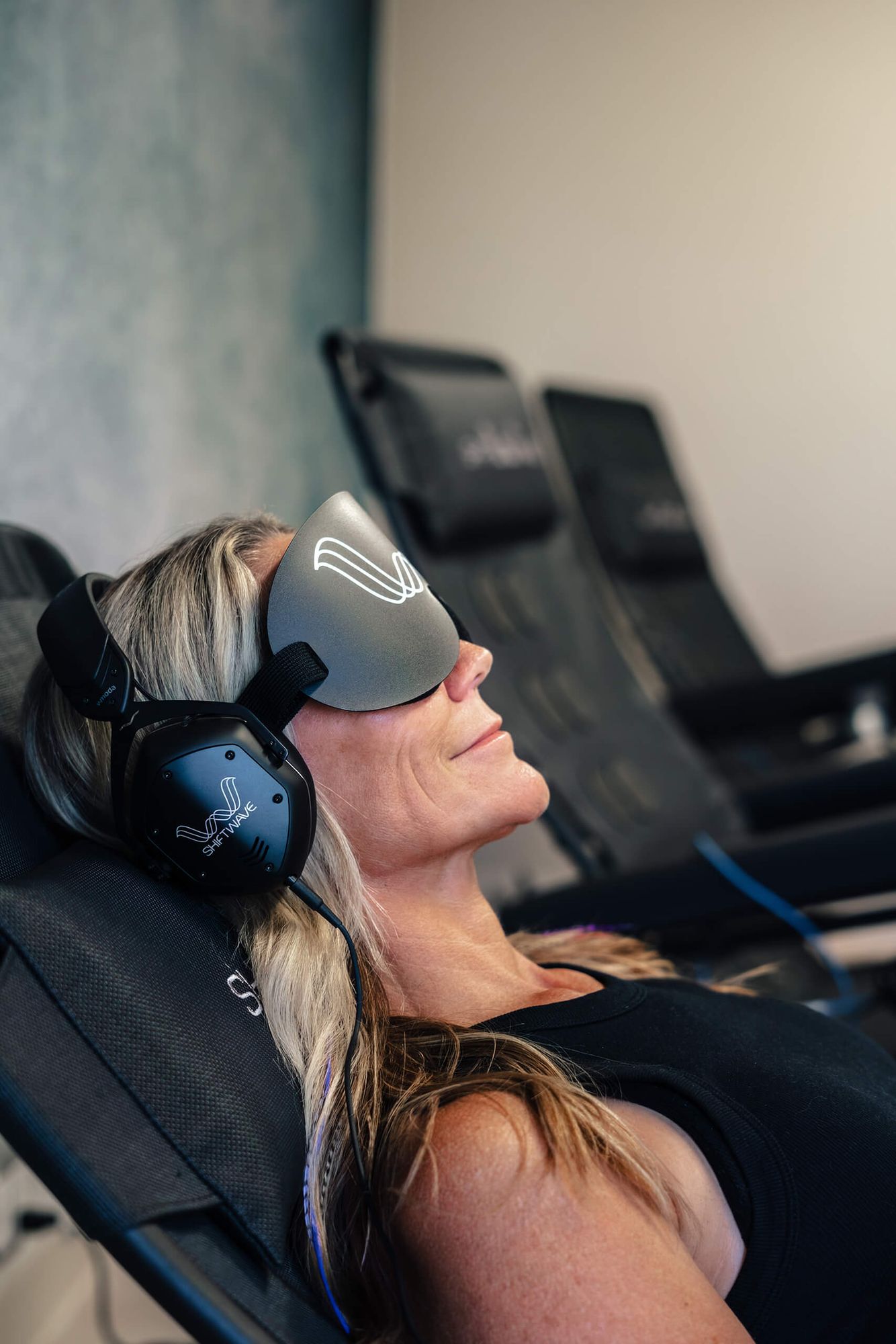
You finally have a quiet evening, yet your body will not settle. Your shoulders are tight, your mind is racing, and sleep feels out of reach. If this sounds familiar, you are not weak or "bad at relaxing." Your nervous system may simply be doing what it was built to do, for far longer than it was meant to.
Recognizing the pattern is the first step toward changing it. Below, we explain what stress mode is, the signs to watch for, and gentle ways to help your body find its footing again.
What Does "Stuck in Stress Mode" Mean?
Your autonomic nervous system has two main branches. The sympathetic branch mobilizes you for action, raising heart rate, sharpening attention and releasing stress hormones such as cortisol and adrenaline. The parasympathetic branch supports rest, digestion and repair. In a healthy rhythm, you move between the two as life demands.
When demands are constant, whether from work, caregiving, illness, grief or past experiences, the body can stay tilted toward alert. Researchers often describe the cumulative wear from this as allostatic load. The system is not broken, but it has lost some of its flexibility in returning to calm.
Common Signs to Notice
Stress shows up differently in each person, and these signs can have other causes, so they are clues rather than a diagnosis. Common patterns include:
- Trouble falling or staying asleep, or waking unrefreshed
- A racing heart, shallow breathing or a tight chest at rest
- Chronic neck, shoulder, jaw or back tension
- Digestive upset such as bloating, nausea or irregular bowel habits
- Feeling "wired but tired" throughout the day
- Irritability, anxiety or a sense of dread without a clear cause
- Brain fog, forgetfulness and difficulty concentrating
- Getting sick often or feeling slow to recover
Your nervous system is not broken, but it has lost some of its flexibility in returning to calm.
Who Is Affected?
Anyone can be. Busy professionals, parents, caregivers, students and people living with chronic pain or illness are all common examples. People who have experienced trauma or long periods of uncertainty may be especially prone to a body that stays on guard, even when life looks calm from the outside.
Why It Matters: What the Research Suggests
Long-term stress activation has been associated with sleep disruption, elevated blood pressure, digestive symptoms, mood changes and increased muscle tension. Studies of heart rate variability, a measure of how flexibly the nervous system responds, link lower variability with higher stress and poorer emotional regulation. Research on slow breathing, mindfulness, regular physical activity and social connection shows these practices can support parasympathetic activity and improve how people feel.
Pain and stress also influence each other. Tense muscles and a vigilant brain can heighten pain sensitivity, which in turn adds more stress. Addressing both the body and the nervous system can help break that loop.
Practical Steps You Can Start Today
Small, consistent signals of safety tell your body it can stand down. Consider these starting points:
- Lengthen your exhale: breathe in for four counts and out for six to eight, for a few minutes.
- Keep regular sleep and wake times, and dim screens an hour before bed.
- Move gently every day. Walking outdoors is a simple, effective start.
- Build in short pauses between tasks instead of pushing through the day.
- Limit caffeine and alcohol, which can amplify a keyed-up body.
- Spend time with people who help you feel safe and understood.
When to Seek Professional Support
If symptoms last for weeks, interfere with work or relationships, or come with chest pain, fainting, thoughts of self-harm or other alarming changes, seek medical care promptly. Persistent stress symptoms deserve a thoughtful look, since other conditions can mimic them.
At Selah Center in Carlsbad, CA, we approach integrative wellness care with attention to the whole person, including the nervous system. If you would like support, call us at (619) 304-7166 or reach out through our contact page. You do not have to stay on high alert alone.