You didn’t choose this. You didn’t sign up for the kind of exhaustion that makes brushing your teeth feel like a marathon.
Or the kind of pain that keeps whispering “you’re never getting better” even on the days you “do everything right.”
You’re still waking up tired, still wondering why your body feels like it’s falling apart for no clear reason, and you’re still getting told it’s probably “just stress.”
Let me say this clearly: It’s not in your head. And it’s not your fault. But it is your responsibility, and that’s actually good news. Because that means there’s something you can do.
We’re several decades into a mass chemical experiment and it has created biological overwhelm. Mitochondria that can’t keep up, tissues starving for oxygen, inflammation that never fully resolves, symptoms piling up like a traffic jam in your lymph.
This is where Hyperbaric Oxygen Therapy (HBOT) comes in.
HBOT helps restore cellular flow by giving your body what it’s screaming for: more oxygen, in a way that reaches the places it needs to go.
Key Takeaways
- Oxygen might be the missing link, but pressure makes it powerful.
- Soft-sided HBOT chambers (called mild HBOT or m/HBOT) are ideal for chronic conditions.
- It works fast, but deep healing still takes time.
What Is HBOT and Why Should You Care?
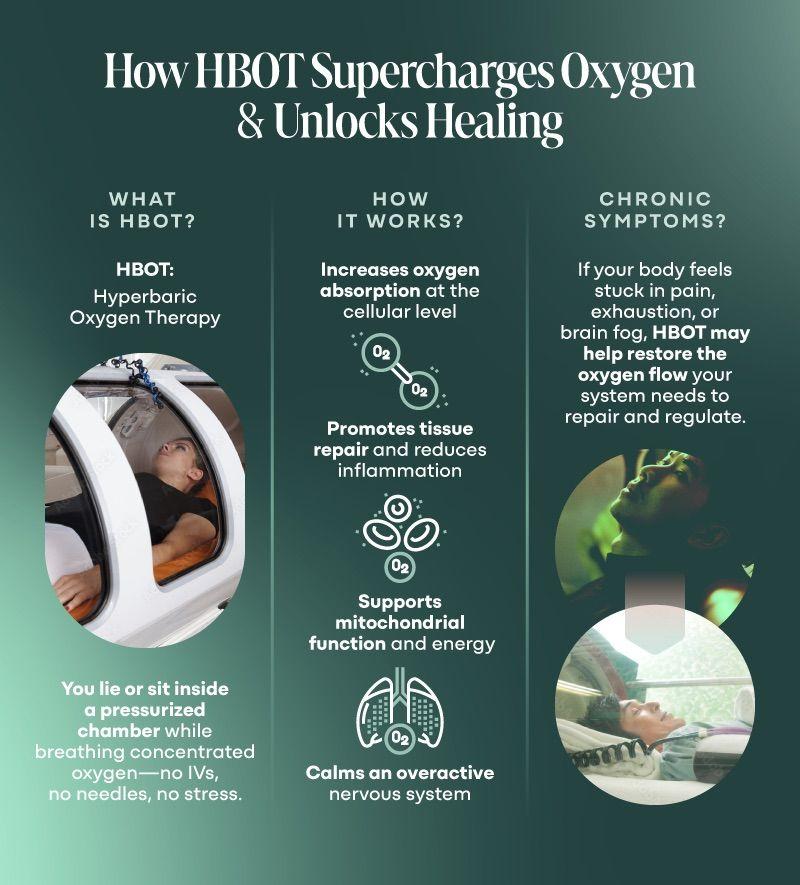
HBOT (short for Hyperbaric Oxygen Therapy) is a non-invasive healing tool where you sit or lie inside a sealed chamber while breathing in concentrated oxygen at increased pressure (8, 13, 15, 16, 18, 23, 28, 29, 35). That’s it. No IVs. No procedures. No stress.
And it works.
This therapy was originally used to help deep-sea divers recover from the bends (1, 19, 28), but now it’s one of the best-kept secrets in root-cause healing.
Here’s why: Under pressure, oxygen dissolves directly into your plasma (8, 12, 13, 26, 28, 33). That means it can finally reach the places in your body that are struggling the most: the inflamed joints, the foggy brain, the tissues that haven’t felt “normal” in years.
What Is Oxygen Therapy?
Oxygen therapy is a general term for anything that increases your body’s oxygen intake. It might involve nasal tubes, masks, or canisters.
HBOT is in a category of its own because it doesn’t just give you more oxygen, it pushes that oxygen deep into your tissues where standard oxygen therapy can’t go (8, 13, 15, 16, 18, 23, 28, 29, 35).
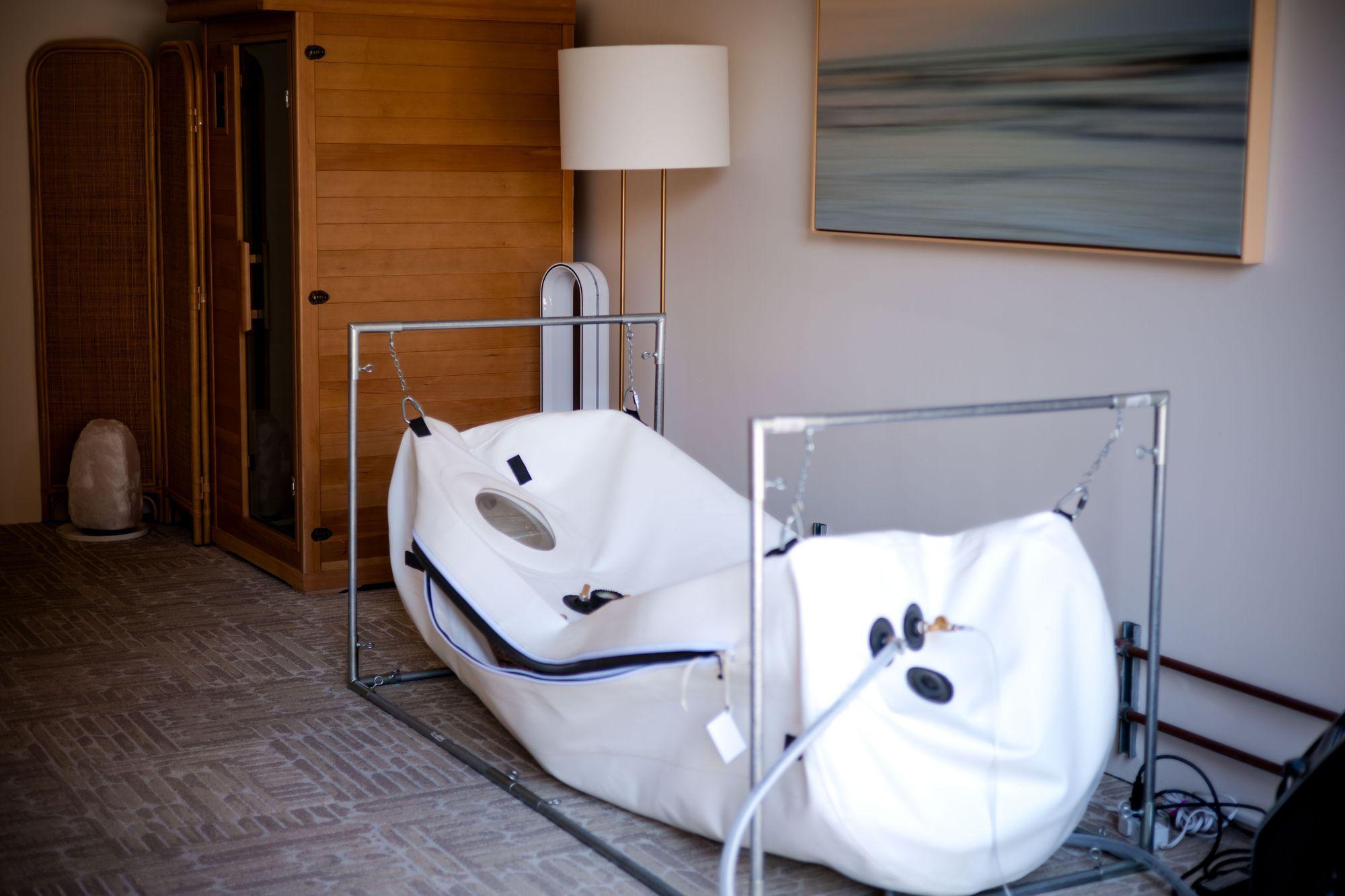
A soft-sided mild HBOT (m/HBOT) chamber (a cozy, zip-up pod that gently increases pressure while you read, meditate, or take a much-needed break from the chaos) works even better in many cases.
If your body is stuck in chronic symptoms (pain that won’t quit, fatigue that steals your days) there’s a good chance it’s not getting the oxygen it needs to repair. And when you restore that oxygen, the whole system shifts.
The Science: Why More Oxygen Doesn’t Always Mean More Healing
Let’s talk mitochondria, because if your cells were a startup, mitochondria would be the overworked employees trying to keep the lights on with no sleep, bad coffee, and zero vacation days.
These tiny power plants inside your cells are responsible for producing ATP, your body’s cellular energy currency.
And guess what their number one requirement is? Yup. Oxygen.
Without enough oxygen, your mitochondria can’t make enough ATP, and without ATP, your body slows everything down: digestion, immune repair, detox, hormone production, and even the ability to think clearly. You’re running on fumes.
Here’s where HBOT earns its stripes:
- It supercharges your mitochondria: By increasing the amount of oxygen available in your bloodstream and tissues, HBOT gives your cells the fuel they need to finally catch up and start producing energy like they’re supposed to (1, 8, 15, 16, 35). Fatigue begins to lift, and repair accelerates.
- It calms inflammation: Inflammation is your body’s alarm system, and chronic inflammation is your body shouting because no one’s listening. HBOT helps turn down that alarm by increasing oxygen to damaged tissues and modulating the inflammatory response without the side effects of steroids or NSAIDs (2, 8, 9, 13, 18, 19, 23, 25, 29, 34, 35).
- It rewires your nervous system: HBOT increases parasympathetic activity (your body’s rest-digest-heal setting) (19). It’s been shown to support vagus nerve function (19), decrease neuroinflammation (14, 18), and reduce the neurological traffic jams behind anxiety (3, 31) and brain fog (1, 12, 14, 16, 21, 31).
- It supports detox: With increased microcirculation and better oxygenation (1, 8, 12, 14, 15, 33, 34), your liver, kidneys, and lymphatic system can do their job. Think of it as unclogging the pipes so the whole house can function again. (And if you’re dealing with hidden toxicants like mold or heavy metals, this becomes non-negotiable.) Unlike pharmaceuticals or quick fixes that override your biology, HBOT partners with your body’s natural healing intelligence.
What Are Atmospheres of Pressure?
If you’ve ever looked up HBOT and seen numbers like 1.3 ATA or 2.0 ATA and immediately zoned out, you’re not alone.
Let’s make it simple.
ATA stands for Atmospheres Absolute, and it’s just a way to measure pressure. At sea level, you’re breathing air at 1.0 ATA, that’s your baseline. (For my fellow science geeks, “normal” air is 78% nitrogen and 21% oxygen) (8).
HBOT increases that pressure slightly (or a lot), depending on the chamber, and the higher the pressure, the more oxygen your body can absorb. When you increase the pressure in a hyperbaric chamber, oxygen dissolves directly into your plasma, spinal fluid, and even into tissues that normally don’t get much blood flow, like old injury sites or low-perfusion zones in the brain (8, 12. 13, 26, 28).
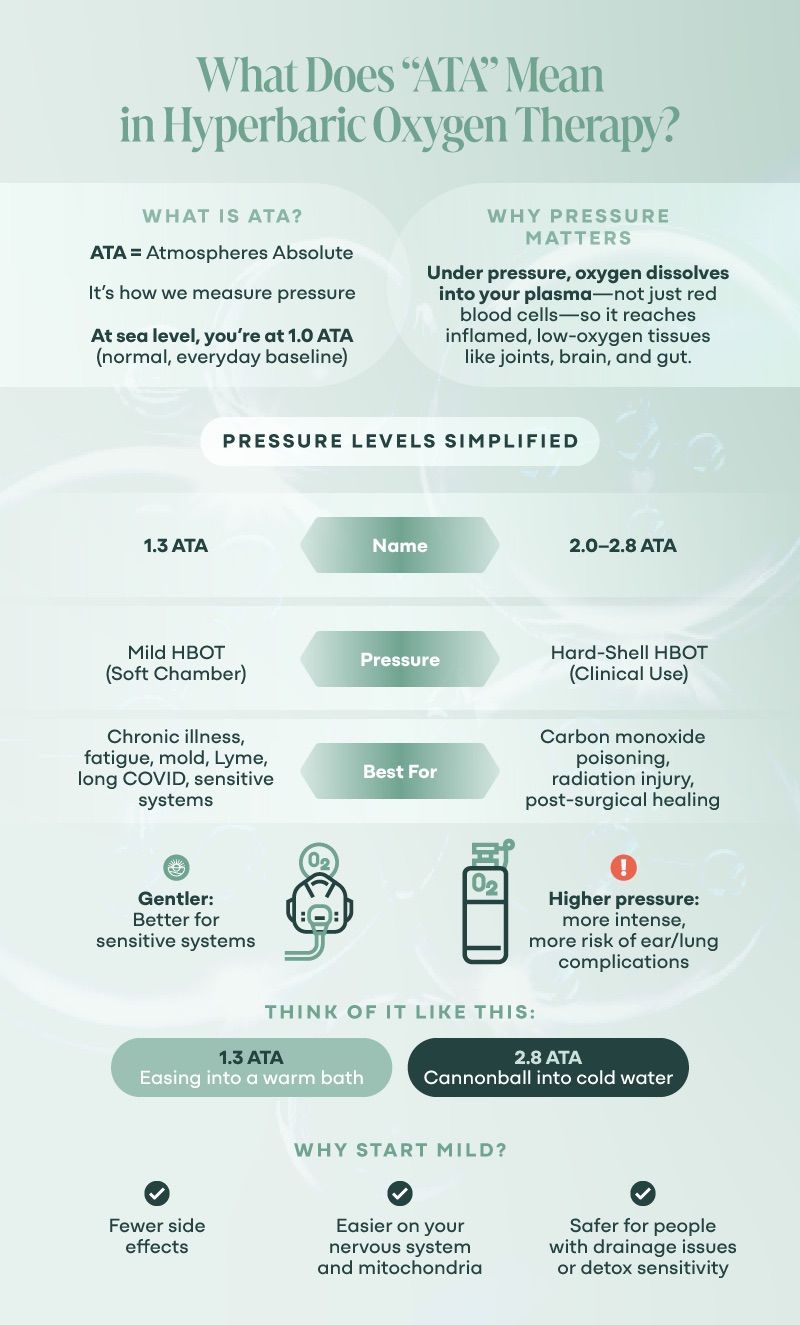
Here’s How Pressure Levels Break Down
- 1.3 ATA: This is the soft-sided chamber sweet spot. Gentle enough for sensitive systems. Powerful enough to reboot healing. This is known as mild HBOT or m/HBOT.
- 2.0–2.8 ATA: These are hard-shell clinical chambers, often used for acute medical conditions like carbon monoxide poisoning, radiation injury, or surgical recovery. (Most HBOT research has been done using these chambers, but you don’t need a formal study to know that oxygen is good for you.)
I use m/HBOT to indicate both HBOT and m/HBOT.
More pressure isn’t always better, especially if your body’s drainage pathways are clogged, your nervous system is fried, or your mitochondria are running on empty. Starting with mild pressure (1.3 ATA) gives your body a chance to shift gears without getting overwhelmed.
It also reduces the risks of serious complications (ear, eye, sinus, or lung damage) that are rare but possible in the higher pressure chambers (13).
It’s the difference between easing into a warm bath vs. cannonballing into cold water. (Ask me how I learned that one the hard way.)
While both chamber types have their place, soft-sided m/HBOT may be the better starting point for people with chronic fatigue, Lyme, mold illness, post-viral burnout, or mystery symptoms that flare with aggressive interventions. Because this isn’t about forcing your body to heal, it’s about setting the right conditions so it finally can.
Restore Vitality & Reduce Inflammation Fast
You don’t have time to wait around for a five-year healing plan.
When your energy is rationed by the hour and your pain makes even simple tasks feel monumental, you need relief that doesn’t take months to kick in. That’s what makes m/HBOT different.
While many therapies focus on managing symptoms or slowly nudging things along, m/HBOT works fast because it addresses one of the most foundational missing pieces in chronic symptoms: cellular oxygen starvation.
Here’s What Happens When You Finally Restore Oxygen
- Energy comes back online (8, 16): Clients often notice more stamina sometimes after just a few sessions. You might walk a little farther. Think a little more clearly. Start your day without bracing for the crash. This isn’t artificial energy. It’s not caffeine or willpower. It’s your cells making fuel again.
- Inflammation calms down (2, 8, 9, 13, 18, 19, 23, 25, 29, 34, 35): That fire in your joints, your gut, your brain is often your body’s desperate response to stuck pathogens, toxins, or low-oxygen tissue. HBOT helps restore balance fast by increasing microcirculation, taming inflammatory messengers, and supporting detox without triggering a flare.
- Nervous system regulation improves: Fatigue and pain don’t live in isolation. They’re deeply tied to your nervous system. HBOT shifts you out of fight-or-flight and into a parasympathetic state where healing happens (19). Clients often report better sleep, lower anxiety, and a sense of finally exhaling after years of white-knuckling through (3, 31).
- Cognitive clarity returns (1, 12, 14, 16, 20, 21, 30): Brain fog is real, and it’s often tied to hypoxia (low oxygen) in brain tissue. HBOT helps increase cerebral blood flow and oxygen saturation. Translation: You can think straight again. You remember where your keys are. You actually finish sentences.
And here’s the best part: the effects are cumulative. The more often you use it, the deeper the benefits go, especially when combined with drainage support and gentle detox strategies.
Soft-Sided vs. Hard-Sided Chambers: What’s Better for Healing?
There are two main types of hyperbaric chambers: Hard-sided and soft-sided.
Hard-sided chambers (what you’ll find in hospitals or burn centers) deliver up to 2.8 ATA pressure and are FDA-approved for conditions like burns, decompression sickness, and serious wounds (1, 3, 5, 11, 12, 19, 24, 25, 28).
Soft-sided chambers (what you’ll find in wellness centers and spas) deliver up to 1.3 ATA pressure. They’re gentler for sensitive systems, and at 1.3 ATA, your tissues are still getting up to 7x more oxygen than normal air. That’s plenty to move the needle on fatigue and inflammation without frying your circuits.
Each one may be appropriate at different times, depending on your situation and goals, because healing isn’t linear.
The Selah Center
At The Selah Center, we offer both m/HBOT and HBOT because your biology deserves options, not a one-size-fits-all protocol.
We help you choose the right level of support for where your body is right now and gently build capacity for deeper therapies as your system comes back online.
Why HBOT Plays So Well With Detox and Nervous System Healing
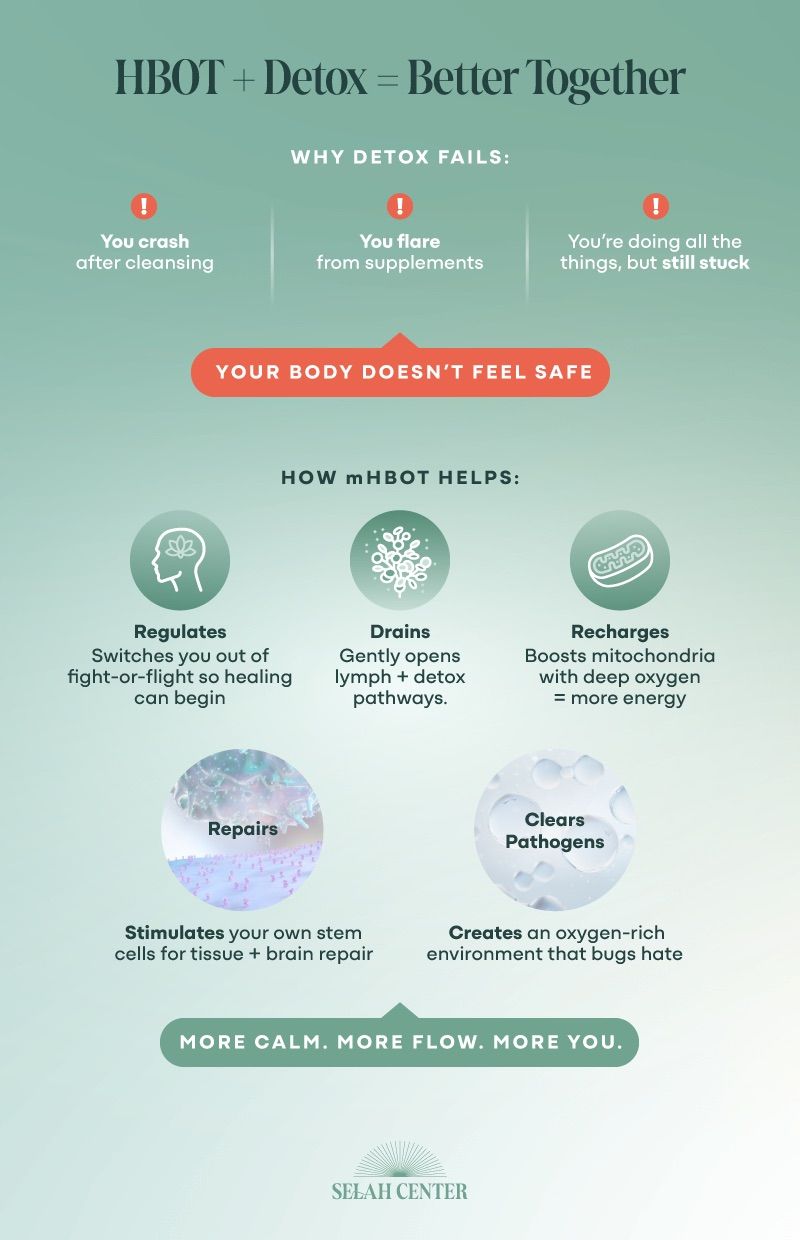
If you’ve done a parasite cleanse and crashed, if you’ve tried detox supplements and ended up more inflamed, if you’ve taken every binder, drained every lymph node, and still feel like your body’s stuck in molasses…
That’s not failure. That’s biology under pressure, and not the good kind.
You can’t force your body to detox if it doesn’t feel safe. You can’t regulate your nervous system if your cells are suffocating. You can’t “cleanse” when drainage pathways are jammed up like LA traffic at rush hour.
This is where m/HBOT shines.
How HBOT Fits Into a Bioregulatory Healing Strategy
It helps your nervous system shift gears.
When you’re in fight-or-flight, healing shuts down. Period.
HBOT promotes parasympathetic dominance (19). That calm, grounded state where real repair can begin.
This matters because if you’re not in regulation, detox becomes trauma.
It supports drainage (without force).
HBOT gently increases lymphatic flow, improves circulation, and helps mobilize waste products through the liver, kidneys, and colon (1, 8, 12, 14, 15, 33, 34).
Think: opening the windows and turning on the fans instead of trying to vacuum with all the doors shut.
It gives your mitochondria a head start.
You can’t detox without energy, and you can’t make energy without oxygen.
HBOT recharges your cellular batteries so your body can do the deeper work without crashing mid-process (1, 8, 15, 16, 35).
It influences stem cells (without needles) (8, 13, 14, 15, 16, 34).
HBOT has been shown to stimulate the release and activation of your body’s own stem cells, those multipurpose repair workers that can transform into the exact type of cell your tissues need to function and heal.
We’re talking neurogenesis (1), tissue repair (8, 12, 13, 24, 26), and immune modulation (12, 13, 19) without needing to fly to a stem cell clinic in Panama or remortgage your house.
It supports pathogen-clearing.
Mold, parasites, and certain bacteria hate oxygen, especially when it’s forced into tissue they’ve been hiding in.
HBOT helps create an environment where your immune system can see what it’s up against and respond accordingly, aka “immune modulation” (12, 13, 19).
The beauty of m/HBOT is that it supports your body’s natural intelligence. The same intelligence that got shut down by toxic exposures, trauma, infections, and modern life chaos. And when you pair m/HBOT with other core healing tools (like nervous system regulation, proper drainage, and individualized detox), the results aren’t just faster, they’re deeper, more sustainable, more you.
What to Expect: Healing Happens in Waves, Not a Straight Line
If you’re anything like most of our community, you want to know what’s going to happen when you start m/HBOT.
Is it going to be obvious? Will you feel better right away?
Are you going to detox? Crash? Float away on a cloud of energy?
The answer is: maybe all the above. (Just not all at once.) Because healing is not a straight line. It’s a spiral. A wave. A series of nudges and recalibrations.
And m/HBOT works with your biology, not on top of it.
Here’s what most people experience, and what it means:
Initial Shifts: “Is This Working?”
You might feel lighter or more clear-headed after just one session.
You might also feel nothing. That doesn’t mean it’s not working. It means your body is absorbing the oxygen and integrating it quietly, especially if your nervous system is in “shut it all down” mode.
Temporary Detox or Fatigue: “Why Do I Feel Worse?”
Some people feel tired or foggy after the first few sessions. That’s not a failure; it’s your body mobilizing toxins and recalibrating drainage.
Remember: the lymph is like a lazy river. When it starts moving again, your system might feel a little sludgy before it clears. That’s okay. That’s momentum.
Cumulative Benefits
Over time (and consistency is key here), you may realize your energy lasts longer. Your brain fog lifts. The pain that used to hang out in your joints every morning is now quieter.
These are signs that your mitochondria are online, your tissues are oxygenated, and your nervous system is re-learning how to feel safe.
Here’s what to do instead of obsessing over instant results:
- Track patterns, not moments
- Prioritize consistency over intensity
- Watch for signs of regulation: deeper sleep, less reactivity, stable mood
- Support drainage alongside your sessions (yes, coffee enemas count)
- And most importantly: stay curious.
Because every symptom shift, every detox wave, every little flicker of energy is your body saying, “I’m doing it, I just needed help.”
Your Body Was Built to Heal, And m/HBOT Could Be the Missing Piece
Your symptoms are not random.
Your exhaustion is not weakness. Your pain is not imagined.
They’re messages. Breadcrumbs. Signs that your body is trying to fix something and just doesn’t have the resources it needs.
That’s where m/HBOT and HBOT come in as powerful tools to restore what got blocked, and give your system the oxygen, pressure, and safety it needs to finally shift out of survival.
Because your body hasn’t forgotten how to heal; it’s just been waiting for the right conditions.
FAQs
1. Is HBOT safe for people with chronic illness?
Yes. Especially when using soft-sided chambers at 1.3 ATA. They’re designed for gentle, sustained healing, ideal for sensitive systems. As you start to heal, the hard-sided HBOT chambers may be a next step – there’s a time and a place for both.
2. Will I feel better after just one session?
Some people do. Others need a few sessions before noticing shifts. Healing is cumulative and consistency matters more than instant results.
3. Can HBOT help with mold, Lyme, or post-viral fatigue?
Yes. HBOT supports oxygen-starved tissues, improves detox, and calms inflammation; all key in recovering from chronic infections and toxic exposures.
4. Is this like getting oxygen at the hospital?
Not even close. m/HBOT delivers oxygen under pressure, which pushes it deeper into your tissues and places normal oxygen can’t reach.
5. Are there any side effects?
Mild fatigue or detox symptoms can happen at first. It usually means your drainage is opening up. Staying hydrated and supporting elimination helps.
6. How many sessions do I need?
It depends on your goals and baseline. Some people start with 10–20 sessions; others integrate m/HBOT long-term as part of their healing rhythm.
7. Will m/HBOT interfere with my meds or protocols?
No, but always consult your practitioner. m/HBOT often enhances the effectiveness of other therapies by improving oxygenation and circulation.
8. Is it okay to use m/HBOT during detox?
Absolutely. In fact, it can make detox more efficient and less intense by supporting drainage, mitochondrial function, and immune modulation.
9. What’s the difference between soft- and hard-sided chambers?
Hard chambers use higher pressure and are great for acute trauma or for less sensitive systems that are ready for more powerful treatments. Soft chambers use lower pressure and are gentler, safer, and more sustainable for chronic issues.
References (38)
- Progress on the mechanism and application of hyperbaric oxygen therapy for neurodegenerative diseases - PubMed. Accessed August 16, 2025.
- Ansari S, Gaurav A, Gupta T, et al. Hyperbaric oxygen therapy is effective and safe for femoral head osteonecrosis: a prospective midterm outcome study - PubMed. European Journal of Orthopaedic Surgery & Traumatology.
- Antunes F, Machado M, Garavini A, Carvalho V, de Souza A. The effect of hyperbaric oxygen therapy on psychological state and wound healing: a case report - PubMed. Wound Management & Prevention.
- Bayoumy AB, de Ru JA. Acute acoustic trauma requires urgent treatment within 72 h for optimal outcomes: results from the Dutch armed forces - PubMed. European Archives of Oto-Rhino-Laryngology.
- Brekke FB, Lippe N von der, Røed I, Gudmundsdottir H, Braaten M, Nordheim E. Hyperbaric oxygen treatment in addition to conventional multidisciplinary care in patients with calciphylaxis - PubMed. Clinical Nephrology.
- Calderón P, Quera R, Núñez P, Flores L. Treatment with hyperbaric oxygen in a Crohn’s disease patient - PubMed. Revista Española de Enfermedades Digestivas.
- Canarslan Demir K, Avci AU, Ozgok Kangal MK, et al. Hyperbaric Oxygen Therapy for Managing Cancer Treatment Complications: A Safety Evaluation - PubMed. Medicina.
- Cannellotto M, Yasells García A, Landa MS. Hyperoxia: Effective Mechanism of Hyperbaric Treatment at Mild-Pressure. IJMS. 2024;25(2):777.
- Cha J, Bosco G, Moon RE, Melloni G, Camporesi EM. Hyperbaric Oxygen Therapy for Management of Complex Regional Pain Syndrome - PubMed. The Clinical Journal of Pain.
- Doenyas-Barak K, Kutz I, Lang E, et al. Hyperbaric Oxygen Therapy for Veterans With Combat-Associated Posttraumatic Stress Disorder: A Randomized, Sham-Controlled Clinical Trial - PubMed. The Journal of Clinical Psychiatry.
- Elsharnoby AM, El-Barbary AH, Eldeeb AE, Hassan HA. Resistant Chronic Venous Leg Ulcers: Effect of Adjuvant Systemic Hyperbaric Oxygen Therapy Versus Venous Intervention Alone - PubMed. The International Journal of Lower Extremity Wounds.
- Ezra N, Dang K, Heuser G. Improvement of attention span and reaction time with hyperbaric oxygen treatment in patients with toxic injury due to mold exposure. Eur J Clin Microbiol Infect Dis. 2010;30(1):1-6.
- Feng J, Zhu C, Zou J, Zhang L. Hyperbaric Oxygen Therapy for the Treatment of Bone-Related Diseases.
- Ginzarly M, Khairy S, Wang Z, Qureshi U, Zaitoun R, Efrati S. Efficacy of hyperbaric oxygen therapy in treating fibromyalgia linked to childhood trauma after late-onset and over a decade of symptoms: a case report. J Med Case Reports. 2025;19(1).
- Hadanny A, Sasson E, Copel L, et al. Physical enhancement of older adults using hyperbaric oxygen: a randomized controlled trial. BMC Geriatr. 2024;24(1).
- Hadanny A, Zilberman-Itskovich S, Catalogna M, et al. Long term outcomes of hyperbaric oxygen therapy in post covid condition: longitudinal follow-up of a randomized controlled trial. Sci Rep. 2024;14(1).
- Hajek M, Jor O, Tlapak J, Chmelar D. Hyperbaric Oxygen Therapy in Children with Brain Injury: A Retrospective Case Series - PubMed. International Journal of Medical Sciences.
- Han Y, Huang L, Wu J, Wan G, Mo L, Liu A. The Role of Astrocytes in Poststroke Rehabilitation. Brain and Behavior. 2025;15(6).
- Kanowski S, Shen Y, Klein T, Moeller MJ, Koch A, Theilig F. Impact of hyperbaric oxygenation therapy (HBOT) on renal function in human. Sci Rep. 2025;15(1).
- Lawati YKA, Hazra D, Al-Alawi AKA, Abri SA. A Rare Case of Acute Carbon Monoxide Toxicity Mimicking Stroke and Successfully Managed with Hyperbaric Oxygen Therapy - PubMed. Sultan Qaboos University Medical Journal.
- Li B, Li H, Chen H, et al. Utilizing Hyperbaric Oxygen Therapy to Improve Cognitive Function in Patients With Alzheimer’s Disease by Activating Autophagy-Related Signaling Pathways - PubMed. Physiological Research.
- Li TH, Lin CH, Peng CK, et al. Effects of adjuvant hyperbaric oxygen therapy and real-time fluorescent imaging on deep sternal wound infection: a retrospective study - PubMed. Journal of Wound Care.
- Li Y, Sun R, Lai C, et al. Hyperbaric oxygen therapy ameliorates intestinal and systematic inflammation by modulating dysbiosis of the gut microbiota in Crohn’s disease. J Transl Med. 2024;22(1).
- Mortada H, González JE, Husseiny YM, et al. Efficacy of Hyperbaric Oxygen Therapy as an Adjunct in Aesthetic Surgery: A Systematic Review and Meta-analysis of Postoperative Outcomes and Complications - PubMed. Aesthetic Plastic Surgery.
- Nguyen H, Hai T, Nguyen Van T, et al. Results of treating patients with cellulitis by hyperbaric oxygen: a case-control study - PubMed. Accessed August 16, 2025.
- Öztürk M, Demir L. Evaluation of Patients Undergoing Hyperbaric Oxygen Therapy for Earthquake-Related Tissue Injuries - PubMed. Disaster Medicine and Public Health Preparedness.
- Park S, Marinov A, Clarke H, et al. Safety of hyperbaric oxygen therapy in non-emergent patients with a history of seizures: A retrospective cohort study - PubMed. PLOS ONE.
- Patel SH, Joseph JJ, Gandhi TR, Mehta A, Shah A. A Review of Emerging Evidence and Clinical Applications of Hyperbaric Oxygen Therapy - PubMed. Journal of Intensive Care Medicine.
- Peng S, Zeng L, Lu B, Li Q. Application of hyperbaric oxygen therapy in the treatment of spinal cord injury: insights from preclinical to clinical evidence - PubMed. Medical Gas Research.
- Schiavo S, Brenna CTA, Albertini L, Djaiani G, Marinov A, Katznelson R. Safety of hyperbaric oxygen therapy in patients with heart failure: A retrospective cohort study - PubMed. PLOS ONE.
- Sun Y, Ren T, Ji X. Influence of hyperbaric oxygen therapy-specialized care on limb motor function and mental state of cerebral infarction patients with hemiplegia - PubMed. Technology and Health Care.
- Tu P, Halili X, Zhang S, Yang J, Xiao Y. The effectiveness of hyperbaric oxygen therapy in children and adolescents and with autism spectrum disorders: A systematic review and meta-analysis - PubMed. Progress in Neuro-Psychopharmacology and Biological Psychiatry.
- Weng J, Ren H, Guo Q, et al. Efficacy and safety of hyperbaric oxygen therapy for diabetes peripheral neuropathy A systematic review and meta-analysis. Published online September 4, 2024.
- Zhang R, Guo H, Tang S, Zuo J, Shi X. Effect of hyperbaric oxygen therapy on postoperative muscle damage and inflammation following total knee arthroplasty: a randomized controlled trial. Sci Rep. 2025;15(1).
- Zhao H, Zhang T, Wang Y, Fang Y. Early Hyperbaric Oxygen Therapy Promotes Recovery of Blunt Liver Injury in Rats via Inhibiting Inflammatory Response and Oxidative Stress. Int J Med Sci. 2025;22(9):2174-2185.
- Figueroa XA, Wright JK. Hyperbaric oxygen: B-level evidence in mild traumatic brain injury clinical trials - PubMed. Neurology.
- Guenneugues R, Henckes A, Mansourati V, Mansourati J. Effects of hyperbaric exposure on mechanical and electronic parameters of implantable cardioverter-defibrillators - PubMed. Europace.
- Chen SY, Tsuneyama K, Yen MH, Lee JT, Chen JL, Huang SM. Hyperbaric oxygen suppressed tumor progression through the improvement of tumor hypoxia and induction of tumor apoptosis in A549-cell-transferred lung cancer - PubMed. Scientific Reports
This article is for general education and is not a substitute for personal medical advice.