You’ve probably heard about stem cell therapy as the “next big thing;” the miracle fix that was supposed to regenerate your joints, your brain, even your entire life.
Maybe you even tried it.
You sat in a sterile office while someone reassured you that your cells just needed a little encouragement to behave better.
And then, maybe nothing changed.
Or worse, things got weird with swelling, inflammation, or no real results, just a lighter wallet.
Stem cells are not the solution we were promised.
They’ve been hyped into a corner, and meanwhile, a quieter revolution has been happening under the microscope. One that’s changing everything we thought we knew about healing.
Exosomes.
These microscopic messengers coordinate regeneration. They don’t need to grow, replicate, or integrate. They just deliver healing instructions cleanly, efficiently, and without drama.
They’re already in your blood, your breast milk, even your tears (yeah, your body really wants you to get the memo).
Let’s look at why exosomes are overtaking stem cells in regenerative medicine.
Key Takeaways
- Stem cells are yesterday’s news.
- Exosomes are the body’s natural repair messengers.
- Healing is about the message, not the cell.
What Are Exosomes? (And Why Should You Care?)
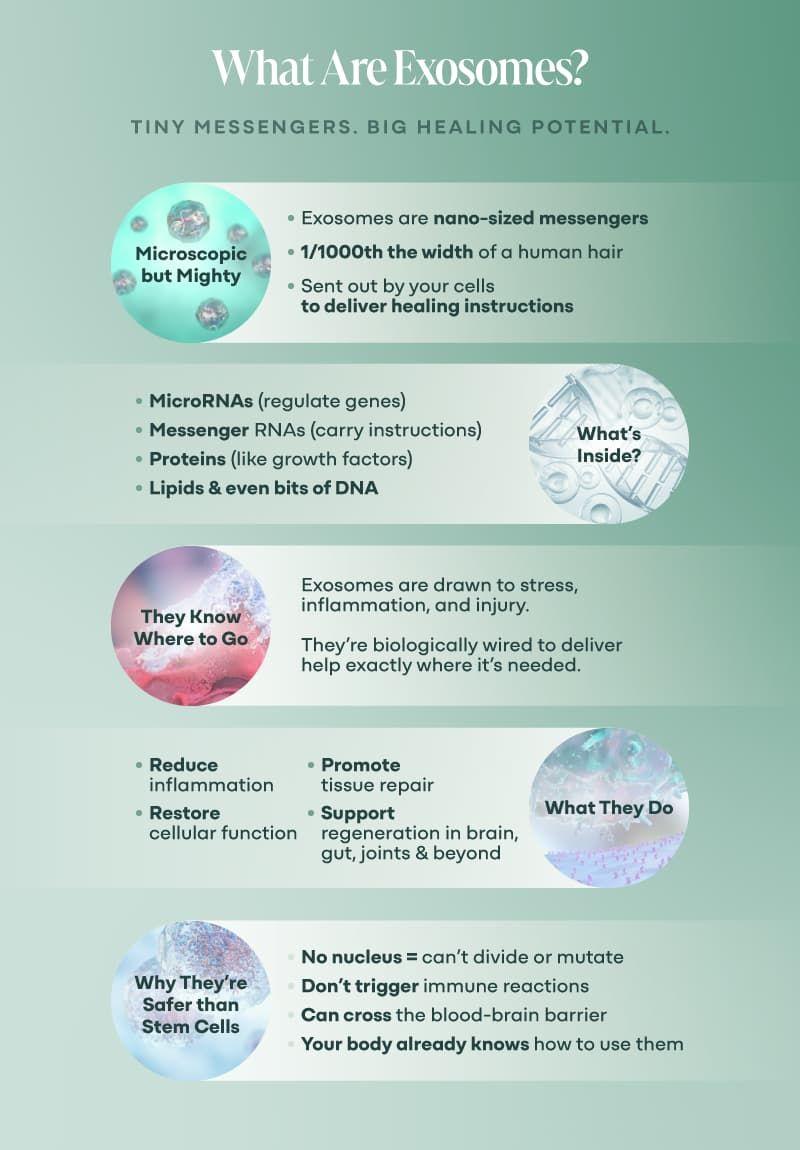
Imagine a microscopic care package tiny enough to cross the blood-brain barrier (7, 9, 20), yet powerful enough to spark tissue repair (2, 9, 16, 17, 28), calm inflammation (2, 7, 18, 20, 21, 28), and help your cells remember how to do their job (18, 20).
That’s an exosome.
Exosomes are nanosized extracellular vesicles (2, 3, 5, 7, 17, 18, 19, 20, 22, 23, 25, 26, 27, 28) roughly 30 to 150 nanometers in diameter (translation: about 1/1000th the width of a human hair) (2, 7, 8, 9, 17, 18, 20, 21, 23, 27, 28).
They’re released by almost every cell in your body (2, 3, 6, 8, 15, 19, 22, 23, 26, 27) and act like molecular messengers, delivering crucial instructions between cells (2, 3, 6, 7, 9, 17, 18, 20, 22, 25, 26, 27, 28).
Unlike stem cells, they don’t have a nucleus (7), which means they can’t divide, mutate, or form tumors (6, 8, 21).
Each exosome is enclosed in a double-layered lipid membrane (2, 6, 20, 21, 23, 25, 27, 28) (think of it like a protective bubble), and inside you’ll find a curated mix of healing ingredients:
- MicroRNAs (regulate gene expression) (2, 3, 6, 7, 8, 9, 20, 21, 23, 27, 28)
- Messenger RNAs (carry genetic instructions) (2, 3, 6, 7, 8, 9, 20, 21, 23, 27, 28)
- Proteins (growth factors, cytokines, enzymes) (2, 3, 6, 7, 8, 9, 20, 21, 23, 27, 28)
- Lipids (2, 3, 6, 7, 9, 20, 21, 23, 27, 28)
- Even bits of DNA (2, 3, 6, 7, 8, 9, 20, 21, 23, 27, 28)
What makes them so compelling isn’t just what they carry, it’s how they know where to go.
Exosomes are drawn to areas of stress or injury, like inflammation hotspots, oxidative damage, or tissue breakdown (7, 9, 25).
They don’t guess.
They’re biologically programmed to respond to trouble, and your body already knows how to use them.
You produce and use exosomes every day, whether you’re recovering from a paper cut or recalibrating your gut after a stressful week.
They’re how your cells talk, heal, and adapt.
When sourced therapeutically (like from umbilical stem cells or placental tissue), these same exosomes can supercharge that healing signal without the baggage stem cells often bring. So no, they’re not “the new stem cells.” They’re the better version—cleaner, smarter, safer (7, 8, 15, 18, 21). And they’re about to change everything.
Where Exosomes Come From (and Why Source Matters)
Every cell in your system, from immune cells to skin cells, releases exosomes (2, 3, 6, 8, 15, 19, 22, 23, 26, 27).
But when we talk about therapeutic exosomes, meaning the kind you’d use to heal something major like nerve damage or autoimmune overload, we’re usually talking about exosomes harvested from mesenchymal stem cells (MSCs).
These are adult stem cells known for their regenerative potential, and they’re found in places like:
- Umbilical cord tissue (1, 3, 18, 210
- Amniotic tissue (7, 18, 21)
- Bone marrow 8, 15, 18, 21, 23, 24, 28)
- Adipose (fat) tissue (7, 8, 18, 21, 23)
Why does this matter?
Because exosomes inherit the traits of their parent cells.
An MSC from umbilical cord tissue is young, vibrant, and free of the accumulated gunk we pick up over a lifetime (think: glyphosate, mycotoxins, emotional baggage).
The exosomes it secretes?
Same deal! Clean, potent, and built for regeneration.
Compare that to an adult-derived MSC that’s been hanging out in someone’s fat tissue for 40+ years.
It’s more likely to carry epigenetic memory from stress, toxic exposures, or inflammation.
And guess what?
Its exosomes will too.
There’s even evidence that exosomes from tumor cells can promote cancer progression (2, 24, 28), which is why quality sourcing and lab testing are non-negotiables.
So if you’re ever considering exosome therapy, the first question isn’t “how much does it cost?” It’s: Where did these exosomes come from?
Where Exosomes Are Found in the Human Body
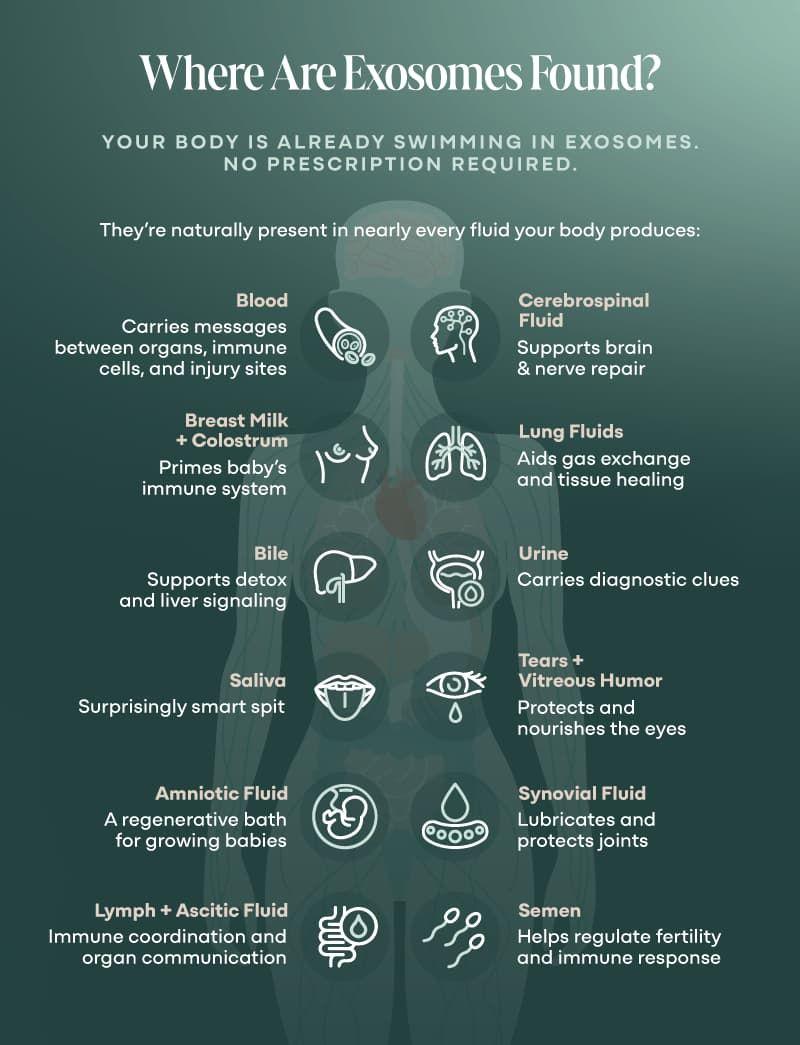
Your body is swimming in exosomes. Literally.
They’re naturally present in nearly every fluid your body produces (3, 6, 15, 23, 27, 28).
Which means your cells have been training with these healing messengers since the womb.
There’s nothing foreign or experimental about them; your biology already knows what to do when they show up.
You’ll find exosomes in:
- Blood – where they ferry signals between immune cells, organs, and injury sites (7, 8, 15, 17, 20, 23, 28)
- Saliva – yep, your spit is smarter than it looks (7, 8, 15, 17, 20, 23, 28)
- Breast milk – delivering immune-priming instructions from mama to baby (7, 7, 15, 23, 28)
- Urine – surprisingly useful for diagnostics (and exosomes don’t mind the exit route) (7, 8, 15, 17, 20, 23, 28)
- Cerebrospinal fluid (CSF) – helping neurons talk and repair in your brain and spine (7, 8, 17, 23, 28)
- Bile – aiding detox and liver signaling (7, 15, 23, 28)
- Lymph – immune coordination central (7, 23, 28)
- Synovial fluid – keeping your joints lubricated and responsive (8, 15)
- Amniotic fluid – a regenerative cocktail for developing babies (7, 8, 15, 28)
- Semen/sperm – influencing fertility and immune tolerance (8, 15)
- Tears – helping maintain the delicate ecosystem of your eyes (28)
- Vitreous humor – supporting eye structure and health (8)
- Ascitic fluid – present in abdominal cavity regulation (7, 8, 28)
- Colostrum – in baby’s first meal (20)
- Lung fluids – helping with gas exchange and tissue repair (20)
Think about that for a second: exosomes are part of your internal terrain.
They’re in charge of maintenance, repair, and crisis response across nearly every system.
They don’t just show up during injury; they’re part of what keeps you well in the first place.
When we talk about exosome therapy, we’re not adding something unnatural.
We’re simply amplifying a language your body already speaks fluently.
Why Exosomes Are Biologically Superior to Stem Cells
Stem cells had their moment, but the more we learned, the more complicated things got.
Stem cells can be powerful, but they also come with risks.
Since they contain nuclei, they can divide, and that opens the door to the potential for unwanted cell growth, including tumor formation (24).
It’s part of why stem cell therapy is so tightly regulated in most countries, and why it often gets held up in clinical settings.
Now enter exosomes.
They don’t have a nucleus, so they can’t replicate or become rogue cells (6, 7, 8, 21). This single feature removes a massive layer of risk as there is no chance of tumor formation.
They’re also tiny—roughly 1000 times smaller than a typical stem cell (2, 7, 8, 9, 17, 18, 20, 21, 23, 27, 28). That means they can slip past barriers that stem cells often bounce off of, like the blood-brain barrier and the placental barrier (7, 9, 20).
If you’re dealing with neurological symptoms, chronic brain inflammation, or prenatal care concerns, this is essential.
Another major advantage is that exosomes are whisper-quiet to your immune system. Stem cells, especially if they’re allogeneic (from a donor), can trigger immune rejection or inflammatory responses.
Exosomes, on the other hand, are stealthy. They’re naturally low in immunogenic markers, so they can circulate and do their job without tripping alarms (7, 8, 9, 15, 24).
And let’s talk logistics. Stem cells require cryopreservation (which isn’t always reliable), have limited shelf life, and don’t travel well.
Exosomes, on the other hand, = can be freeze-dried, stored, and reconstituted when needed. No fancy lab setup required. They’re also more biocompatible across the board (7, 8, 9, 18, 27).
Whether you’re working with detox pathways that are clogged up, mitochondria that are limping along, or a nervous system stuck in fight-or-flight, exosomes integrate smoothly without triggering chaos.
While stem cells may still have niche uses, exosomes are proving to be safer, more stable, and more effective for most regenerative applications (7, 8, 15, 18, 21).
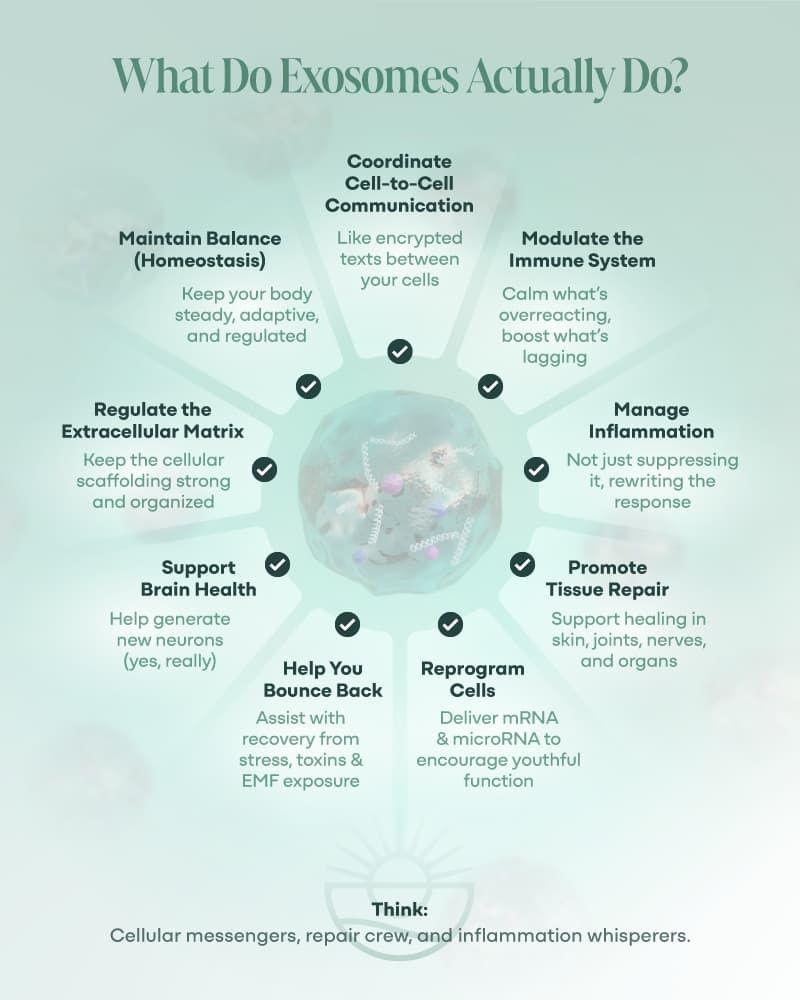
What Do Exosomes Actually Do?
If you’ve ever wished you could just “reset” your cells to give them a clean slate and better instructions, this is what exosomes are built for.
Here’s what we know they do (and why your body responds so well to them):
- Facilitate cell-to-cell communication: Exosomes carry information between cells across long distances (2, 3, 6, 7, 8, 9, 17, 18, 20, 22, 25, 26, 27, 28). This is critical for coordinating healing responses, immune regulation, and tissue regeneration.
- Regulate the immune system: Depending on what’s needed, they can calm an overactive immune response or rally one that’s falling behind (2, 7, 8, 9, 17, 18, 20, 23, 28). That’s huge for those dealing with autoimmunity, chronic infections, or long-haul inflammation.
- Manage inflammation: Exosomes are like built-in inflammation moderators (2, 7, 15, 18, 29, 21, 28). They don’t just suppress inflammation blindly; they reprogram how your immune cells respond to stress and damage.
- Promote tissue repair: They stimulate the growth of new blood vessels called angiogenesis (7, 15, 18, 20, 21, 28), encourage cell differentiation (7, 17, 20), and help rebuild damaged tissues like cartilage, bone, skin, and nerves (2, 8, 9, 14, 15, 16, 17, 18, 20, 23, 26, 28).
- Regulate the extracellular matrix: Translation: they help maintain the scaffolding that holds your cells in place, ensuring the whole system doesn’t fall apart under pressure (18, 20).
- Support stress recovery: Exosomes help your cells recover from oxidative stress, EMF exposure, toxin overload, and metabolic chaos (7, 18, 20). They basically clean up the cellular group chat after a trauma spiral.
- Exchange genetic information: Through their cargo of microRNAs and mRNAs, exosomes can literally reprogram gene expression, guiding cells to behave more like their healthy, youthful selves (2, 3, 6, 7, 9, 15, 18, 20, 21, 23, 27, 28).
- Maintain homeostasis: Exosomes help your body adapt to change and stabilize itself (18, 20). Whether you’re battling an acute injury or navigating chronic conditions, they bring order to the chaos.
- Encourage neurogenesis: Yep, some exosomes help grow new neurons in the brain (20, 23, 26). Let that sink in for a second.
In short, exosomes are coordinators, making sure the repair crew shows up to the right job site with the right tools, without wasting time or resources.
And because they’re already a part of your body’s natural healing language, they don’t need to force anything. They just remind your system how to heal—clearly, gently, and effectively.

The Conditions Exosomes Can Help (Yes, It’s a Long List for a Reason)
Exosomes are like a cellular Swiss Army knife—versatile, adaptive, and surprisingly effective across multiple systems.
Let’s look at where exosomes are showing up as serious contenders in regenerative therapy:
Neurological & Cognitive Health
- Alzheimer’s, Parkinson’s, and MS (8, 9, 20) – exosomes cross the blood-brain barrier and modulate neuroinflammation, oxidative stress, and synaptic repair
- Stroke recovery (7, 8, 9, 20) – shown to promote neurogenesis and angiogenesis in damaged areas
- TBI and concussion (8) – can improve cognitive function and memory loss
- Peripheral nerve injuries (22, 26) – aid in myelin repair and nerve regeneration
Musculoskeletal & Orthopedic
- Osteoarthritis & osteoporosis (2, 9, 15, 28) – stimulate cartilage regeneration and modulate bone turnover
- Tendon and ligament injuries (7, 9) – accelerate collagen synthesis and healing
- Bone fractures (7, 15) – promote vascularization and osteoblast activation
- Cartilage repair (2, 7, 9, 15, 23) – modulate joint inflammation and promote chondrocyte proliferation
Autoimmune, Inflammatory & Gut
- Crohn’s, ulcerative colitis, and IBD (8) – reduce inflammation, enhance barrier repair, and calm overactive immune responses
- Systemic inflammation & cytokine storms (2, 7, 15, 18, 29, 21, 28) – especially relevant in long COVID and post-viral syndromes
- Skin issues (eczema, psoriasis, ulcers, scarring) (6, 7, 13, 21) – regulate keratinocyte activity and reduce local inflammation
Respiratory & Immune Health
- Asthma & COPD (9) – reduce pulmonary inflammation and restore lung epithelial integrity
- Immune dysregulation (2, 7, 8, 9, 17, 18, 20, 23, 28) – shift immune balance toward regulatory T-cell dominance
Cardiovascular & Metabolic
- Atherosclerosis (7) – improve endothelial function and reduce plaque buildup
- Heart failure (7, 8, 9, 20) – exosomes from cardiac progenitor cells promote myocardial repair
Hair & Skin
- Alopecia (6, 9, 13) – stimulate hair follicle regeneration and reduce miniaturization
- Wound healing (6, 7, 8, 13, 15, 18, 20, 21) – improve closure time, reduce scarring, enhance skin structure
- Anti-aging (1, 6, 13, 14) – support collagen remodeling and reduce oxidative damage
Other
- Fertility support (male and female) (9) – reduce inflammation and oxidative stress in reproductive tissues
- Retinal repair (9, 20) – promote survival of retinal ganglion cells
This is cellular-level recalibration, and your body is already built to receive the message.

Why Are Stem Cells Falling Out of Favor?
Remember when stem cells were all over the headlines?
And sure, there was real promise. But as the research matured, so did the list of complications.
Here’s why stem cells are losing ground in the regenerative world:
- Unpredictable behavior (24): If the cells don’t behave exactly as expected, they can cause inflammation, fibrosis, or even form unwanted tissue (Yup, a tumor).
- High immunogenicity (7, 8, 9, 15, 24): Because they’re full, complex cells, stem cells often trigger immune reactions, especially if they’re from a donor.
- Ethical and regulatory hurdles: Depending on the source (embryonic, fetal, or adult) stem cells carry various ethical baggage. In the U.S., many clinics operate in a legal gray zone. It’s like the Wild West, but with centrifuges.
- Logistical drama (7, 8, 24, 27): Stem cells are fragile. They require cryopreservation, strict handling protocols, and even then, their potency degrades with time.
Exosomes sidestep allll of that. They’re not a diluted version of stem cells; they’re the refined intelligence behind them.
Stem cells secrete exosomes. That’s how they actually do their healing. But \why use the whole complicated cell when the healing message is already available, cleaner, safer, and ready to go? And if your health is on the line, you want the tool that works with your body, not the one that might set it off.
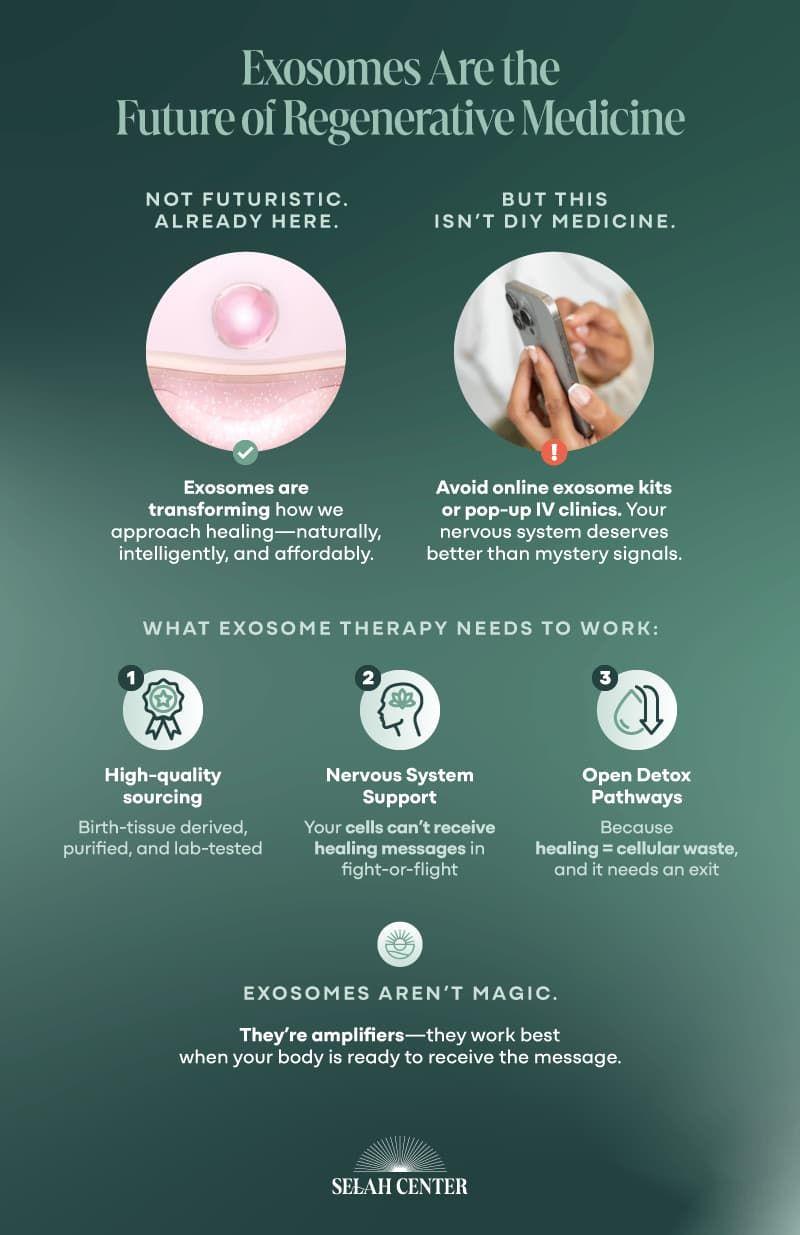
The Future Is Already Here: Exosomes Are Reshaping Regenerative Medicine
Exosomes are reshaping how we approach healing, and not just in elite clinics or research labs.
This is the next chapter of regenerative medicine. But here’s the warning label: don’t DIY this.
There’s a rise in people buying exosomes online or showing up at pop-up IV clinics offering “rejuvenation in a bag.”
Please don’t. Your nervous system has already been through enough. You don’t need mystery signals added to the mix.
To work, exosome therapy needs three things:
- High-quality sourcing – birth-tissue derived, lab-tested, and purified
- A regulated nervous system – if you’re still in fight-or-flight, your cells can’t receive the healing message
- Clear detox pathways – because healing generates cellular waste, and if you’re not draining properly, you’ll just re-tox
They work best when your terrain is ready to receive the message.
FAQs
1. How do I know if the exosomes being used are high quality?
Ask these three questions:
- What tissue were they derived from? (You want birth tissue—cord or placenta—not fat from someone’s midlife crisis.)
- How were they processed? (Were they purified, tested, and verified for contaminants, or scooped out of a cell culture like mystery soup?)
- Are they tested for tumorigenicity, sterility, and potency? (If not, walk away.)
2. What are exosomes, exactly?
Exosomes are microscopic messengers your cells use to send healing instructions. They carry proteins, RNA, and signaling molecules (no nucleus, no drama) and help your body repair itself by communicating directly with damaged or stressed tissues.
3. How long have we known about exosomes?
Believe it or not, we discovered them in the 1980s and initially thought they were just cellular garbage (7, 8, 9, 17, 18, 20). Yep. Trash. Fast-forward a few decades, and we now know they’re more like gold: the body’s most efficient, intelligent communication system.
4. What makes exosomes different from stem cells?
Exosomes are what stem cells secrete to trigger healing. But exosomes don’t replicate, don’t trigger immune reactions, and don’t form tumors. They’re smaller, safer, and a lot less needy.
5. How are exosomes different from PRP (platelet-rich plasma)?
PRP uses growth factors from your own blood to send general healing signals to the body. Exosomes go further—they provide more concentrated and precise signals, making them stronger, more versatile, and effective for a wider range of therapies than PRP.
6. Can a single exosome do all that?
Surprisingly, yes. One exosome can participate in multiple healing pathways at once (2, 7, 25), regulating inflammation, encouraging tissue repair, and modulating immunity all at the same time.
7. How long does an exosome stay active?
A single exosome can release active substances multiple times over time, not just once and done (21). Think of it as a slow-release capsule of healing instructions working in waves, not just a single hit.
8. Are exosomes useful as biomarkers?
Absolutely. Because they reflect the state of their parent cells, exosomes can act like microscopic status reports. They’re now being explored as early-warning systems for conditions like cancer, Alzheimer’s, and autoimmune disease—long before symptoms show up (2, 12, 20, 21, 27, 28).
9. Where do therapeutic exosomes come from?
Most high-quality therapeutic exosomes are sourced from birth tissues like umbilical cord or placenta. These are young, clean, and loaded with regenerative potential unlike adult tissues that carry more “life baggage.”
10. Who can benefit from exosome therapy?
Anyone struggling with chronic inflammation, brain fog, gut dysfunction, joint pain, hormonal chaos, immune dysregulation, or recovery from trauma. Exosomes don’t treat disease, they support your body in remembering how to heal itself.
References (28)
- Bi, Y., Qiao, X., Liu, Q., Song, S., Zhu, K., Qiu, X., Zhang, X., jia, C., Wang, H., Yang, Z., Zhang, Y., & Ji, G. (2022). Systemic proteomics and miRNA profile analysis of exosomes derived from human pluripotent stem cells. Stem Cell Research & Therapy, 13(1).
- Chen, X., Tian, B., Wang, Y., Zheng, J., & Kang, X. (2025). Potential and challenges of utilizing exosomes in osteoarthritis therapy (Review). International Journal of Molecular Medicine, 55(3).
- Cunha, K., Rocha, W., Ying, J. M., & Olefsky. (2024). Exosome-Mediated Impact on Systemic Metabolism.
- Estupiñan, B., Ly, K., & Goldberg, D. J. (2025). Adipose Mesenchymal Stem Cell‐Derived Exosomes Versus Platelet‐Rich Plasma Treatment for Photoaged Facial Skin: An Investigator‐Blinded, Split‐Face, Non‐Inferiority Trial. Journal of Cosmetic Dermatology, 24(5).
- Girón, J., Maurmann, N., & Pranke, P. (2021, September 12). The role of stem cell-derived exosomes in the repair of cutaneous and bone tissue - PubMed. Journal of Cellular Biochemistry; Wiley.
- Gupta, A. K., Wang, T., Rapaport, J. A., & Talukder, M. (2024). Therapeutic Potential of Extracellular Vesicles (Exosomes) Derived From Platelet‐Rich Plasma: A Literature Review. Journal of Cosmetic Dermatology, 24(2).
- Hade, M. D., Suire, C. N., & Suo, Z. (2021). Mesenchymal Stem Cell-Derived Exosomes: Applications in Regenerative Medicine. Cells, 10(8), 1959.
- Janockova, J., Slovinska, L., Harvanova, D., Spakova, T., & Rosocha, J. (2021). New therapeutic approaches of mesenchymal stem cells-derived exosomes. Journal of Biomedical Science, 28(1).
- Lee, K. W. A., Chan, L. K. W., Hung, L. C., Phoebe, L. K. W., Park, Y., & Yi, K.-H. (2024). Clinical Applications of Exosomes: A Critical Review. International Journal of Molecular Sciences, 25(14), 7794.
- Liu, X., Mei, L., Wang, J., Liu, X., Yang, Y., Wu, Z., & Ji, Y. (2025, May). Cutting-edge insights into the mechanistic understanding of plant-derived exosome-like nanoparticles: Implications for intestinal homeostasis - PubMed. Food Research International; Elsevier BV.
- Majewska, L., Dorosz, K., & Kijowski, J. (2025). Efficacy of Rose Stem Cell‐Derived Exosomes (RSCEs) in Skin Treatment: From Healing to Hyperpigmentation Management: Case Series and Review. Journal of Cosmetic Dermatology, 24(1).
- Mueller, S. K. (2022). The Role of Exosomes in the Pathophysiology of Chronic Rhinosinusitis. Frontiers in Cellular and Infection Microbiology, 11.
- Olumesi, K. R., & Goldberg, D. J. (2023, July 27). A review of exosomes and their application in cutaneous medical aesthetics - PubMed. Journal of Cosmetic Dermatology; Wiley.
- Pinto, H., & Sánchez-Vizcaíno Mengual, E. (2024, February 5). Exosomes in the Real World of Medical Aesthetics: A Review - PubMed. Aesthetic Plastic Surgery; Springer Science and Business Media LLC.
- Roszkowski, S. (2024). Therapeutic potential of mesenchymal stem cell-derived exosomes for regenerative medicine applications. Clinical and Experimental Medicine, 24(1).
- Saumell-Esnaola, M., Delgado, D., García del Caño, G., Beitia, M., Sallés, J., González-Burguera, I., Sánchez, P., López de Jesús, M., Barrondo, S., & Sánchez, M. (2022). Isolation of Platelet-Derived Exosomes from Human Platelet-Rich Plasma: Biochemical and Morphological Characterization. International Journal of Molecular Sciences, 23(5), 2861.
- Schur, N., Samman, L., Shah, M., Dukharan, V., Stegura, C., Broughton, L., & Schlesinger, T. (2025). Exosomes: Historical Evolution and Emerging Roles in Dermatology. Journal of Cosmetic Dermatology, 24(1).
- Selvadoss, A., Baby, H. M., Zhang, H., & Bajpayee, A. G. (2024). Harnessing exosomes for advanced osteoarthritis therapy. Nanoscale, 16(41), 19174–19191.
- Shah, M., Dukharan, V., Broughton, L., Stegura, C., Schur, N., Samman, L., & Schlesinger, T. (2025, January). Exosomes for Aesthetic Dermatology: A Comprehensive Literature Review and Update - PubMed. Journal of Cosmetic Dermatology; Wiley.
- Singh, S., Paul, D., Nath, V., & A, R. (2023). Exosomes: current knowledge and future perspectives. Tissue Barriers, 12(2).
- Wang, F., Yao, J., Zuo, H., Jiao, Y., Wu, J., & Meng, Z. (2025). Diverse-Origin Exosomes Therapeutic Strategies for Diabetic Wound Healing. International Journal of Nanomedicine, Volume 20, 7375–7402.
- Wang, J., Huang, Q., Hu, D., & Zhang, W. (2024, November). Therapeutic effect of exosomes derived from Schwann cells in the repair of peripheral nerve injury - PubMed. Life Sciences; Elsevier BV.
- Wang, Z., He, Z., Liang, S., Yang, Q., Cheng, P., & Chen, A. (2020). Comprehensive proteomic analysis of exosomes derived from human bone marrow, adipose tissue, and umbilical cord mesenchymal stem cells. Stem Cell Research & Therapy, 11(1).
- Yang, Z., Deng, Z., Gao, W., Zhang, W., Fan, X., Su, K., & Liu, Z. (2025). Research progress on exosomes from different sources in osteoarthritis and cartilage injury. Journal of Orthopaedic Surgery and Research, 20(1).
- Yu, H., Feng, H., Zeng, H., Wu, Y., Zhang, Q., Yu, J., Hou, K., & Wu, M. (2024). Exosomes: The emerging mechanisms and potential clinical applications in dermatology. International Journal of Biological Sciences, 20(5), 1778–1795.
- Yu, Q., Ye, S., Chen, M., Sun, P., & Weng, N. (2025, May). A novel function for exosomes in depression - PubMed. Life Sciences; Elsevier BV.
- Zhang, S., Duan, Z., Liu, F., Wu, Q., Sun, X., & Ma, H. (2023). The impact of exosomes derived from distinct sources on rheumatoid arthritis. Frontiers in Immunology, 14.
- Zou, J., Peng, H., & Liu, Y. (2021). The Roles of Exosomes in Immunoregulation and Autoimmune Thyroid Diseases. Frontiers in Immunology, 12.
This article is for general education and is not a substitute for personal medical advice.